Bassey John is a Performance Marketing Specialist at Ogabassey with cross-industry experience spanning e-commerce, gaming, and real estate. He focuses on paid acquisition, conversion-rate optimisation, and data-driven growth strategy, turning campaign performance into measurable revenue. At Ogabassey he writes about consumer technology, product buying guides, and the Nigerian gadget market to help shoppers make confident, informed decisions.
Redmi 15C 5G is the smarter buy only if you expect to use 5G and you are comfortable paying about ₦12,279.07 more for a phone that otherwise stays very close to the 4G Redmi 15C. If battery, screen size, camera basics and day-to-day value matter more, the standard Redmi 15C remains the cleaner budget pick.
The decision between Redmi 15C and Redmi 15C 5G is mostly about value, not headline specs.Both phones keep the same 6000mAh battery and 33W charging, so the real premium is the 5G platform.
Decision summary
On Ogabassey, the Redmi 15C was listed at ₦161,767.44 while the Redmi 15C 5G was listed at ₦174,046.51 in the candidate snapshot dated 2026-06-16. That puts the 5G model only about ₦12,279.07 above the 4G phone. In a vacuum, that small gap makes the 5G version look like an easy win. In practice, the right answer depends on whether you will actually benefit from 5G, whether you want more variant flexibility, and whether the chipset difference matters to how you use your phone.
This is a catalog-verified comparison, not a hands-on lab review. The strongest evidence here comes from Ogabassey product data, first-party price and availability signals, and official Xiaomi spec sources for both models. That means this draft is good for making a buying decision, but it does not pretend to measure real-world battery runtime, benchmark scores or camera output beyond the supplied spec sheets.
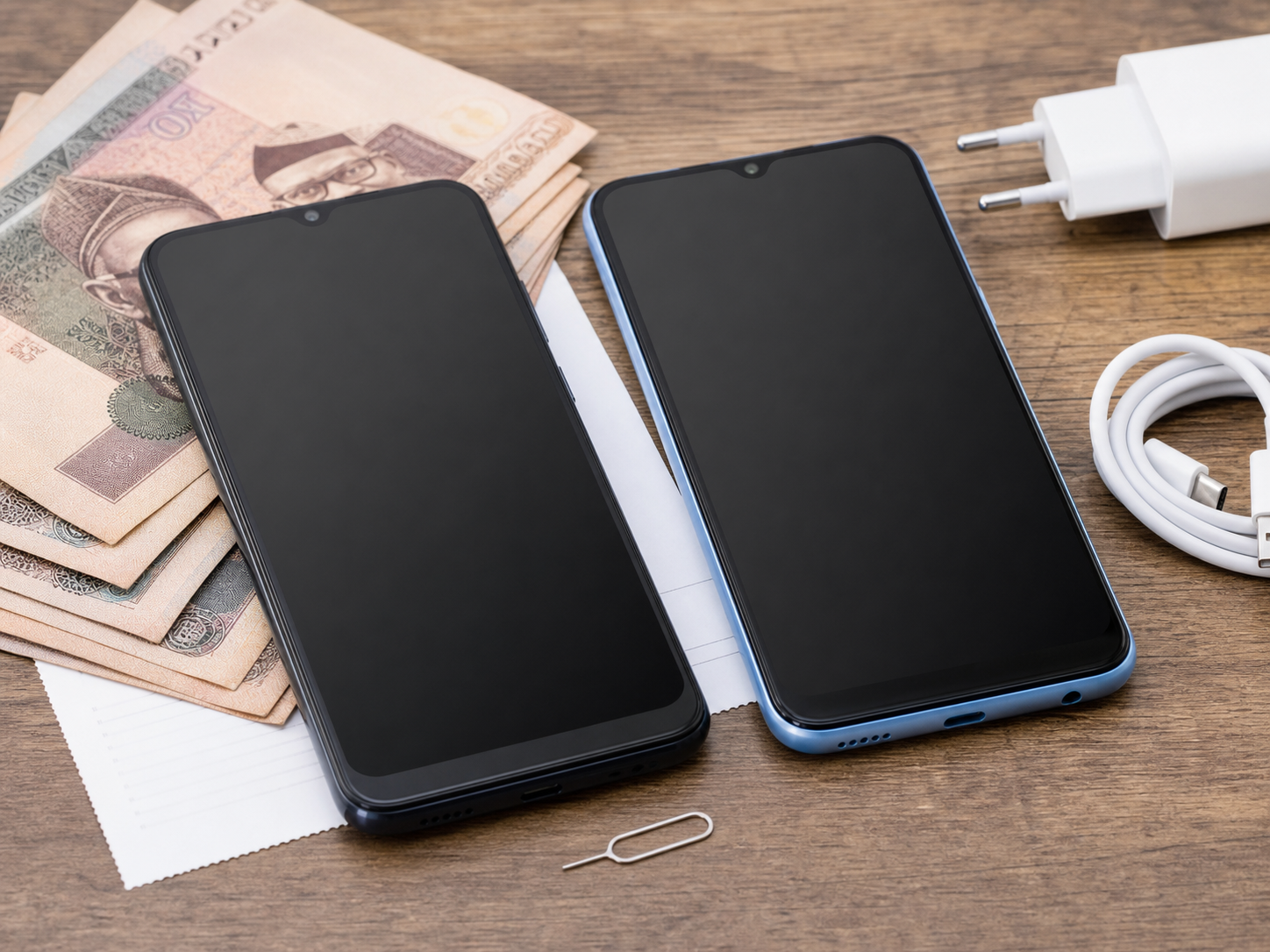
At a high level, both phones are trying to solve the same problem: give budget buyers a large 6.9-inch 120Hz display, 6000mAh battery, 33W charging, 50MP rear camera, IP64 splash resistance, headphone jack, USB-C and microSD expansion without pushing the price too high. The real fork in the road is whether the Dimensity 6300 and 5G support on the 5G model are valuable enough to outweigh the lower price and broader variant ladder of the standard Redmi 15C.
{INLINE_IMAGE_1}
Price, value and variant flexibility
The ordinary Redmi 15C has the simpler value pitch. It starts lower and, according to the candidate snapshot, is available in 4GB/128GB, 6GB/128GB and 8GB/256GB trims. That matters more than many buyers realise. Budget phones often feel slower over time because of memory pressure and limited storage, so having a path to 6GB or 8GB RAM plus more internal storage can be more useful in real ownership than a feature you rarely touch.
The Redmi 15C 5G, by contrast, carries the higher entry price and the candidate snapshot only clearly exposes a 4GB/128GB configuration. If you are the kind of buyer who keeps many apps open, downloads a lot of media, or wants the phone to feel less cramped two years from now, the non-5G Redmi 15C may actually be the better long-term catalog choice if the higher-memory variants remain available on Ogabassey.
There is another subtle but important point: both products are marked as in stock with unmanaged inventory policy. For Ogabassey, that means the numeric stock field is not the hard availability cap. Buyers should read the live product page and checkout flow as the operational truth, not assume that a displayed stock quantity of zero means out of stock. For commerce content, the safest language is that both phones are actively listed and availability should be reconfirmed at checkout.
Side-by-side spec table
Spec
Redmi 15C
Redmi 15C 5G
Network technology
4G LTE
5G SA/NSA, 4G LTE, 3G WCDMA, 2G GSM
5G support
No
Yes
Display size
6.9 inches
6.9 inches
Display type
Dot Drop display
Dot Drop display
Resolution
1600 x 720 pixels (HD+)
1600 x 720 pixels (HD+)
Refresh rate
120Hz
120Hz
Peak brightness
810 nits
810 nits
Chipset
MediaTek Helio G81-Ultra
MediaTek Dimensity 6300
GPU
Mali-G52 MC2
Mali-G57 MC2
Main camera
50MP
50MP
Battery
6000mAh
6000mAh
Charging
33W wired
33W wired
Card slot
microSD expandable up to 1TB
microSD expandable up to 1TB
Protection
IP64
IP64
Weight
205g
211g
Bluetooth
5.4
5.4
Performance and daily use
The biggest real difference after price is the platform. Redmi 15C uses the MediaTek Helio G81-Ultra, while Redmi 15C 5G steps up to the MediaTek Dimensity 6300. Without inventing benchmark numbers, the safer buying conclusion is that the 5G model should be the better option for buyers who care about newer network support and a more forward-looking performance platform. That does not automatically make the 4G version weak. It simply means the 5G model has the more modern silicon foundation.
For ordinary use such as WhatsApp, TikTok, YouTube, Chrome, banking apps, maps, photos, Bluetooth accessories and hotspot sharing, the non-5G Redmi 15C still covers the basics well on paper. If your usage is mostly social media, calls, streaming and light multitasking, the 4G model remains easy to justify because it gives up very little outside network generation and chipset class.
Where the 5G version makes more sense is for buyers who plan to keep one phone for several years, expect heavier app loads, or want the psychological and practical headroom of a newer network-capable platform. A student buying one phone to last through school, or a business user who regularly downloads files and relies on mobile data, will likely feel better paying the extra money once rather than wishing for 5G later.
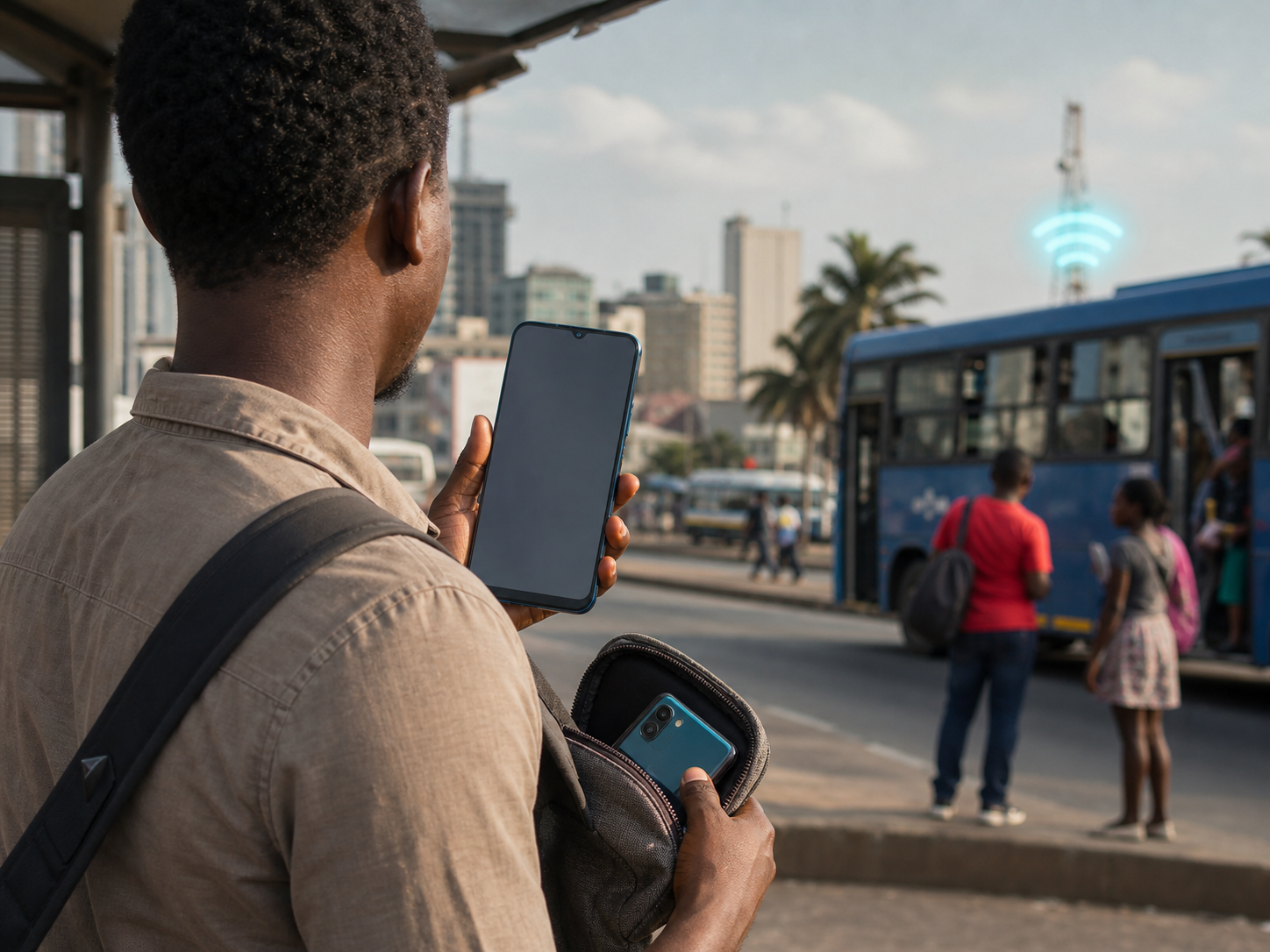
That said, do not overstate 5G as magic. The right question is not “Does Nigeria have 5G everywhere?” but “Will my carrier, plan and daily locations let me benefit from 5G often enough to care?” If the answer is mostly no, the 4G Redmi 15C is still the more disciplined value buy.
Battery, display and build
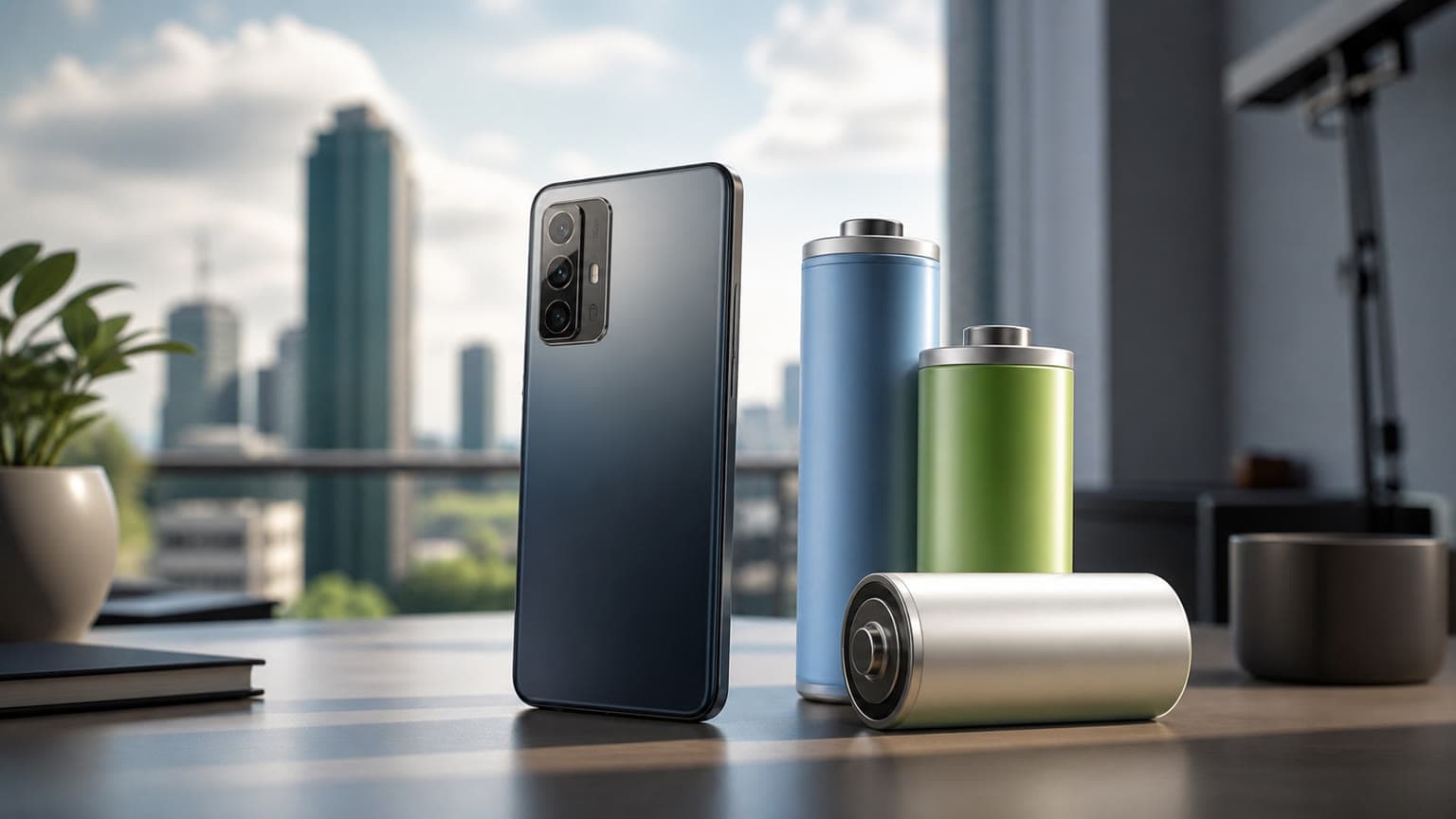
Battery and charging do not separate these phones much. Both are listed with a 6000mAh battery and 33W wired charging. That means long battery life is a strength on either side of the comparison. If your top priority is surviving long workdays, commuting, school or power interruptions, both models still deliver the part of the experience that matters most.
The display story is also close. Both phones use a 6.9-inch panel with HD+ resolution and 120Hz refresh rate. That means neither one wins on sharpness; both are essentially choosing screen size and smoothness over Full HD+ detail. For video, scrolling and everyday messaging, that is fine. For buyers who are sensitive to text sharpness, both should be treated as budget compromises rather than display-first choices.
Build differences are small but not meaningless. The 4G Redmi 15C is lighter at 205g versus 211g on the 5G model, and it is also slightly slimmer and narrower in the matrix snapshot. Those are not dramatic changes, but they help explain why the 4G device may feel a bit easier to live with if one-handed comfort matters.
Both retain IP64 splash resistance, dual SIM plus microSD, a side fingerprint sensor, Wi-Fi 2.4GHz/5GHz, NFC, FM radio and USB-C. In other words, Xiaomi did not strip the cheaper model of the everyday quality-of-life features many budget buyers still care about.
{INLINE_IMAGE_2}
Who should buy each option
Buy Redmi 15C if you want the lowest entry price, you do not specifically need 5G, and you like the fact that the product line gives you more room to choose higher RAM or storage variants. It is also the better pick if you simply want a big-battery Xiaomi phone for calls, media, work apps and everyday reliability without paying extra for a feature you may barely use.
Buy Redmi 15C 5G if your budget can comfortably absorb the extra ₦12,279.07, you expect to keep the phone for a while, and you want the cleaner long-term story of a 5G-capable chipset. It is also the safer option for buyers who hotspot often, move large files on mobile data, or want the peace of mind that they are not buying a network-limited variant if their usage evolves.
If charging behaviour is part of your decision, Ogabassey’s broader explainer How Fast Can Your Phone Charge? is a good companion read, because both phones rely on the same 33W charging story and the real experience still depends on charger quality, cable quality and what is included at purchase.
For buyers exploring the wider sub-₦200k to low-₦200k band, it also makes sense to browse the broader Ogabassey smartphones catalog before deciding. The Redmi 15C and Redmi 15C 5G are good shortlist options, but the strongest value choice always depends on whether your priority is battery, 5G, camera, memory or brand preference.
Verdict
The ordinary Redmi 15C is the better buy for most budget-conscious Nigerian shoppers because it is cheaper, slightly lighter and still keeps the battery, display size, charging speed and everyday essentials that define this product family. If your phone life is mostly 4G social apps, calls, media and work basics, it does not feel under-equipped.
The Redmi 15C 5G is worth the extra money only when 5G and the newer Dimensity 6300 platform are meaningful to how you plan to use the phone. Because the price gap in the candidate snapshot is relatively small, the 5G version is easier to justify than many typical 5G upsells. But it is not automatically the best deal for every buyer. If you will not benefit from 5G and you prefer the cheaper or higher-memory 4G variants, Redmi 15C remains the sharper purchase.
FAQ
Is Redmi 15C 5G worth more than Redmi 15C?
Yes, but only conditionally. The 5G model is worth the extra money if you expect to use 5G and want the newer Dimensity 6300 platform. If you mainly need battery life, a large display and everyday 4G use, the standard Redmi 15C is the better value.
What is the price difference between Redmi 15C and Redmi 15C 5G?
In the candidate snapshot dated 2026-06-16, Redmi 15C was listed at ₦161,767.44 and Redmi 15C 5G at ₦174,046.51. That is a gap of about ₦12,279.07. Confirm the live product pages before paying because prices can change.
Do Redmi 15C and Redmi 15C 5G have the same battery?
Yes. Both were listed with a 6000mAh battery and 33W wired charging, so battery size alone is not the reason to choose one over the other.
Should I buy Redmi 15C or Redmi 15C 5G in Nigeria?
Buy Redmi 15C if you want the lower entry price and do not care much about 5G. Buy Redmi 15C 5G if you want the newer network-capable chipset and you expect 5G to matter to your usage over the life of the phone.