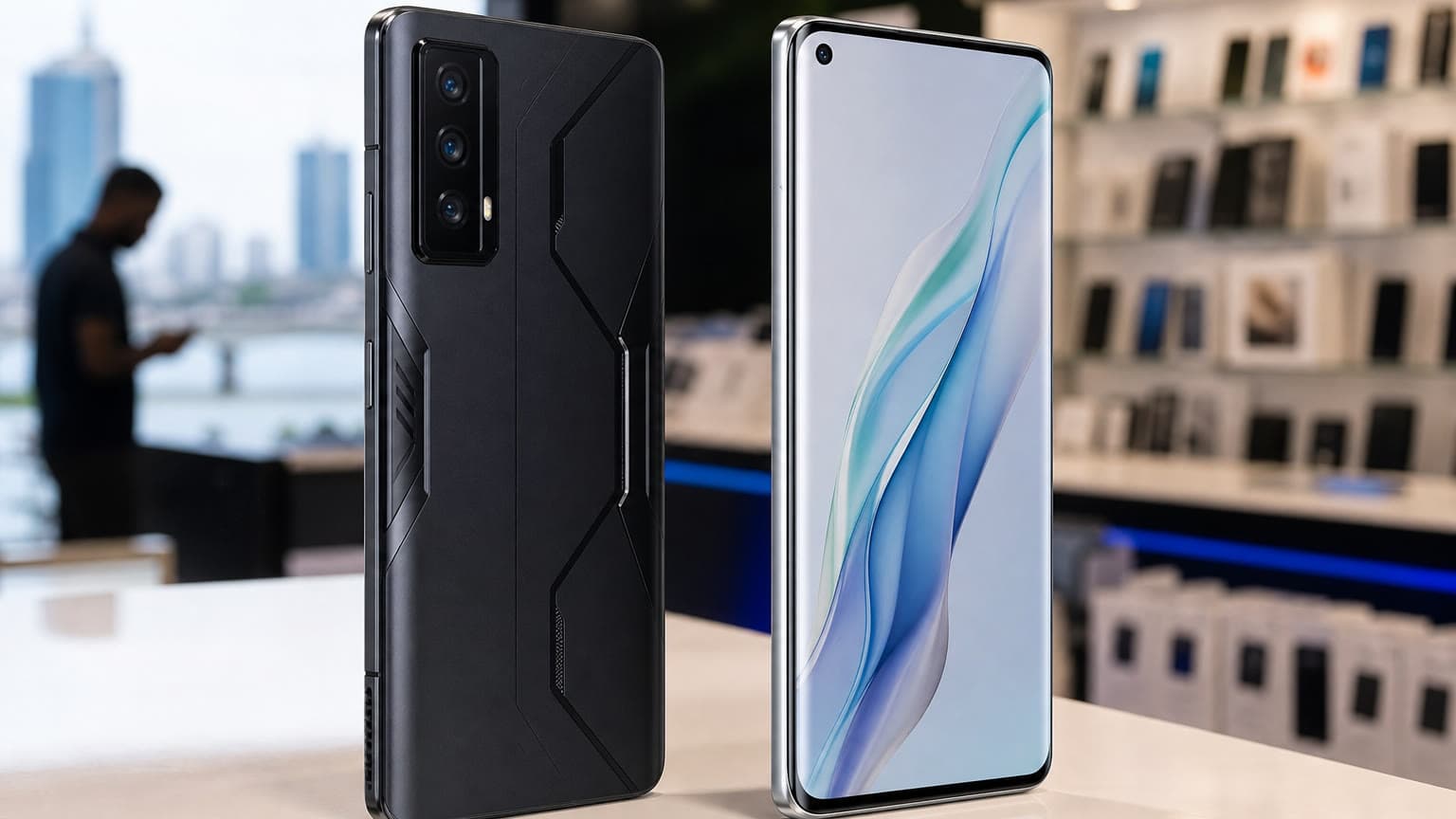
Smartphones
The Redmi Note 17 Pro Max 5G is listed on Ogabassey at ₦650,976.74 from the 2026-09-21 price snapshot. Its best case is clear: a very large 6.83-inch 1.5K AMOLED display, 120Hz refresh, 5G, 8GB RAM, 256GB storage, a huge silicon-carbon battery and 100W wired charging. Check the regional battery specification and charger contents of the unit being sold before paying.
The Redmi Note 17 Pro Max 5G makes the most sense for shoppers who want a big-screen Redmi with serious battery comfort and fast charging, without jumping to a flagship Xiaomi, Samsung, iPhone or Pixel price. If your daily use is WhatsApp, banking apps, TikTok, YouTube, school work, delivery apps, ride-hailing, office files and photo sharing, the display, battery and 256GB storage are the reasons to look closely.
At ₦650,976.74, this is not a casual budget phone. It sits in the range where buyers should ask tougher questions about warranty, charger contents, network support, camera performance, software updates and resale value. Start with the live Redmi Note 17 Pro Max 5G product page, then compare the price against the wider Ogabassey Smartphones category before checkout.
It is not the same product as the Xiaomi 17 Pro Max flagship. This article is about the REDMI Note 17 Pro Max 5G, a Redmi Note-series model positioned around display, battery and value. That distinction matters because the names are similar, but the processor class, camera system, buyer expectations and price logic are very different.
Xiaomi's official regional pages list a 6.83-inch AMOLED display with 2772 x 1280 resolution, up to 120Hz refresh, HDR10+, Dolby Vision support, 12-bit colour, 3500-nit peak brightness claims and Gorilla Glass Victus 2. For real buyers, the useful takeaway is simple: this should be a strong phone for streaming, reading, maps, spreadsheets and long browsing sessions. The size is generous, so check whether you are comfortable with a phone around 225g to 229.5g depending on colour or region.
The listed processor is Snapdragon 6 Gen 5, paired on Ogabassey with 8GB RAM and 256GB storage. Xiaomi's UK specification page lists LPDDR5X memory and UFS 4.1 storage for 256GB and 512GB variants, while some reviews note that the base storage options and regional configurations can vary. The safe buying advice is to confirm the exact RAM and storage variant on the box or invoice, especially if another seller advertises a cheaper 128GB version.
Xiaomi lists a 50MP main camera with OIS, an 8MP ultrawide and a 32MP front camera. Its UK specification lists rear and front 4K video at 30fps. These are manufacturer specifications, not results from an Ogabassey hands-on test.
Battery is the headline. Xiaomi's UK page lists a 9210mAh typical silicon-carbon battery, 100W HyperCharge and 27W wired reverse charging, with the note that a power adapter is not included in that UK box. Some launch coverage and other regions mention 10,000mAh, so buyers in Nigeria should check which regional unit Ogabassey is selling. Either way, this is a battery-first Redmi, but charger-in-box and adapter compatibility still decide how much of the 100W promise you will actually enjoy.

| Area | What the evidence says | Buyer meaning |
|---|---|---|
| Ogabassey price | ₦650,976.74 snapshot from 2026-09-21 | Use as a dated guide; confirm the live checkout price. |
| Display | 6.83-inch 1.5K AMOLED, up to 120Hz | Excellent fit for media, reading and productivity. |
| Battery | 9210mAh on Xiaomi UK; some markets report 10,000mAh | Confirm the regional variant and box label. |
| Charging | 100W wired, 27W reverse wired on official UK specs | Ask whether the correct charger is included or needed separately. |
| Processor | Snapdragon 6 Gen 5 | Battery and display are stronger selling points than flagship gaming power. |
| Storage | Ogabassey target is 8GB + 256GB | Good storage baseline, especially if no microSD expansion is available. |
| Camera | Official UK specs list 50MP OIS main plus 8MP ultra-wide | OIS is listed by Xiaomi; distinguish it from overall camera quality. |
| NFC | Official UK specs list NFC, market availability may vary | Do not assume tap-to-pay or NFC pairing unless the region supports it. |
| Durability | IP66/IP68 on the UK page, with liquid damage warranty limits | Useful protection, but not permission to test water resistance. |
| Software | HyperOS 3 listed officially; launch reports say Android 16 base | Check update promise and security patch date on the unit. |
This is the part of the phone that most clearly justifies attention in 2026. Android Central's review praised battery life as the standout feature and reported multi-day endurance in real use, while Xiaomi's official regional specs confirm a massive silicon-carbon battery and 100W wired charging support. For Nigerian buyers dealing with busy workdays, long commutes or uneven power availability, that can be more valuable than a small benchmark gain.
The caution is accessory reality. Xiaomi's UK page says no power adapter is included in that box and recommends a compatible 100W PD or Xiaomi official adapter. Other regions may ship different package contents, and Ogabassey's listing needs to be checked at checkout. If the correct charger is not included, the phone may still charge safely, but not necessarily at the advertised maximum speed.
Reverse wired charging is also useful if you carry earbuds, another phone or small USB-C accessories. Treat it as emergency convenience, not a full power-bank replacement. The battery is large, but heat, charger quality and cable quality still affect long-term health.
The camera system comprises a 50MP OIS main camera, 8MP ultrawide and 32MP front camera. Front and rear 4K 30fps recording is a concrete advantage to weigh against the Pro model’s listed 1080p 30fps limit.
The limits are worth saying plainly. Independent reviewers have described the cameras as decent rather than class-leading, and the phone does not appear to be a specialist camera device in the way a Pixel or higher Xiaomi flagship tries to be. Android Central noted that the camera is not the strongest reason to buy it, and Digital Camera World framed the phone as a battery monster held back by modest cameras. If your priority is night video, moving children, product reels or creator work, compare it against camera-first alternatives before committing.
For more Xiaomi camera context on Ogabassey, read Redmi Note 15 Pro Plus price and camera context and Redmi Note 14 Pro 5G versus Xiaomi 15T. Those guides help you decide whether you want a battery-focused Redmi or a camera-led upgrade path.

The Snapdragon 6 Gen 5 should be fine for ordinary Android use, but it is not the reason to buy this phone over every rival. Reviews have been mixed on performance value, especially because some previous Redmi Note Pro Plus models used stronger-feeling chips for the price. If you mainly browse, message, stream, bank, edit documents and use social apps, the 8GB RAM and 256GB storage are the bigger practical wins. If you are a heavy gamer, compare carefully before paying.
The 256GB configuration is important because Nigerian buyers often keep years of WhatsApp media, offline videos, school files, banking screenshots and camera clips. If the exact unit lacks a memory card slot, 256GB is the minimum comfortable choice for many people. Avoid cheaper variants if they force you into storage anxiety within one year.
5G support is useful in Lagos, Abuja and other coverage areas where your network and plan can actually use it. The official UK bands include n78, n77, n41, n28 and other common bands, but network support varies by region and operator. If your area is still mostly 4G, buy the phone for battery, display and storage first, then treat 5G as future flexibility.
Xiaomi lists HyperOS 3 for the phone, and launch coverage reports Android 16 as the base. That is current enough for a 2026 buyer, but the bigger question is the update horizon for the exact regional model. Xiaomi's regional marketing mentions a long like-new software experience in some markets, yet shoppers should still confirm update promise, security patch level and warranty channel on the unit being sold in Nigeria.
Before payment, ask for the box seal, IMEI consistency, model number, receipt, return policy and warranty route. Confirm whether liquid damage is excluded even with IP66/IP68 marketing. Xiaomi's own water-resistance notes warn that ingress protection can deteriorate with wear, repair or damage, and that warranty may not cover liquid damage outside test conditions. That matters in rainy-season Nigeria and for buyers who work outdoors.
Also confirm charger contents. A phone advertised with 100W charging but sold without a compatible adapter may require an extra purchase. Cheap third-party chargers can create heat, slow charging or safety issues, so budget for a reputable adapter if Ogabassey does not include the original regional charger.
If the Redmi Note 17 Pro Max 5G feels too expensive, compare it with the Redmi Note 17. You may give up some display, battery, camera or performance features, but the regular model can make sense if you simply want a newer Redmi at a lower entry point.
If you want a closer Xiaomi comparison, check the Redmi Note 17 Pro 5G. It should be the first internal alternative for buyers who like the Note 17 family but are not sure the Pro Max premium is justified. Compare battery size, charging speed, OIS, storage and warranty terms, not only the model name.
Budget-focused Xiaomi shoppers can also look at the Redmi A7 Pro, while buyers open to another Android brand should compare the Infinix NOTE 60 Pro. For a broader charging-and-performance comparison, Ogabassey's Infinix GT 30 Pro versus Note 50 Pro guide is useful when deciding whether speed, battery or price matters most.
If you are comparing across brands, use a practical rule. Xiaomi often wins on display, battery and charging value. Samsung can be stronger for warranty confidence and retail familiarity. iPhone wins if long-term resale and iOS are more important than charging speed. Pixel is the safer camera-processing direction. Tecno and Infinix may offer aggressive value when the budget is tighter.
Buy the Redmi Note 17 Pro Max 5G if you want a large AMOLED phone with a huge battery, 100W charging, 5G, 256GB storage and a modern Redmi design at Ogabassey's ₦650,976.74 snapshot price. It is strongest for buyers who care about screen size, long runtime and storage more than top-tier gaming or the very best camera processing.
Pause before buying if the camera is your top priority, if you need guaranteed NFC for local workflows, if you expect the 100W charger in the box, or if warranty certainty matters more than raw spec value. The right next step is to open the live product page, confirm the regional variant, charger contents, warranty terms and current price, then compare it against the Redmi Note 17 Pro 5G and at least one non-Xiaomi alternative.
Ogabassey's 2026-09-21 snapshot lists the Redmi Note 17 Pro Max 5G at ₦650,976.74. Treat this as an editorial price snapshot and check the live product page for the current price before paying.
Yes. Xiaomi lists OIS on the 50MP main camera. Do not confuse stabilization with a guarantee of superior image quality; processing, light and subject movement also matter.
Not always. Xiaomi's UK page says no power adapter is included in that box, while package contents can vary by market. Confirm Ogabassey's box contents before checkout.
Yes, if your carrier has usable 5G coverage in your normal areas and you buy enough data to benefit. If your home or workplace is still mainly 4G, choose this phone for the display, battery and storage first.
Choose the Pro Max if battery size, 100W charging, display quality and storage are worth the higher price. Choose a cheaper Redmi if you mainly need WhatsApp, calls, banking apps and social media without paying for premium battery and display features.