Bassey John is a Performance Marketing Specialist at Ogabassey with cross-industry experience spanning e-commerce, gaming, and real estate. He focuses on paid acquisition, conversion-rate optimisation, and data-driven growth strategy, turning campaign performance into measurable revenue. At Ogabassey he writes about consumer technology, product buying guides, and the Nigerian gadget market to help shoppers make confident, informed decisions.
Last reviewed: July 3, 2026. The Redmi Note 14 Pro 5G remains the easier Xiaomi recommendation for price-sensitive Nigerian buyers, while the Xiaomi 15T is the better long-term phone if you can justify the premium. Redmi gives you 5G, a 120Hz AMOLED display, IP68 protection and a 200MP OIS main camera at a lower Ogabassey catalog price. Xiaomi 15T adds the stronger platform: faster memory and storage, a bigger battery, quicker charging, a larger display and a more useful Leica triple-camera system.
Decision summary
This comparison is not only about which phone has the bigger camera number. The Redmi Note 14 Pro 5G and Xiaomi 15T both sit in Xiaomi's modern 5G lane with AMOLED displays, NFC, stereo speakers, in-screen fingerprint sensors, optical image stabilization on the main camera and IP68-rated bodies. The practical buying question is whether the Xiaomi 15T's higher price is worth paying for stronger performance hardware, faster storage, better charging, a larger screen and a telephoto camera.
Ogabassey catalog data supplied for this refresh lists the Redmi Note 14 Pro 5G from ₦578,800, with 8GB/256GB and 12GB/512GB variant context. The Xiaomi 15T row in the existing article was listed at ₦715,813.95 for 12GB/512GB. Treat those figures as catalog reference prices, not live checkout promises, because the supplied product snapshot shows stock quantity 0 for the Xiaomi/Redmi products attached to this intake. Confirm live stock, color, RAM/storage, warranty route and final delivery cost before paying.
The short verdict: choose Redmi Note 14 Pro 5G if the budget ceiling matters most and you want Xiaomi's strongest value features without crossing into upper-midrange pricing. Choose Xiaomi 15T if you shoot more video, keep many apps and files, travel often, rely on hotspot, or want a phone that should feel less constrained over several years.
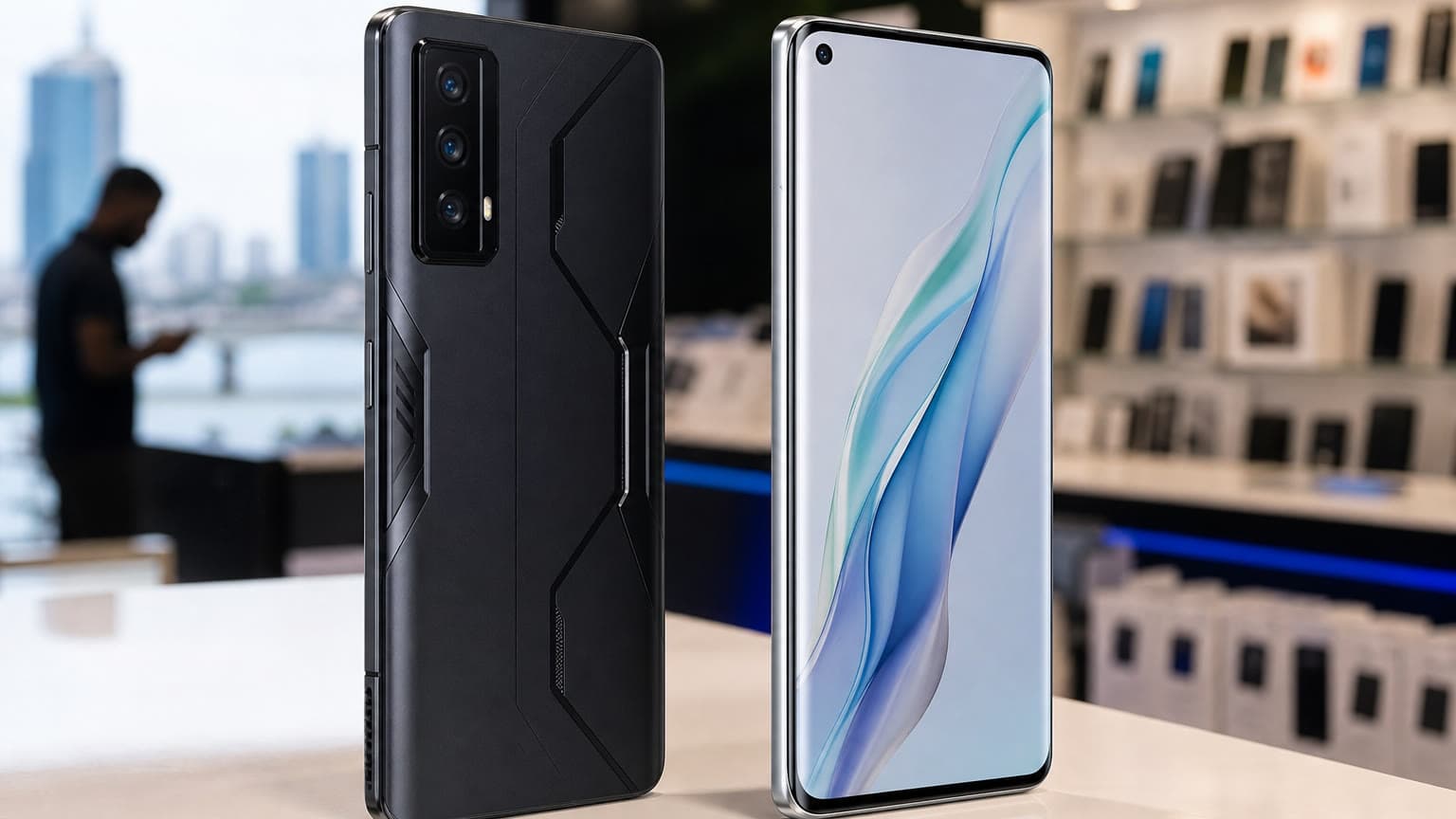
A buyer-focused comparison map for choosing between Redmi Note 14 Pro 5G and Xiaomi 15T in Nigeria.
What changed in this 2026 refresh
The core verdict still holds, but the 2026 context makes the split clearer. Xiaomi's official Redmi Note 14 Pro 5G specification page lists a MediaTek Dimensity 7300-Ultra chip, LPDDR4X memory, UFS 2.2 storage, a 5110mAh battery and 45W charging. Xiaomi's official Xiaomi 15T specification page lists a Dimensity 8400-Ultra chip, LPDDR5X memory, UFS 4.1 storage, a 5500mAh battery and 67W HyperCharge. That is why the Xiaomi 15T should not be treated as only a more expensive Xiaomi with nicer branding; it has faster core components in the areas that usually affect long-term ownership.
Software also deserves a stronger warning in 2026. Xiaomi lists HyperOS and AI features on these devices, while review and rollout coverage reports Android 16 availability for the Xiaomi 15T family after launch. That does not mean every box in Nigeria will arrive fully updated. Imports can sit in inventory or ship with region software that needs several updates during setup. Check the update screen, security patch level, region variant, Google services, eSIM support and system-app ads before deciding the phone is ready for daily use.
The duplicate intake attached to this task points toward broader Redmi launch and Xiaomi software-interest signals, including Redmi Note 15, Redmi Note 15 Pro and Redmi Note 15 Pro+ 5G searches. Those are useful as buyer context, but they should not turn this article into a different launch story. This article should remain the canonical Redmi Note 14 Pro 5G versus Xiaomi 15T comparison, with newer Redmi catalog options handled as alternatives and internal links rather than a second draft.
Comparison scorecard
Decision point
Redmi Note 14 Pro 5G
Xiaomi 15T
Buyer impact
Ogabassey price context
Supplied catalog starts from ₦578,800
Existing Ogabassey row was ₦715,813.95 for 12GB/512GB
Redmi is easier to justify if you are staying below the ₦600k-₦650k band.
Processor
MediaTek Dimensity 7300-Ultra
MediaTek Dimensity 8400-Ultra
15T has the stronger official platform for heavy multitasking and longer ownership.
RAM and storage class
LPDDR4X + UFS 2.2
LPDDR5X + UFS 4.1
15T should feel quicker with large apps, file transfers and storage-heavy use.
Display
6.67-inch 1.5K AMOLED, up to 120Hz, 3000-nit listed peak
6.83-inch AMOLED, up to 120Hz, 3200-nit listed peak over part of the panel
Both are strong; 15T is larger and slightly brighter on paper.
Battery and charging
5110mAh, 45W
5500mAh, 67W
15T is better for long commutes, hotspot use and short charging windows.
Main camera
200MP OIS
50MP Leica main camera with OIS
Redmi wins the megapixel headline; 15T has the more balanced camera system.
Extra rear cameras
8MP ultra-wide, 2MP macro
50MP telephoto, 12MP ultra-wide
15T is more useful for portraits, products, events and travel framing.
Front camera and video
20MP front camera, 1080p front video
32MP front camera, 4K front video listed
15T is stronger for creators and video calls.
Durability
IP68 under Xiaomi lab conditions
IP68 under Xiaomi lab conditions
Both need sensible water care; liquid damage can still be excluded from warranty.
Price and value in Nigeria
The Redmi Note 14 Pro 5G has the cleaner value story. At the supplied ₦578,800 starting point, it competes against Samsung A-series, Tecno Camon, Infinix Note, older Xiaomi T-series models and some UK-used iPhones. It is the phone to start with if you are buying for school, work, family, a second line, a creator starter kit or a business device where the savings could go toward a case, charger, earbuds, power bank or data plan.
The Xiaomi 15T is the upgrade pick, not the budget pick. Its value comes from avoiding compromises that become annoying after a year: slower storage, smaller battery, weaker charging and less flexible cameras. If you already know you need 512GB because of WhatsApp media, offline video, business photos, banking apps, school files and camera footage, the 15T becomes easier to defend. If you mostly stream, browse, call, use WhatsApp and take casual photos, Redmi is the more rational spend.
Availability is the caution on both sides. The catalog snapshot attached to this enrichment shows zero stock for the linked Redmi/Xiaomi rows, so do not build a buying plan around the reference price alone. From the wider Ogabassey Smartphones section, confirm the exact model, storage, color, warranty terms, box contents, charger status and delivery timeline before payment. A small price difference can disappear quickly if one option lacks a charger, has unclear warranty handling or requires delayed import sourcing.
Performance and storage
On paper, Xiaomi 15T is the stronger daily-performance phone. The Dimensity 8400-Ultra, LPDDR5X RAM and UFS 4.1 storage give it a better foundation for multitasking, video editing, navigation, camera use, hotspot sharing and years of app updates. This is especially important for buyers who keep a phone for three years or more, because storage speed and RAM headroom often affect perceived age before the screen or camera does.
The Redmi Note 14 Pro 5G is still strong enough for most normal users. Its Dimensity 7300-Ultra, 120Hz AMOLED display, Wi-Fi 6, Bluetooth 5.4, 5G support and 8GB/256GB entry configuration are suitable for messaging, banking, YouTube, TikTok, Instagram, mobile hotspot, rides, maps, school portals and light gaming. It is not the weaker phone in a way that makes it hard to recommend; it is simply the value phone beside a more complete upper-midrange device.
Storage is the part buyers should not rush. Xiaomi lists Redmi Note 14 Pro 5G configurations up to 12GB/512GB, while Xiaomi 15T is listed globally in 12GB/256GB and 12GB/512GB variants. Since neither phone should be bought on the assumption of expandable storage, choose the variant carefully. For creators, traders, students with large offline files and anyone who records frequent video, 512GB is safer. For lighter users with cloud backup and streaming habits, 256GB can still be fine.
Battery, charging and display
Xiaomi 15T wins the battery-and-charging section. Its 5500mAh battery and 67W charging are better suited to Lagos or Abuja days with mobile data, traffic, navigation, calls, camera use and hotspot sharing. The Redmi Note 14 Pro 5G's 5110mAh battery and 45W charging are still practical, but the 15T gives you more room when power supply is unpredictable or your day does not allow a long charging break.
Display quality is close enough that most buyers should not decide only on the screen. The Redmi's 6.67-inch CrystalRes AMOLED panel has 1.5K resolution, up to 120Hz refresh rate, Dolby Vision, HDR10+ and a 3000-nit listed peak brightness. The Xiaomi 15T moves to a larger 6.83-inch AMOLED panel with 2772 x 1280 resolution, up to 120Hz refresh rate, Dolby Vision, HDR10+ and a 3200-nit listed peak brightness over part of the display. The 15T is better for people who read, watch video, edit content and use split-screen-style workflows; Redmi is easier if you prefer a slightly smaller and lighter phone.
Both official pages list IP68 resistance, but Xiaomi's own conditions matter: lab-tested freshwater resistance is not the same as real-life immunity to rain, beach water, pool water, soap, impact or repair-related seal loss. Use a case, avoid unnecessary water exposure and dry the USB-C port before charging. Warranty disputes around liquid damage are common across phone brands, so treat IP68 as risk reduction, not permission to test the phone.
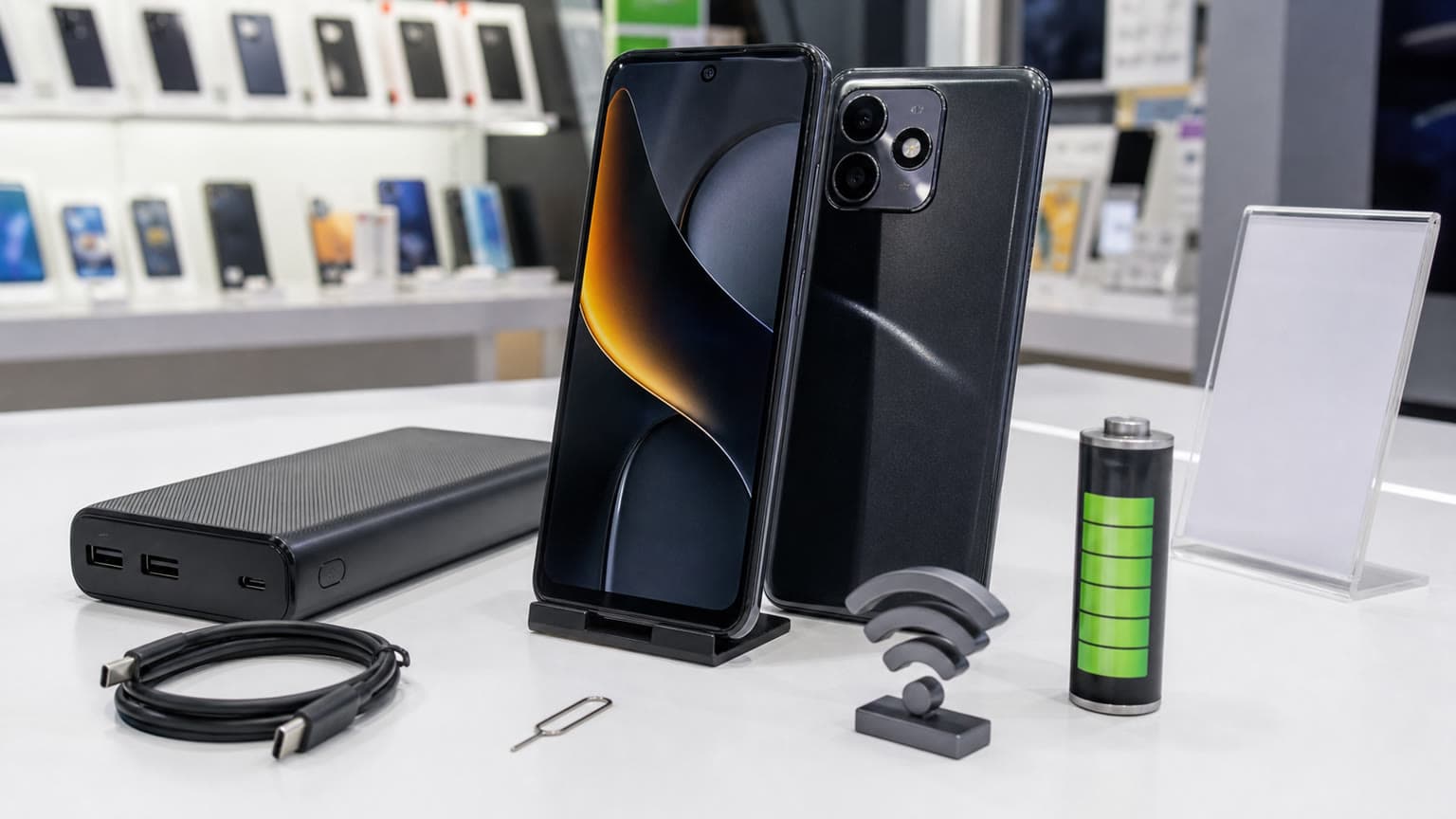
Key checks before paying for a Redmi or Xiaomi phone: variant, storage, warranty, network support and software status.
Cameras and video
The Redmi Note 14 Pro 5G will attract buyers with its 200MP OIS main camera, and that is understandable. For daylight shots, products, documents, posters and casual social posts, a high-resolution main sensor can be useful. The limitation is the rest of the rear camera setup: an 8MP ultra-wide and 2MP macro are less flexible than a real telephoto. Redmi is good if your camera use is mostly point-and-shoot from the main lens.
The Xiaomi 15T is the better camera-and-video pick from the listed hardware. It has a 50MP Leica main camera with OIS, a 50MP 46mm telephoto camera, a 12MP ultra-wide camera and a 32MP front camera with 4K front-video support. That makes it more useful for portraits, event photos, product shots, travel images, short-form video and social content where switching focal lengths matters. Independent review coverage also frames the 15T as a strong all-round mid-ranger, while warning that the regular 15T's 2x telephoto is not a flagship long-zoom replacement.
Do not buy either phone on megapixels alone. If you shoot mostly bright outdoor photos and want the lower price, Redmi makes sense. If you sell products online, shoot events, record video, crop images often or care about selfie video quality, the Xiaomi 15T is the better tool.
5G, software and compatibility checks
Both phones support 5G, so the question is not whether 5G exists. The question is whether the rest of the phone justifies the money. In Lagos, Abuja and other covered areas, 5G can improve downloads, cloud backup and hotspot sharing, but coverage, building penetration and plan cost still vary. If you mostly use 4G or Wi-Fi, Redmi Note 14 Pro 5G is already enough for network speed.
Xiaomi 15T has the more future-looking connectivity sheet, with Wi-Fi 6E where regionally supported, Bluetooth 6.0 and broader eSIM combinations listed on Xiaomi's official page. Redmi Note 14 Pro 5G lists Wi-Fi 6, Bluetooth 5.4 and dual-SIM options that may include eSIM depending on country and carrier. For Nigeria, verify physical SIM and eSIM behavior on the exact region model, especially if you travel, use more than one line or rely on a work SIM.
Software features should be verified on-device. Xiaomi's AI and Google feature notes can vary by region, app version, language and internet connection. During setup, check Android/HyperOS version, security patch level, Google Play Protect status, system update availability and whether any preloaded apps or ads can be removed or disabled. If software support matters more than hardware, compare carefully with Samsung and Google Pixel alternatives before paying extra for Xiaomi hardware.
Warranty, originality and repair checks
Before buying either phone in Nigeria, verify three things: originality, warranty route and repair risk. Check the sealed box, IMEI, storage/RAM variant, color, region code, charger and warranty card before leaving the store or accepting delivery. Do not pay for a 512GB listing if the box or settings page says 256GB. If the price is far below the market, ask whether the unit is new, open-box, refurbished, demo, carrier-locked, region-specific or missing accessories.
Repairability is also part of value. Both phones use sealed premium-style builds, so screen, battery and water-resistance repairs are not as simple as older removable-back models. A cheap used or imported unit can become expensive if it needs display work, battery service or board repair. If after-sales support matters to you, confirm the warranty process and service route before prioritizing a lower headline price.
Related Ogabassey categories and products
If you like the Redmi value lane but want newer or cheaper catalog alternatives, compare the Redmi Note 15, Redmi Note 15 Pro and Redmi Note 15 Pro+ 5G listings against live price and warranty availability. If your budget is lower, the Redmi 15 and Redmi A3 Pro can be checked as lower-cost alternatives, while the Redmi Note 14 and Redmi Note 14 Pro help buyers who want Redmi features without necessarily choosing this 5G Pro model.
For broader phone-launch context, Ogabassey's Infinix HOT 70 launch buyer checklist is useful if battery and price matter more than Xiaomi branding. The Tecno Camon Slim buyer checks guide is also worth reading if you are comparing design, battery and local availability across Chinese Android brands.
Verdict
Buy Redmi Note 14 Pro 5G if you want the lower-cost Xiaomi with the right headline features: 5G, 120Hz AMOLED, IP68, NFC, stereo speakers, OIS and a 200MP main camera. It is the better value pick for most budget-sensitive Nigerian buyers, provided the live variant, warranty and final checkout price match the catalog expectation.
Buy Xiaomi 15T if you want the stronger all-round phone. Its bigger battery, 67W charging, faster RAM and storage, Dimensity 8400-Ultra chipset, larger display, 32MP selfie camera and Leica camera system with telephoto make it the more complete device for creators, travellers, heavy app users and buyers who want 512GB headroom from day one. The extra money is justified only if those differences match how you actually use a phone.
FAQ
Which phone is best for my budget in Nigeria?
The Redmi Note 14 Pro 5G is the better budget pick because its supplied Ogabassey catalog price starts lower. Xiaomi 15T costs more, but adds a bigger battery, faster charging, faster storage, stronger performance hardware and a more versatile camera setup.
Is 5G worth paying extra for in Lagos or Abuja?
Do not pay extra for Xiaomi 15T only because of 5G, because both phones support 5G. Pay extra only if you also need its battery, charging, storage, display, camera and performance advantages.
Which is better for camera and video?
Xiaomi 15T is the better camera-and-video option from the listed specs because it has a Leica triple-camera system with a real telephoto camera and stronger front-video support. Redmi Note 14 Pro 5G has the bigger 200MP main-camera headline but a less flexible supporting camera setup.
Should I wait for Redmi Note 15 models instead?
Wait if live Redmi Note 15, Redmi Note 15 Pro or Redmi Note 15 Pro+ 5G pricing is close to the Redmi Note 14 Pro 5G and you can verify warranty, stock and region compatibility. Buy the Redmi Note 14 Pro 5G now only if the price advantage is clear and the variant is confirmed.
What should I verify before buying an imported Xiaomi phone?
Confirm the exact model, storage, RAM, region, charger, eSIM behavior, Google services, warranty route, security patch level and return policy. Also check that the IMEI, box label and settings page match before completing payment.