Bassey John is a Performance Marketing Specialist at Ogabassey with cross-industry experience spanning e-commerce, gaming, and real estate. He focuses on paid acquisition, conversion-rate optimisation, and data-driven growth strategy, turning campaign performance into measurable revenue. At Ogabassey he writes about consumer technology, product buying guides, and the Nigerian gadget market to help shoppers make confident, informed decisions.
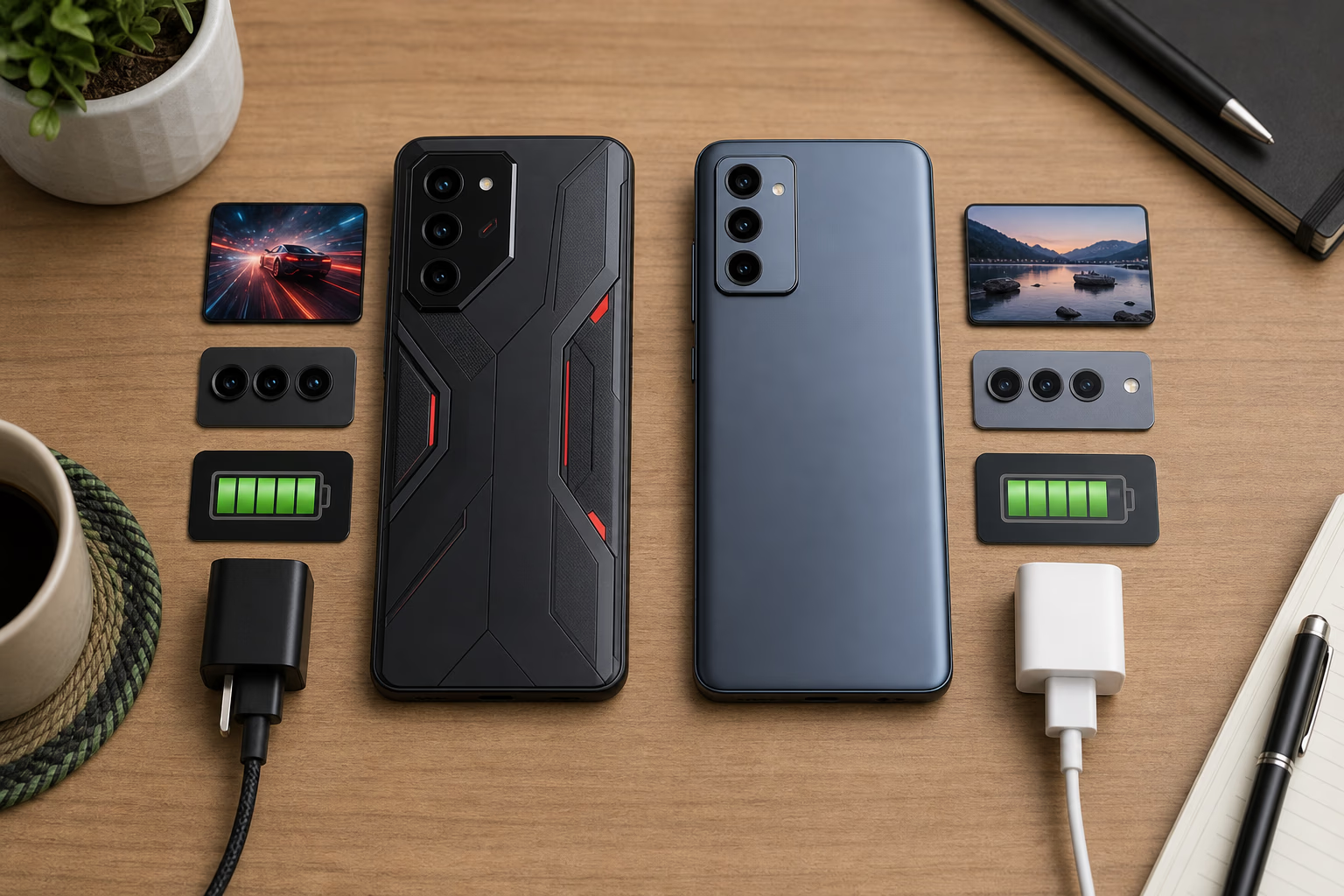
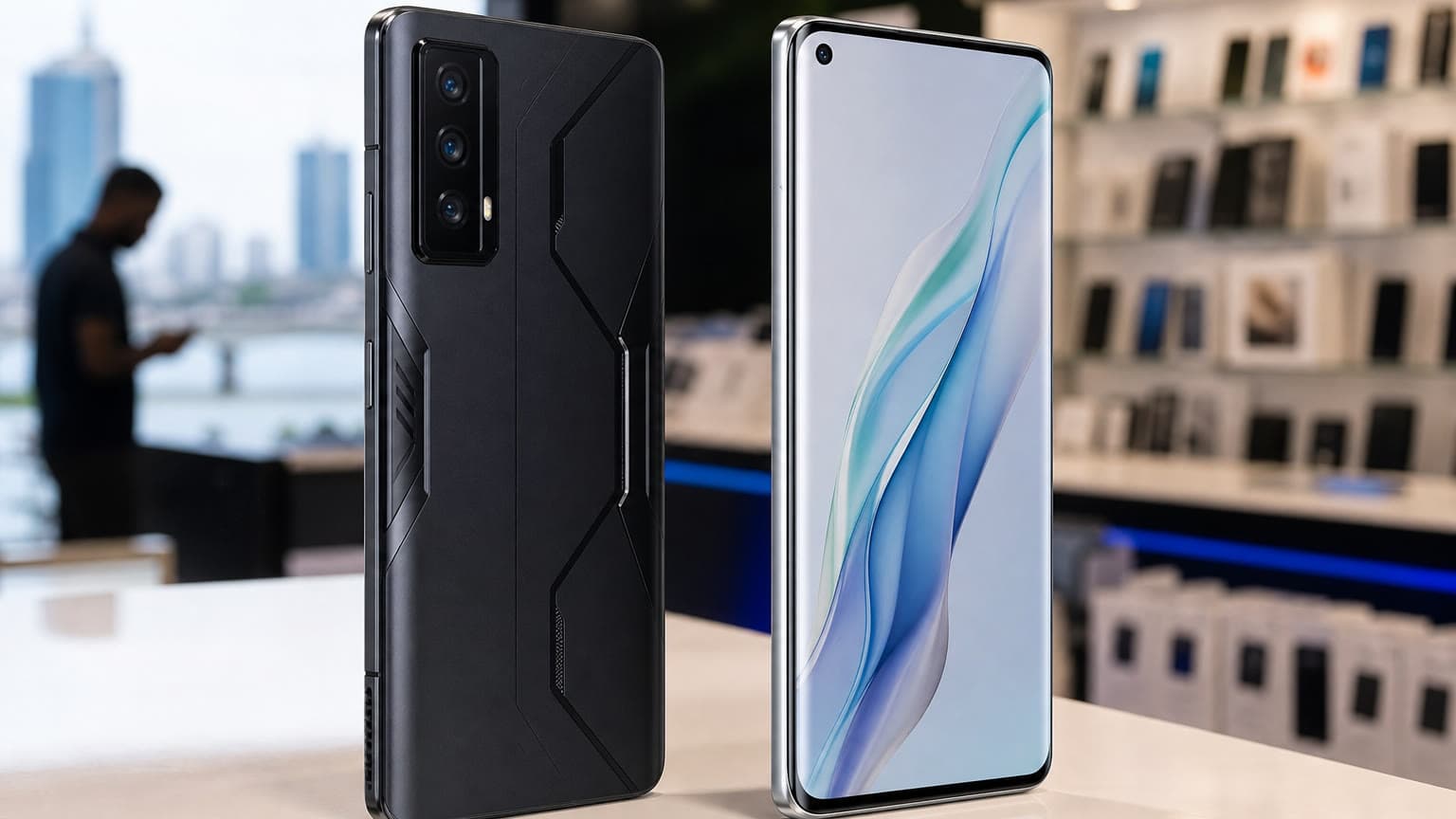
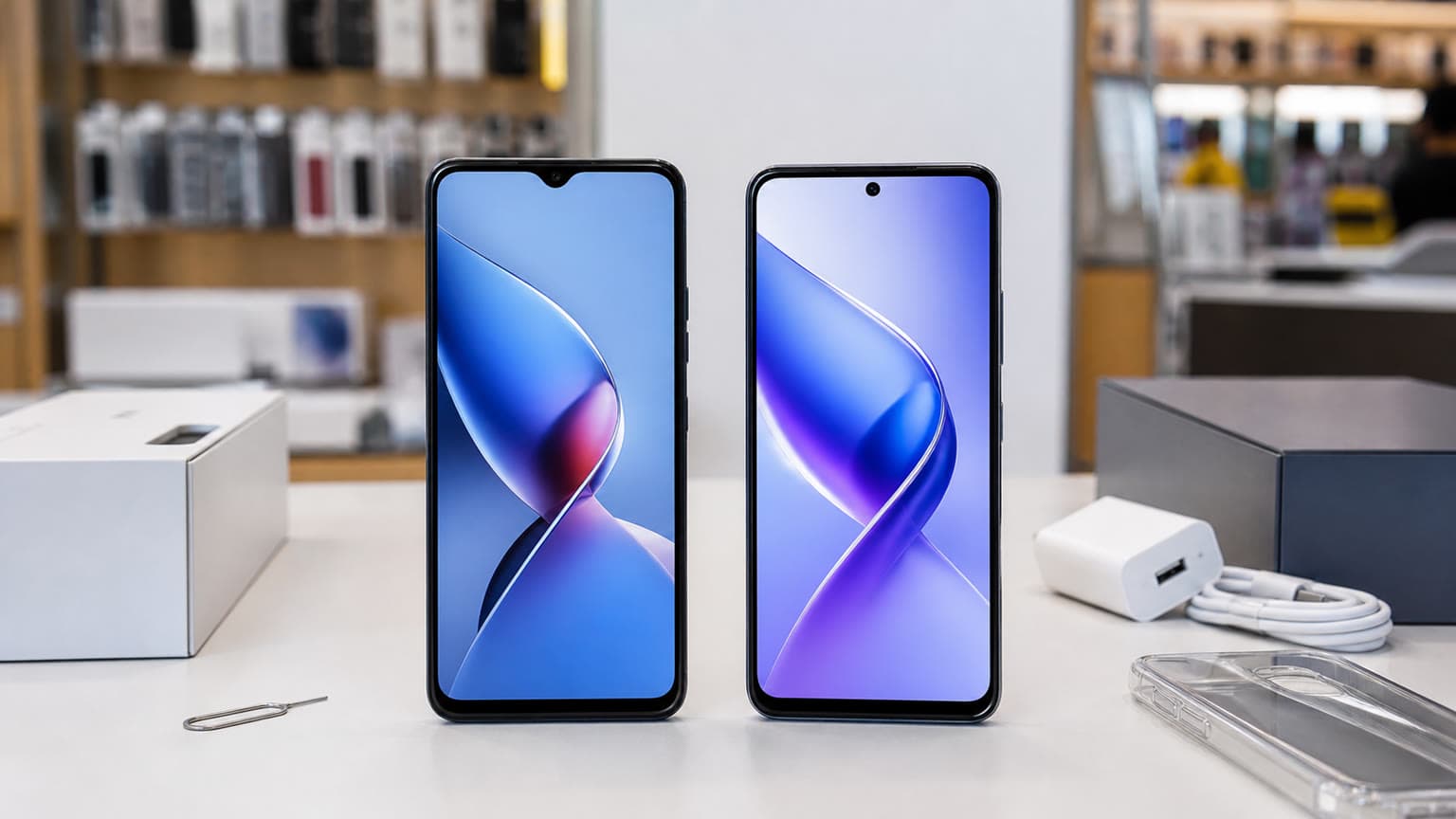
If you are choosing between the Infinix GT 30 Pro and Infinix Note 50 Pro in Nigeria, the useful answer is still not simply the newer-looking phone or the cheaper phone. The GT 30 Pro is the stronger buy for 5G, gaming, sustained performance, sharper display specs and longer hardware headroom. The Note 50 Pro is the more disciplined buy if you want a new Infinix with 90W charging, 256GB storage, Android 15-class software and a lower listed price for daily 4G use.
Decision Summary
This revised guide keeps the existing Ogabassey comparison: Infinix GT 30 Pro versus Infinix Note 50 Pro. It also folds in the fresh Hot-series buyer context from the duplicate intake without turning this page into a different Infinix Hot 70 article. The main question remains whether the GT 30 Pro is worth paying more for over the Note 50 Pro in the Nigerian market.
At the current Ogabassey catalog snapshot, the GT 30 Pro is listed at NGN 549,700, while the Note 50 Pro is listed at NGN 378,400. That puts the GT 30 Pro NGN 171,300 higher before delivery, accessories, bundle changes, exchange-rate movement or stock updates. The extra spend buys a Dimensity 8350 Ultimate-class 5G platform, 12GB RAM in the cataloged variant, a 1.5K-class AMOLED display, GT Trigger gaming controls, a 108MP main camera headline, 5500mAh battery capacity and a gaming-focused design. The Note 50 Pro counters with lower spend, 90W wired charging, 8GB RAM, 256GB storage, AMOLED, Android 15/XOS 15-class software and enough battery for serious daily use.
The practical verdict: buy the GT 30 Pro if you will actually use the performance, 5G and gaming features. Buy the Note 50 Pro if your routine is WhatsApp, banking, POS or business apps, school portals, YouTube, social media, light gaming and short charging windows. Both can be good buys; only one is the sensible spend for your workload.
The choice turns on performance, 5G, charging speed, warranty route and how much the buyer wants to spend.
Who Should Read This
This guide is for Nigerian buyers who need a buying decision before checkout, not a spec-table trophy. It suits students choosing one phone for classes and entertainment, small-business owners who need stable battery life and fast top-ups, gamers who care about frame rate and heat, and buyers deciding whether 5G is worth paying for in Lagos, Abuja, Port Harcourt or any area where coverage is usable in daily life.
It also helps shoppers comparing Infinix against Redmi, Tecno, Samsung A-series, used iPhones or cheaper Hot-series models. If your budget is flexible, start from the broader Ogabassey Smartphones catalog and compare live stock, warranty path and variant details. If your budget is fixed, the Note 50 Pro deserves attention because the current NGN 171,300 difference can pay for a case, screen protector, power bank, earbuds, data, delivery or a repair reserve.
Side-by-Side Scorecard
Decision row
Infinix GT 30 Pro
Infinix Note 50 Pro
Buyer meaning
Ogabassey listed price
NGN 549,700
NGN 378,400
Note 50 Pro costs less in the provided snapshot; confirm live checkout price.
Condition
New
New
Both avoid used-phone battery and originality risks if the exact listing matches.
RAM and storage
12GB RAM, 256GB storage
8GB RAM, 256GB storage
GT 30 Pro has more RAM; storage is tied in this comparison.
Chipset
MediaTek Dimensity 8350 Ultimate class
MediaTek Helio G100 Ultimate class
GT 30 Pro is the performance-first option.
5G support
Yes
4G/LTE listing
GT 30 Pro is better if your SIM, plan and location can use 5G.
Display
6.78-inch 1.5K-class AMOLED, 144Hz class
6.78-inch AMOLED, 1080 x 2436 class, 144Hz class
Both are large and smooth; GT 30 Pro is sharper on paper.
Main rear camera
108MP headline
50MP headline
GT 30 Pro has the stronger camera spec, but megapixels are not a full camera test.
Battery and charging
5500mAh, 45W wired class
5200mAh, 90W wired class
GT has more capacity; Note has the faster wired top-up.
Software support
Android 15/XOS 15 class, with published GT update promise to verify by region
Android 15/XOS 15 class, update promise should be confirmed for the exact SKU
Software runway matters if you keep phones for three years or more.
Best fit
Gaming, 5G, heavier multitasking, creator use
Value, fast charging, school, business and everyday 4G use
The winner depends on workload and network reality.
What Changed Since This Comparison Was First Published
The core recommendation has not changed, but the buyer context has. First, the GT 30 Pro now has stronger independent review coverage showing that its gaming pitch is not just marketing language: its Dimensity 8350 Ultimate-class platform, 144Hz AMOLED panel, 120fps support in selected titles, GT Trigger controls, cooling accessories and 5500mAh battery all support the performance-first positioning. Second, Infinix's own launch material confirms the phone's gaming ecosystem, 108MP camera, 45W wired charging, 30W wireless charging in supported markets, 2 years of Android updates and 3 years of security patches for the GT 30 Pro line.
Third, the Infinix Hot 70 and Hot 60 family have become more visible in buyer search demand. That matters because some shoppers searching for Infinix in Nigeria are not only comparing GT versus Note; they are also asking whether a cheaper Hot-series phone is enough. This article should not absorb the separate Infinix HOT 70 launch buyer checklist, but the comparison should warn readers that Hot-series phones may be better budget alternatives if gaming power is not the reason for buying.
Price, Value and the Real Cost of Paying More
The Note 50 Pro's strongest argument is value. It does not beat the GT 30 Pro outright, but it keeps several high-value basics while costing much less in the current Ogabassey snapshot. You still get 256GB storage, AMOLED, 144Hz-class smoothness, Android 15/XOS 15-class software and 90W wired charging. For many buyers, that is already above basic phone territory.
The GT 30 Pro asks you to spend more for headroom. That headroom matters if the phone will be your main gaming device, hotspot device, work screen and creator tool for the next few years. More RAM helps with heavier multitasking. A stronger chipset helps demanding games stay usable for longer. 5G can matter if your regular locations have reliable coverage and your data plan can use it. The sharper display helps if you read, stream and game for long sessions.
Do not buy the GT 30 Pro only because it is the better phone. Buy it because the better parts match your real use. A buyer who mostly chats, transfers money, watches videos, joins classes and takes normal photos may feel little daily difference after the first week. A buyer who plays demanding games, edits short videos, uses hotspot heavily, streams live or wants 5G readiness will notice the GT 30 Pro's advantage more often.
Performance, Gaming and Multitasking
The GT 30 Pro is the clear performance pick. Its MediaTek Dimensity 8350 Ultimate-class platform, GT positioning and 12GB RAM catalog variant make it the safer choice if speed is the reason you are shopping. Current review coverage highlights 120fps support in selected games, a 144Hz AMOLED display, improved thermal handling and ultrasonic trigger-style controls. Infinix's own launch material also positions the GT 30 Pro around GT Trigger, a full-fps gaming system, 3D vapor chamber cooling, XBoost AI and gaming accessories such as MagCharge Cooler and MagCase in supported bundles.
The Note 50 Pro is more of a practical productivity phone. Its Helio G100 Ultimate-class platform and 8GB RAM are suitable for daily Android use, but they are not the same promise as the GT model. For WhatsApp Business, banking apps, TikTok, Instagram, YouTube, email, school documents, trading dashboards and lighter games, the Note 50 Pro remains sensible. For higher graphics settings, longer gaming sessions, heavier app switching and 5G hotspot use, the GT 30 Pro is the safer option.
Storage is tied at 256GB in the product snapshot. That matters because Nigerian buyers often keep large WhatsApp folders, offline movies, music, PDFs, product photos and screen recordings. Still, do not assume memory-card expansion unless the exact variant confirms it. If you record many videos or install heavy games, 256GB can still fill up, so choose the selected variant carefully before payment.
Battery, Charging and Display Trade-Offs
Battery capacity favors the GT 30 Pro, while wired charging convenience favors the Note 50 Pro. The GT 30 Pro's 5500mAh battery gives it a capacity edge over the Note 50 Pro's 5200mAh listing. That can help during gaming, travel days, hotspot use and long work shifts. Real endurance will still depend on brightness, signal strength, dual-SIM behavior, game settings, camera use and whether you stay on 5G all day.
The Note 50 Pro's 90W wired charging is the more immediate everyday advantage. If you often charge during short power windows, between lectures, during lunch breaks or before leaving the office, faster charging can feel more useful than a slightly larger battery. Confirm the charger in the box and exact supported charging standard before checkout, especially if you are comparing local stock against imported variants.
Display quality leans toward the GT 30 Pro because of its 1.5K-class AMOLED resolution. Both phones are listed around 6.78 inches with 144Hz-class refresh rates, so both should feel large and smooth in supported apps. The GT 30 Pro is better for buyers who care about sharper text, gaming visuals and a more premium panel story. The Note 50 Pro is better for buyers who want a large smooth AMOLED phone without paying GT money.
Before checkout, confirm variant, charger rating, network bands, warranty path and live stock.
Camera, Video and Content Creation
The GT 30 Pro has the stronger camera headline with a 108MP main camera, while the Note 50 Pro is listed with a 50MP main camera. For product photos, social content, school-event clips, business stock images and travel posts, that gives the GT 30 Pro the better paper case. Review coverage also suggests the GT 30 Pro's main camera is capable for its class, while secondary cameras and software support remain below premium camera phones.
Megapixels should not be treated as a guarantee. Photo quality also depends on sensor size, lens quality, image processing, stabilization, night mode, shutter speed and skin-tone handling. This article should not claim flagship camera performance for either phone without hands-on Ogabassey testing. Choose GT 30 Pro if camera quality is part of your reason to spend more. Choose Note 50 Pro if the camera mainly needs to handle receipts, documents, family photos, video calls and daily social posts.
5G, Software Support and Regional Variant Checks
Network fit is one of the clearest differences. The GT 30 Pro is the 5G-ready option. The Note 50 Pro listing is a 4G/LTE choice. In 2026, 5G is worth paying extra for only when your regular locations, SIM provider and data plan make it useful. A buyer in a covered part of Lagos or Abuja may see more benefit than a buyer whose home, school or shop still relies on strong 4G or Wi-Fi.
Software support is a trust issue, not just a feature row. Infinix's GT 30 Pro launch material states 2 years of Android updates and 3 years of security patches for the model, while independent review coverage also flags that this is shorter than some rivals. The Note 50 Pro starts with Android 15/XOS 15-class software, but the exact update promise should be confirmed for the regional SKU on sale. If you keep phones for three years or more, ask about Android upgrades and security patches before buying either phone.
Regional variant checks matter. Confirm model code, network bands, RAM and storage, charger rating, plug type, warranty path, return policy, box contents, color and live stock. This is especially important when prices move quickly or when imported variants sit beside local retail stock.
Nigeria Availability, Warranty and Repair Context
Both comparison targets are treated as new phones in the existing Ogabassey article, but live availability can change. Before payment, confirm that the exact product page still matches the price and variant you want. A phone comparison is only useful if the device you receive has the same RAM, storage, charger and network support as the one you compared.
For warranty and repair confidence, avoid vague listings. Ask how warranty is handled, what counts as returnable, whether the charger is included, and whether screen, battery and charging-port service are accessible locally. If repairability is part of your decision, check Ogabassey's phone repairs support route before choosing a variant that may be harder to service.
Accessories also affect the real cost. A case and screen protector should be budgeted from day one. Gaming buyers should also check whether optional GT accessories are available locally or only shown in overseas launch coverage. If the GT accessories are not available with the Nigerian unit, judge the phone mainly on the handset itself, not on a bundle you cannot buy.
Alternatives: Hot 70, Hot 60 and GT Options
If the GT 30 Pro is above budget, do not force the spend. The Hot-series alternatives matter because buyer demand around Infinix now includes Hot 70 and Hot 60 comparisons. The Infinix Hot 70 is relevant for shoppers who want a cheaper Infinix path and are willing to verify local availability before paying. The catalog snapshot shows it with no stock, so treat it as a watch-list option until availability is live. The Infinix Hot 60 Pro, Infinix Hot 60 Pro+ and Infinix Hot 60i are more relevant if the goal is lower spend, style, battery life or everyday Android use rather than GT-class gaming.
If you want 5G and gaming headroom, the GT 30 Pro remains the more natural Infinix pick than a Hot-series phone. If you want the newest Infinix launch story, read the HOT 70 guide separately and verify price, warranty and stock before comparing it with this GT-versus-Note decision. If you want a more expensive gaming-first direction, compare the cataloged GT family and do not assume every Infinix 5G phone has the same cooling, triggers, display or update policy.
What to Verify Before Buying
Confirm live price, stock and color before payment because catalog snapshots can change.
Check the exact RAM and storage variant; do not rely on a general model name.
Ask whether the charger is included and whether it supports the advertised wattage.
Confirm 5G bands and network fit if buying the GT 30 Pro mainly for 5G.
Ask about warranty route, return window and what happens if the device arrives with a fault.
Check software update expectations for the exact regional SKU.
Budget for case, screen protector and possible repair costs, not only the phone price.
Verdict
The Infinix GT 30 Pro is the better phone for 5G, gaming, RAM, display sharpness, performance headroom and camera headline. The Infinix Note 50 Pro is the better-value buy for many Nigerian shoppers because it costs less in the current Ogabassey snapshot while keeping 256GB storage, AMOLED, Android 15-class software, a large battery and much faster 90W wired charging.
Choose the GT 30 Pro if you play demanding games, want 5G readiness, multitask heavily, create content or plan to keep the phone long enough for the stronger hardware to matter. Choose the Note 50 Pro if price discipline, fast charging and normal daily productivity are more important than 5G and gaming headroom. Before checkout, confirm live stock, exact variant, charger rating, warranty route, regional model code and network-band support.
FAQ
Which phone is best for my budget in Nigeria?
The Infinix Note 50 Pro is better for a tighter budget because it is listed at NGN 378,400 versus NGN 549,700 for the GT 30 Pro in the provided Ogabassey snapshot. Confirm live price and selected variant before checkout.
Is the Infinix GT 30 Pro worth the extra money?
It is worth the extra money if you need 5G, stronger gaming performance, more RAM, sharper display specs and GT gaming features. If your use is mostly communication, business apps, social media and video, the Note 50 Pro is likely the better value.
Is 5G worth paying extra for in Lagos or Abuja?
It can be worth it if your regular locations have reliable 5G and your SIM plan supports the way you use data. If your daily experience is still mostly 4G or Wi-Fi, the Note 50 Pro may be better value.
Which phone charges faster?
The Note 50 Pro is the faster wired-charging option on paper with a 90W listing versus 45W wired charging for the GT 30 Pro. Confirm the charger and regional variant before buying.
Should I buy Hot 70 instead of GT 30 Pro or Note 50 Pro?
Consider Hot 70 only if your priority is a cheaper Infinix and live Ogabassey stock is available. For gaming and 5G headroom, the GT 30 Pro remains the stronger fit. For fast charging and lower spend, the Note 50 Pro remains the cleaner comparison target.