Bassey John is a Performance Marketing Specialist at Ogabassey with cross-industry experience spanning e-commerce, gaming, and real estate. He focuses on paid acquisition, conversion-rate optimisation, and data-driven growth strategy, turning campaign performance into measurable revenue. At Ogabassey he writes about consumer technology, product buying guides, and the Nigerian gadget market to help shoppers make confident, informed decisions.
Redmi 15C is best for Nigerian buyers who want a new budget Xiaomi phone with long battery life, a very large screen, expandable storage and a sensible starting price. It is less ideal if you need 5G, sharper display detail, stereo speakers, optical camera stabilisation or stronger gaming performance.
Who the Redmi 15C is for
The Redmi 15C fits buyers who want a practical everyday phone rather than a spec-sheet trophy. Its strongest reasons to buy are the 6000mAh battery, 33W wired charging, large 6.9-inch display, dual SIM plus microSD slot, headphone jack, FM radio, USB-C, and 4G LTE support. For many students, small-business owners, delivery riders, family users and first-time smartphone buyers, those basics matter more than chasing the latest camera sensor or gaming chipset.
Ogabassey catalog data listed the Redmi 15C from ₦161,767.44 as of 2026-06-16, with variants up to ₦215,720.93 depending on RAM and storage. The listed variants are 4GB/128GB, 6GB/128GB and 8GB/256GB, with official colours Moonlight Blue, Midnight Black, Mint Green and Twilight Orange. Because prices and availability can change, treat this as a buying guide and price context, not a locked quote.
This is not a hands-on review. The evidence here is catalog-verified Ogabassey product data, first-party price and availability signals, and Xiaomi official specification context. That matters because the right conclusion is not “this phone is fastest” or “this camera is best”; it is whether the Redmi 15C’s known specs match the jobs Nigerian buyers usually need from a budget phone.
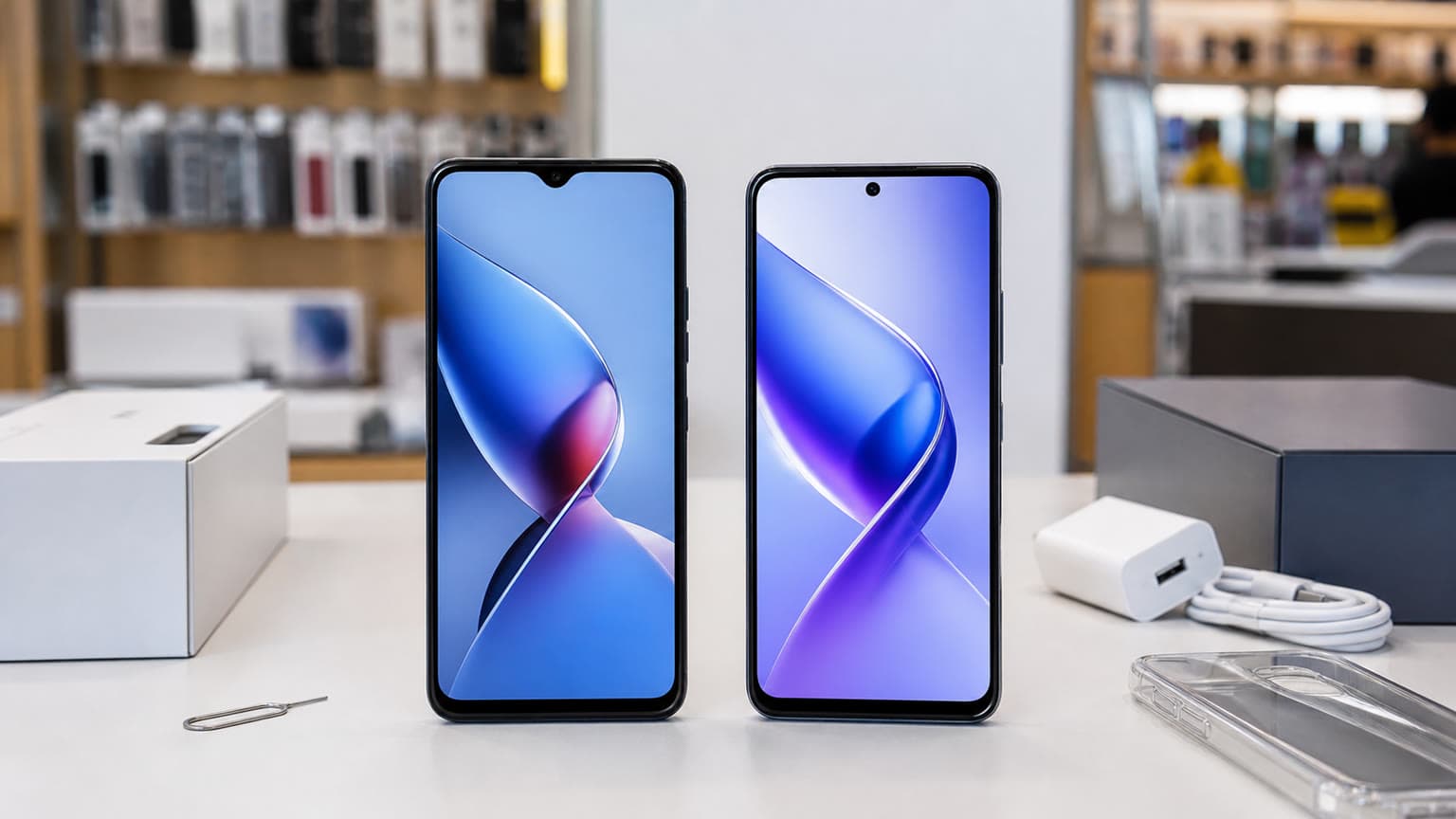
The 6000mAh battery and 33W wired charging are the Redmi 15C's strongest everyday advantages.
Key specs and buying context
The headline feature is the 6000mAh battery. In practical terms, that gives the Redmi 15C a strong advantage for people who spend long hours away from a charger, deal with power cuts, tether mobile data, run WhatsApp Business all day, stream video, or use maps and calls heavily. A big battery also helps the phone age better, because capacity naturally degrades over years of charging. If battery life is your first priority, the Redmi 15C has a clearer argument than many lighter budget phones.
The 33W wired charging support is also useful, especially when paired with a large battery. It is not flagship-fast charging, but it is a healthy number in this price class. Buyers who care about charging should also check charger compatibility and box contents at the point of purchase, because retail bundles can vary by market. Ogabassey’s broader charging explainer, How Fast Can Your Phone Charge?, is useful if you want to understand why wattage, cable quality and charger standard all affect real charging speed.
The display is where the biggest trade-off starts. Redmi 15C gives you a very large 6.9-inch Dot Drop display and up to 120Hz refresh rate, which should make scrolling and supported animations feel smoother than a basic 60Hz panel. The resolution, however, is 1600 x 720 pixels, so it is HD+, not Full HD+. That means the phone prioritises size and smoothness over pixel density. For TikTok, YouTube, WhatsApp, reading messages and casual browsing, many buyers will accept that. For long reading sessions, small text, spreadsheets, photo editing or anyone sensitive to display sharpness, a Full HD+ phone may feel cleaner.
The MediaTek Helio G81-Ultra with Mali-G52 MC2 graphics is a 4G-focused budget chipset. It should be approached as an everyday-performance platform for calls, messaging, social media, banking apps, light editing, streaming and casual games. It is not the right reason to buy if you expect heavy gaming, long high-frame-rate sessions or the responsiveness of a higher Redmi Note or Poco model. If you can afford it, the 6GB/128GB or 8GB/256GB versions are easier to recommend than the 4GB/128GB version for buyers who keep many apps open.
Camera expectations should also be realistic. The rear camera is listed as a 50MP main camera with f/1.8 aperture, HDR, night mode, portrait mode and 1080p video at 30fps. There is no OIS. That means the Redmi 15C is better framed as a daylight, social-sharing and document-photo phone than a serious video or low-light camera phone. The 8MP front camera with HDR, portrait mode and night mode is adequate on paper for video calls and simple selfies, but creators should look higher up the range.
Decision scorecard
Area
Catalog or official fact
Buyer judgement
Battery
6000mAh, non-removable
Strong fit for long days, commuting, school and business use.
Charging
33W wired charging
Good for the class, but charger and cable quality still matter.
Display
6.9-inch, 120Hz, 1600 x 720 HD+
Large and smooth, but not as sharp as Full HD+ options.
Performance
MediaTek Helio G81-Ultra, Mali-G52 MC2
Fine for everyday use; not a heavy gaming choice.
Camera
50MP rear, 8MP front, no OIS, 1080p 30fps video
Best for casual photos, not serious low-light or stabilised video.
Network
4G LTE, no 5G
Good for many Nigerian buyers today, but not future-facing.
Storage
microSD expansion up to 1TB; 4GB/128GB, 6GB/128GB, 8GB/256GB listed
Expandable storage is a real advantage for media-heavy users.
Durability
IP64 dust and splash resistance
Useful protection against dust and light splashes, not waterproofing.
Availability
Ogabassey status: in stock; inventory policy: unmanaged
Catalog availability is active, but numeric stock count does not cap availability.
What unmanaged stock means on Ogabassey
The Redmi 15C listing is marked in stock on Ogabassey, while the numeric stock quantity is 0 and the inventory policy is unmanaged. That is not the same as a normal out-of-stock listing. In this catalog context, unmanaged stock means availability is not capped by the numeric stock count. The product can remain available for checkout or request flow even when the stored quantity number is zero.
For buyers, the practical reading is simple: rely on the live product page and checkout availability, not just the stock number. For editors and support teams, the safer language is “listed as in stock with unmanaged inventory” instead of “X units available.” That avoids making a hard stock promise from a field that is not being used as a strict warehouse counter.
This also affects warranty and trust framing. Buyers should prefer a clean catalog purchase flow, clear variant selection, and a seller that can confirm the RAM/storage option being supplied. The Redmi 15C supports dual SIM plus microSD, has a side fingerprint sensor, USB Type-C, Bluetooth 5.4, Wi-Fi 2.4GHz/5GHz, NFC where available, and a headphone jack. Those details are useful because they reduce accessory friction for Nigerian buyers moving from older Redmi, Tecno, Infinix or Samsung budget phones.
Buyers should compare Redmi 15C with Redmi 15 and Redmi 15C 5G when display quality, performance or 5G matter more.
Trade-offs to know before paying
The first trade-off is 4G. Redmi 15C does not support 5G. That is acceptable if your main concern is battery, price and reliable 4G coverage, especially outside areas where 5G service is meaningful to your routine. It becomes a limitation if you want to keep the phone for several years and specifically want faster 5G data where available in Lagos, Abuja or other covered areas.
The second trade-off is the HD+ display. A 120Hz refresh rate improves motion smoothness, but it does not make the panel sharper. If you are coming from an older 720p phone, the Redmi 15C may feel spacious and smoother. If you are coming from a Full HD+ Redmi Note, Samsung A-series or iPhone, the lower resolution may be obvious, especially with text and detailed images.
The third trade-off is camera stabilisation. The 50MP main camera gives Redmi 15C a strong marketing number, but the absence of OIS matters for shaky hands, night scenes and walking video. If your phone is mainly for family photos, receipts, social media posts and daylight shots, that is fine. If you shoot events, products, food content or low-light video, move up the range.
The fourth trade-off is software certainty. The product description says Redmi 15C runs Xiaomi HyperOS 2, but the candidate data does not provide a guaranteed Android version, release date or update commitment. That does not mean the phone will not receive updates; it means this draft should not invent a long update promise. Buyers who prioritise long security support should confirm Xiaomi’s regional update policy before purchase.
When to choose Redmi 15 or Redmi 15C 5G instead
Choose Redmi 15C if the lower starting price, big 6000mAh battery, microSD expansion, 3.5mm jack and simple 4G reliability are the main attractions. It is the sensible pick for a buyer who wants a new phone for everyday communication, media and banking without paying extra for features they may not use.
Consider Redmi 15 instead if you want a more rounded mainline model and can pay more for stronger overall balance. The first-party search data shows buyers are already asking about “redmi 15 price,” which suggests some shoppers are comparing Redmi 15C against the non-C model. Without a supplied Redmi 15 spec matrix in this assignment, this article will not invent exact differences. The buying logic is that the non-C model is worth checking if display sharpness, camera balance or performance matters more than reaching the lowest Redmi 15-series entry price.
Consider Redmi 15C 5G if 5G is the feature you do not want to compromise on. That matters for buyers who live or work in stronger 5G coverage areas, download large files often, hotspot laptops, or plan to keep one phone for a long time. The 4G Redmi 15C can still be the better value if your network plan, location and daily use are mostly 4G. Browse the wider Ogabassey smartphones catalog when comparing available Xiaomi, Samsung, Tecno and Infinix alternatives in the same price band.
Verdict
Redmi 15C is a good budget choice if your buying priority is battery life first, screen size second, and 4G everyday reliability third. The 6000mAh battery, 33W charging, microSD expansion, headphone jack, large 120Hz display and active Ogabassey listing make it practical for Nigerian buyers who need a dependable daily phone.
Do not buy it expecting flagship camera quality, high-end gaming, 5G, stereo audio or a crisp Full HD+ display. The best version for most buyers is likely the highest RAM/storage option they can afford, because the chipset is budget-class and extra memory/storage will help the phone feel more comfortable over time. If your budget can stretch and 5G or sharper display quality is important, compare Redmi 15 and Redmi 15C 5G before settling on the 4G Redmi 15C.
FAQ
What is the Redmi 15C price in Nigeria?
Ogabassey catalog data listed Redmi 15C from ₦161,767.44 as of 2026-06-16, with higher variants up to ₦215,720.93. Check the live product page before paying because smartphone prices and available variants can change.
Is Redmi 15C a good phone for battery life?
Yes, battery life is the clearest reason to consider it. The Redmi 15C has a 6000mAh battery and 33W wired charging, making it a strong fit for long days, commuting, school, business calls and users who cannot charge often.
Does Redmi 15C support 5G?
No. The Redmi 15C in this catalog snapshot is a 4G LTE phone. Choose it if price and battery matter more than 5G. Consider Redmi 15C 5G or another 5G phone if your location, data plan and usage make 5G important.
Should I buy Redmi 15C or Redmi 15?
Buy Redmi 15C for lower-cost battery value and everyday 4G use. Check Redmi 15 if you can pay more and want a potentially more balanced model. This draft does not invent Redmi 15 specs because they were not included in the evidence snapshot.