Bassey John is a Performance Marketing Specialist at Ogabassey with cross-industry experience spanning e-commerce, gaming, and real estate. He focuses on paid acquisition, conversion-rate optimisation, and data-driven growth strategy, turning campaign performance into measurable revenue. At Ogabassey he writes about consumer technology, product buying guides, and the Nigerian gadget market to help shoppers make confident, informed decisions.
If you want the stronger Tecno tablet for study, streaming, split-screen work and longer sessions, choose the Tecno Mega Pad Pro. If the budget matters more and you mainly need a simple Android tablet for classes, reading, YouTube and light browsing, the Tecno Megapad 10 is the better-value pick.
Decision summary
This comparison is catalog-verified from the current Ogabassey tablet snapshot, with official-source context where available. It is not a hands-on review, so it does not claim lab battery life, benchmark scores, speaker testing or real-world drop durability. The useful buyer question is simpler: which Tecno tablet makes more sense for Nigerian shoppers who want a large-screen device without moving up to premium iPad or Galaxy Tab pricing?
The Tecno Mega Pad Pro is the more capable option on paper. It has a larger 12.0-inch IPS LCD, sharper 2000 x 1200 resolution, 90Hz refresh rate, 8GB RAM, 256GB storage, microSDXC support, a MediaTek Helio G100 chipset, a 10000mAh battery and 33W charging. Ogabassey lists it at NGN 307,600 in the provided catalog snapshot, with live availability and the exact selected variant still to be confirmed before checkout.
The Tecno Megapad 10 is the more affordable, smaller and simpler tablet. It has a 10.1-inch LCD, 1280 x 800 resolution, 60Hz refresh rate, 4GB RAM, 128GB storage, a MediaTek MT8786 / G80 platform, a 7000mAh battery and 18W charging. Ogabassey lists it at NGN 218,400 in the same snapshot. That makes the Mega Pad Pro NGN 89,200 more expensive, but the upgrade buys a larger display, more RAM, more storage, faster charging and a much bigger battery.
For most buyers comparing these two on Ogabassey Tablets, the best decision depends on whether the tablet is a primary work/study screen or a secondary entertainment and reading device. The Pro is easier to recommend for students who keep multiple apps open, creators who want more canvas space, and families who want one shared tablet that feels less cramped. The Megapad 10 is easier to justify for a child, a secondary home tablet, a budget school device or a buyer who already has a laptop and only needs a portable Android screen.
Comparison table: key specs and buyer impact
Decision row
Tecno Mega Pad Pro
Tecno Megapad 10
Buyer meaning
Ogabassey catalog price
NGN 307,600
NGN 218,400
Megapad 10 saves NGN 89,200; Pro asks you to pay for a bigger productivity screen and stronger memory.
Screen size
12.0 inches
10.1 inches
The Pro is better for split-screen notes, PDFs, lessons and video; the 10 is easier to hold.
Display resolution
2000 x 1200
1280 x 800
The Pro should look sharper for reading documents and watching content.
Display type
IPS LCD
LCD
Both are LCD tablets; no OLED claim is supported by the catalog snapshot.
Refresh rate
90Hz
60Hz
The Pro has the smoother listed refresh rate for scrolling and general navigation.
Peak brightness
450 nits listed
Not listed
The Pro has a brightness figure in the catalog; the 10 does not in this snapshot.
Chipset
MediaTek Helio G100
MediaTek MT8786 / G80
The Pro has the more performance-focused catalog listing.
RAM
8GB
4GB
The Pro is safer for multitasking and heavier Android use.
Storage
256GB
128GB
The Pro gives more room for offline videos, files, apps and school materials.
Card slot
microSDXC listed
Not listed
The Pro has expandable-storage support listed; do not assume the same for the 10.
Battery
10000mAh
7000mAh
The Pro has the larger battery capacity for longer untethered use.
Charging
33W
18W
The Pro has faster listed charging, useful if power supply is inconsistent.
Weight
547g
495g
The Megapad 10 is lighter; the Pro trades weight for screen and battery size.
Headphone jack
No headphone jack listed
Headphone jack listed
The Megapad 10 is friendlier for wired school headphones and simple media use.
Android version
Android 14
Android 14
Both are listed with Android 14; long-term update policy is not stated in the snapshot.
Main camera
8MP
8MP
Neither should be bought mainly for camera quality based on the provided specs.
Price and value
The Megapad 10 has the obvious price advantage. At NGN 218,400 in the catalog snapshot, it is the tablet to consider first if the purchase is for basic school work, online classes, recipe videos, reading, social apps or as a shared family screen. It also has the practical advantage of a listed headphone jack, which still matters in schools, churches, training centers and homes where Bluetooth accessories are not always available or charged.
The Mega Pad Pro costs more, but the upgrade is not cosmetic. The jump from 10.1 inches to 12.0 inches changes how the tablet can be used. A 12-inch screen is more comfortable for two-window use, landscape video calls, digital textbooks, spreadsheets, Canva-style design work and long PDF reading. The Pro also doubles RAM from 4GB to 8GB and storage from 128GB to 256GB, which matters if the buyer plans to keep the tablet for several years instead of replacing it quickly.
For Nigerian buyers, the value calculation should include accessory and power realities, not just the upfront price. A tablet used in a hostel, shop, school or field office may spend long stretches away from a wall socket. The Pro's 10000mAh battery and 33W charging are meaningful advantages on paper. The Megapad 10's 7000mAh battery and 18W charging are still reasonable for a budget tablet, but the Pro has the more forgiving battery specification if the device is used heavily during the day.
Availability also needs a human check before money changes hands. The product snapshot asks shoppers to confirm exact regional model, selected variant price and live availability before checkout. That is especially important because tablet listings can vary by RAM, storage, Wi-Fi or cellular configuration. If you are buying through Ogabassey, open the current Tecno Mega Pad Pro product page or the Tecno Megapad 10 product page and confirm the variant shown at checkout, not only the article price.
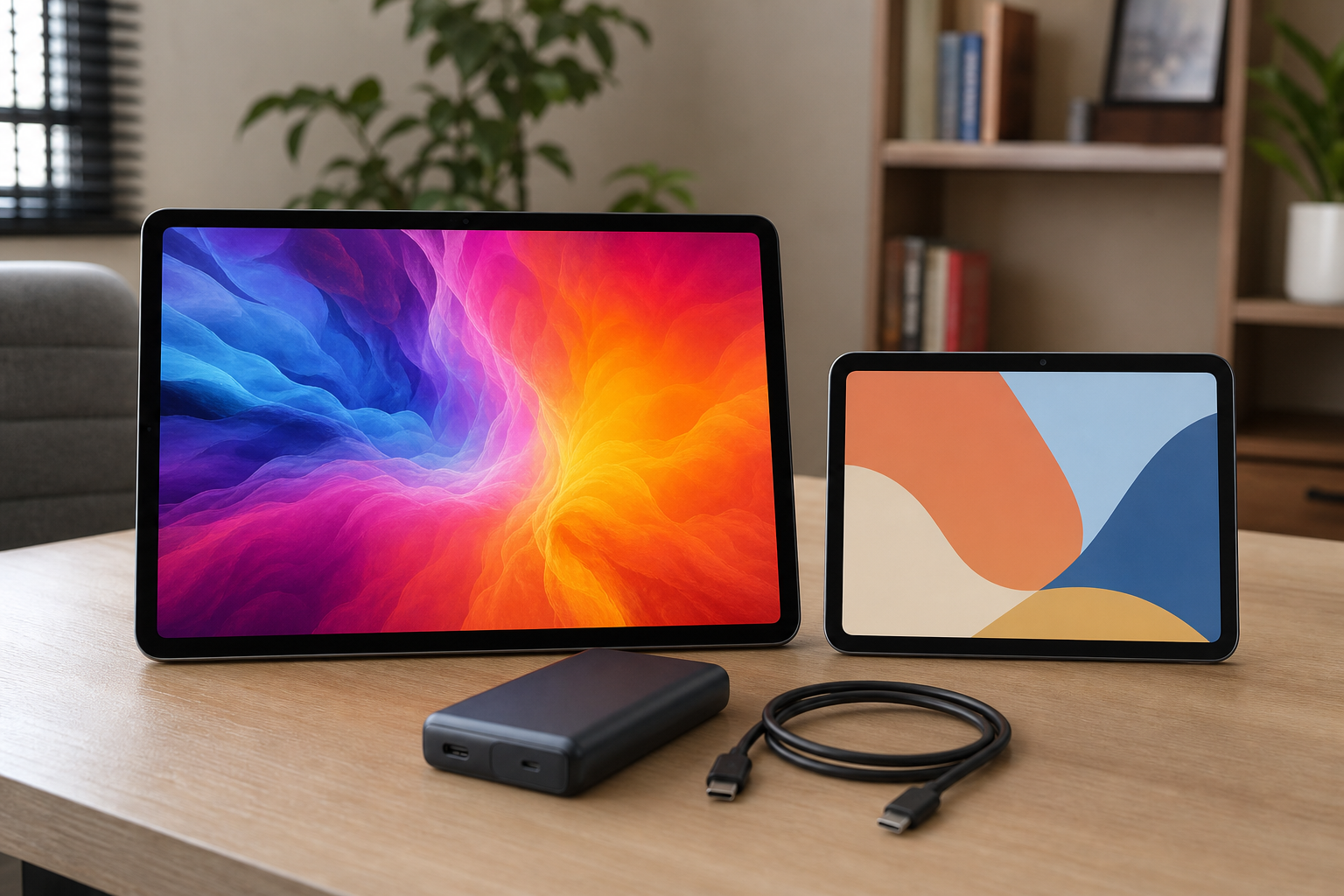
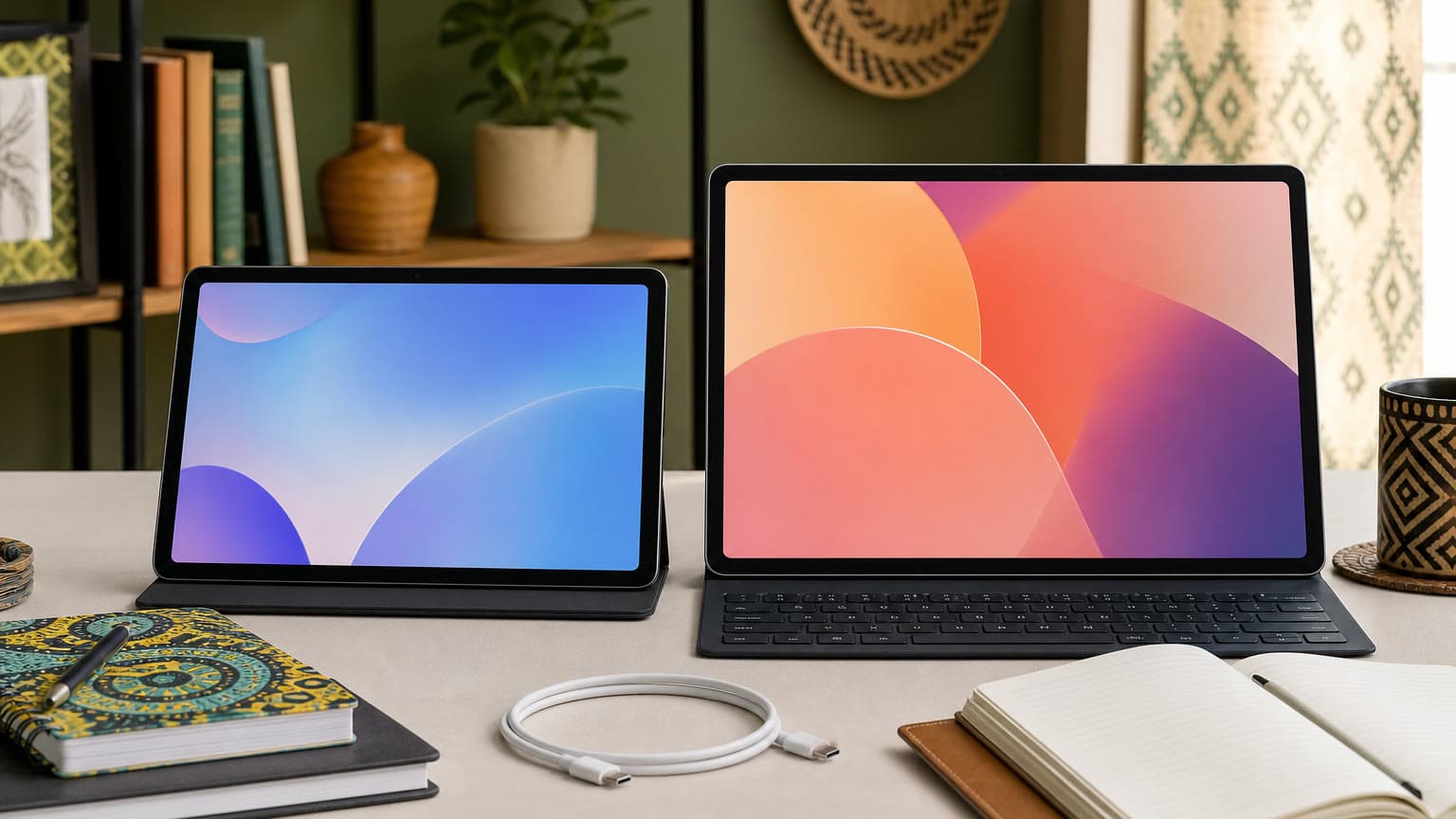
Battery, charging speed and display size are the biggest practical differences between these two Tecno tablets.
Performance and daily use
The Mega Pad Pro is the safer choice for heavier everyday Android use. Its MediaTek Helio G100 listing, 8GB RAM and 256GB storage give it more room for multitasking than the Megapad 10. This does not make it a laptop replacement for everyone, but it should suit a buyer who wants to move between Chrome tabs, Google Docs, lessons, video apps, WhatsApp, file storage and note-taking without constantly managing space.
The Megapad 10 is better understood as a focused budget tablet. Its 4GB RAM and 128GB storage are acceptable for light use, but they leave less headroom if the user installs many apps, downloads lots of video, or expects the tablet to behave like a compact laptop. It is best for a buyer who already knows the workload will stay simple: streaming, reading, checking mail, using learning apps, attending video classes and browsing.
Neither product snapshot confirms official keyboard or stylus bundles, and that matters. Many buyers ask whether a tablet is enough instead of a laptop. The honest answer is that a tablet can replace a laptop only for specific workflows: reading, video, light documents, web apps, email, lessons, casual design, and note review. If typing long documents, using desktop software, coding, advanced spreadsheets or professional editing is the main job, neither of these Tecno tablets should be treated as a guaranteed laptop substitute without checking keyboard support, app requirements and accessory availability.
Stylus compatibility also should not be assumed. The snapshot does not provide an official active-stylus standard for either tablet. A passive capacitive stylus may work like a finger on many touchscreens, but that is not the same as pressure-sensitive pen input. If handwriting, drawing or annotated PDFs are the main reason for buying, confirm the exact stylus support from the current product page or ask Ogabassey before checkout. For more big-screen Tecno context, the related Ogabassey guide on Tecno Mega Pad Pro for study, streaming and light creator work is the better next read.
Battery, display, and build
The display row is where the Pro separates itself most clearly. A 12.0-inch 2000 x 1200 IPS LCD at 90Hz is better suited to reading, multitasking and long video sessions than a 10.1-inch 1280 x 800 LCD at 60Hz. This is not just about size. The resolution difference means the Pro gives more pixels for text and interface elements, which matters if you read textbooks, invoices, Bible study materials, PDFs, slides or long web pages on the tablet.
The Megapad 10 can still make sense because smaller tablets are more comfortable for hand-held use. At 495g, it is lighter than the 547g Pro. That difference is not massive, but it becomes noticeable when a child is holding the tablet, when you are reading in bed, or when the device is passed around a classroom or shop. The 10.1-inch size is also easier to fit into smaller bags.
Battery capacity strongly favors the Pro. Its 10000mAh battery is larger than the Megapad 10's 7000mAh unit, and its 33W charging is faster than the 18W listing on the 10. That does not let us claim exact screen-on time, because this draft is not based on hands-on battery testing. It does, however, support the editorial judgement that the Pro is the better pick if long untethered sessions are a priority.
Both products list Android 14, which is good for current app compatibility, but neither snapshot gives a guaranteed software-update policy. Buyers who keep tablets for several years should treat this as a decision point. Ask about security updates, warranty handling and return conditions before checkout, especially if the device is for a school program, office deployment or family member outside your city. Ogabassey can list the products, but the buyer still needs the exact warranty and variant terms for the selected unit.
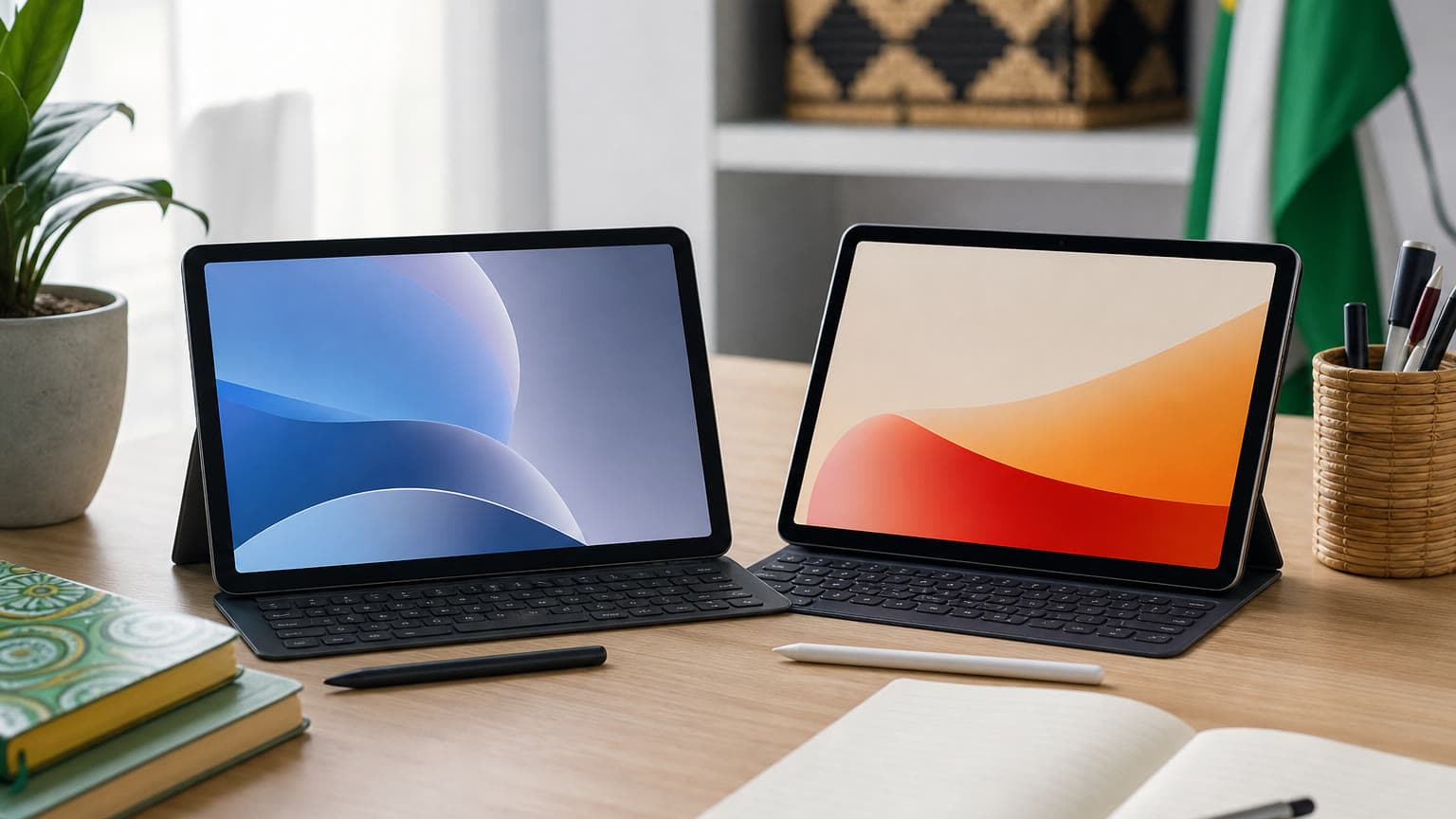
Keyboard and stylus needs should be confirmed for the exact variant before treating either tablet as a laptop alternative.
Who should buy each option
Buy the Tecno Mega Pad Pro if the tablet will be used as a main screen
Choose the Pro if the tablet is for university work, online classes, lesson planning, creator drafts, shared home entertainment or light office use. The larger and sharper 12-inch display, 8GB RAM, 256GB storage, microSDXC listing, 10000mAh battery and 33W charging give it the stronger long-term case. It is also the better choice if the buyer expects to keep many files offline, switch between apps often, or use the tablet for more than casual streaming.
Buy the Tecno Megapad 10 if price, portability and simplicity matter more
Choose the Megapad 10 if the tablet is mainly for YouTube, reading, children's learning apps, light browsing, video calls and basic school use. It costs less in the provided snapshot, weighs less, and includes a listed headphone jack. The trade-off is clear: lower resolution, smaller screen, half the RAM, half the listed storage, a smaller battery and slower charging. For many light users, that trade-off is acceptable.
Alternatives and related comparisons
If you are not fixed on these two models, compare the broader Ogabassey tablet category before deciding. The right alternative depends on whether you need a bigger battery, a children's tablet, a premium pen display, or a stronger productivity tablet. Ogabassey's related comparison of Tecno Mega Pad Pro vs Mega Pad SE is useful if you like the Pro but want another big-battery Tecno option in the decision set.
The related Tecno Mega Pad SE vs Tecno Megapad 10 comparison is useful if the Megapad 10 feels affordable but you are worried about battery and screen size. If you are comparing beyond Tecno, the iPad Pro M4 vs Galaxy Tab S10 Ultra productivity comparison shows what premium tablet productivity looks like at the other end of the market. Those options are not direct budget rivals, but they help set expectations around keyboards, pens, display quality and laptop replacement claims.
Verdict
The Tecno Mega Pad Pro is the better tablet if you can justify the extra NGN 89,200 in the current Ogabassey snapshot. The display row and battery row are the decisive differences: 12.0 inches at 2000 x 1200 and 90Hz with a 10000mAh battery and 33W charging give the Pro a stronger case for study, streaming, light productivity and shared family use. The RAM and storage rows reinforce that verdict because 8GB and 256GB give more headroom than 4GB and 128GB.
The Tecno Megapad 10 is still the practical pick if the buyer wants a lower-cost tablet for simple use. It is lighter, cheaper and has a listed headphone jack, which may matter more than a bigger display for children, casual media users and school environments with wired headsets. Just do not buy it expecting the same multitasking comfort or long-term storage breathing room as the Pro.
Final recommendation: choose the Mega Pad Pro for a main tablet and choose the Megapad 10 for a budget secondary tablet. Before checkout, confirm live availability, exact RAM/storage variant, Wi-Fi or cellular configuration, accessory support, warranty terms and return conditions on the relevant Ogabassey product page.
FAQ
Which Tecno tablet should I buy in Nigeria, Mega Pad Pro or Megapad 10?
Buy the Mega Pad Pro if you want the stronger screen, battery, RAM and storage. Buy the Megapad 10 if you want the lower price and only need light study, reading, streaming and browsing.
Can either Tecno tablet replace a laptop?
Only for light workflows. They can handle reading, video, browsing, email, basic documents and learning apps. For long typing, advanced spreadsheets, coding or desktop software, confirm keyboard support and app requirements before treating either as a laptop replacement.
Do these Tecno tablets support a keyboard or stylus?
The provided catalog snapshot does not confirm official keyboard or active-stylus support for either model. Confirm accessory compatibility for the exact regional variant before checkout, especially if note-taking or drawing is a major reason for buying.
Which one has the better battery and display?
The Mega Pad Pro has the stronger listed specs: 10000mAh battery, 33W charging, 12.0-inch 2000 x 1200 display and 90Hz refresh rate. The Megapad 10 lists 7000mAh, 18W charging, 10.1 inches, 1280 x 800 and 60Hz.