Bassey John is a Performance Marketing Specialist at Ogabassey with cross-industry experience spanning e-commerce, gaming, and real estate. He focuses on paid acquisition, conversion-rate optimisation, and data-driven growth strategy, turning campaign performance into measurable revenue. At Ogabassey he writes about consumer technology, product buying guides, and the Nigerian gadget market to help shoppers make confident, informed decisions.
Evidence level: this is a catalog-verified comparison using the Ogabassey product snapshot and manufacturer research context available for both tablets. It is not a hands-on review, benchmark test, battery drain test, or repair teardown. Prices, storage options, and listed specs should be confirmed on the product page before checkout because regional variants and live availability can change.
Decision summary
The choice between the Samsung Galaxy Tab A11 LTE and the Samsung Galaxy Tab A11+ 5G is not just a small-tablet-versus-big-tablet question. For Nigerian buyers, it is also a budget, network, portability, screen comfort, storage, and replacement-for-a-small-laptop question. The Tab A11 LTE is the lower-cost and more portable option, listed from ₦198,000 in the supplied Ogabassey catalog snapshot, with an 8.7-inch 90Hz LCD/TFT display, 1340 x 800 resolution, 5100mAh battery, LTE-class connectivity, and 64GB or 128GB storage options. The Tab A11+ 5G costs more, listed from ₦388,000, but moves up to an 11.0-inch 90Hz LCD/TFT display, 1920 x 1200 resolution, a 7040mAh battery, 5G support, and 128GB or 256GB storage options.
For most students who want a tablet for reading PDFs, joining online classes, streaming, checking email, and carrying something light, the Tab A11 LTE is the more sensible starting point. It saves money upfront and its smaller screen is easier to hold in one hand. For buyers who expect to type more, watch longer videos, keep split-screen apps open, store more media, or use mobile data heavily where 5G coverage is available, the Tab A11+ 5G is the stronger long-term pick. The extra NGN 80,000 at the entry price is buying a larger and sharper display, bigger battery, faster network class, and higher storage ceiling, not just a plus sign in the name.
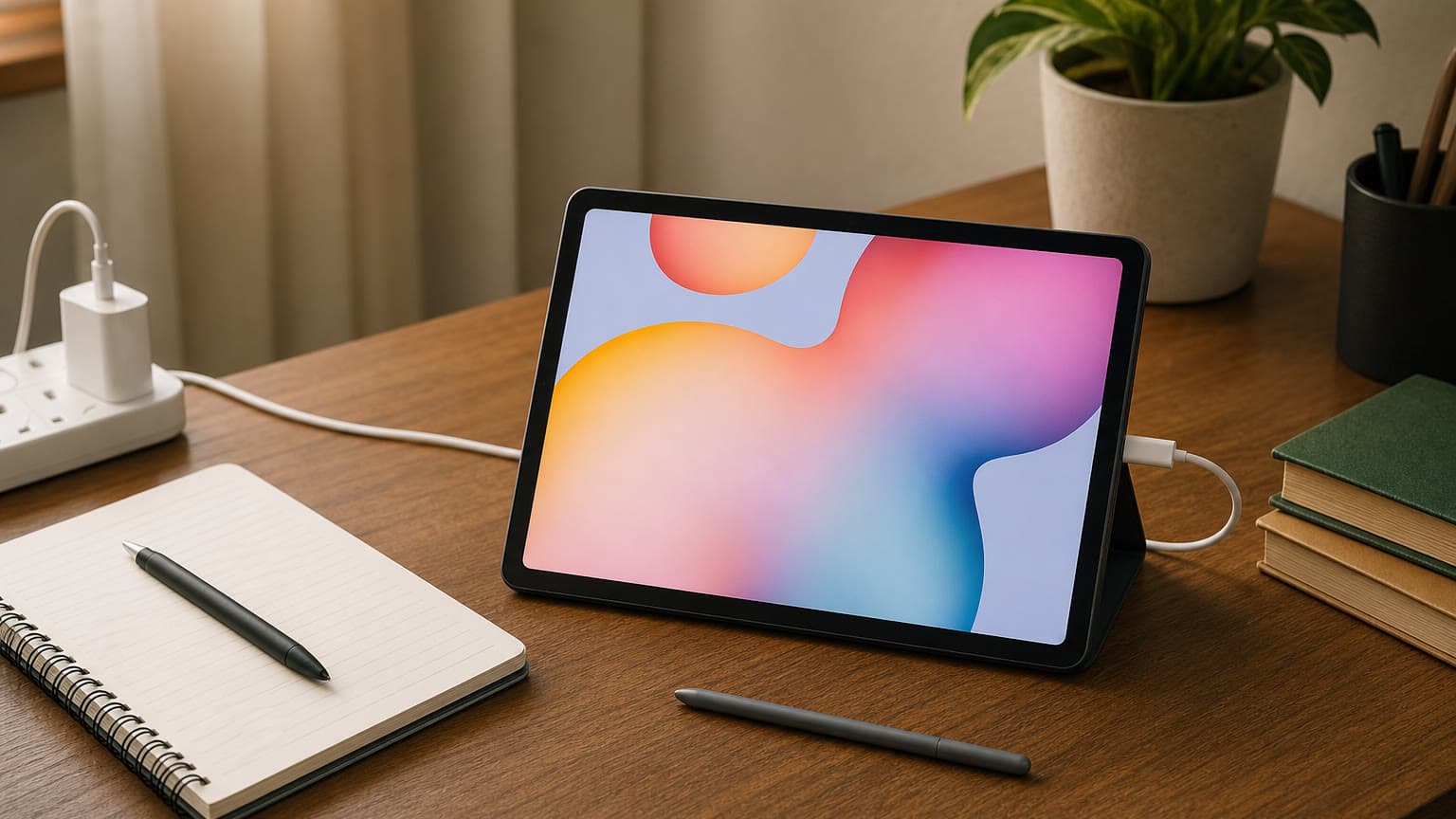
The Tab A11 LTE is the easier model to carry for reading, streaming, and school notes.
Catalog comparison table
Decision point
Samsung Galaxy Tab A11 LTE
Samsung Galaxy Tab A11+ 5G
Buyer meaning
Ogabassey listed starting price
₦198,000
₦388,000
The A11 LTE is the lower-entry option; the A11+ 5G asks for about NGN 80,000 more at the listed starting prices.
Catalog price range
₦198,000 to NGN 270,000
₦388,000 to NGN 360,000
Variant choice can widen the gap, so compare the exact storage and connectivity variant before paying.
Screen size
8.7 inches
11.0 inches
The A11 LTE is easier to carry; the A11+ 5G is better for documents, video, multitasking, and typing setups.
Display type
LCD/TFT
LCD/TFT
Both use the same broad display class in the catalog; neither should be treated as an OLED tablet from the supplied data.
Resolution
1340 x 800
1920 x 1200
The A11+ 5G has the sharper catalog-listed panel, useful for reading and split-screen work.
Refresh rate
90Hz
90Hz
Both list 90Hz, so smooth scrolling is not the main reason to upgrade.
Battery capacity
5100mAh
7040mAh
The A11+ 5G has the bigger listed battery, though real endurance still depends on brightness, network use, and apps.
Charging
15W
25W
The A11 LTE supports 15W charging, while Samsung lists up to 25W for the A11+ 5G.
Connectivity class
LTE tablet platform; 5G not listed
MediaTek 5G tablet platform; 5G listed
The A11+ 5G is the better option if mobile-data speed and future network flexibility matter.
Storage options
64GB, 128GB
128GB, 256GB
The A11+ 5G starts higher and has more headroom for offline videos, school files, and apps.
RAM
Confirm exact RAM for selected variant
Confirm exact RAM for selected variant
Do not assume RAM from the name; confirm the exact variant on checkout.
Main camera
8MP
8MP
Camera is not a differentiator from the supplied catalog facts.
Android version listed
Android 14
Android 14
Both are listed with Android 14; no future update duration is provided in the snapshot.
Stylus compatibility
Not listed
Not listed
Do not buy either mainly for pen work unless the exact S Pen or stylus support is confirmed for the regional model.
Keyboard compatibility
Not listed
Not listed
Bluetooth keyboards may be possible in general Android use, but official keyboard-cover support is not confirmed here.
Availability status in snapshot
Active product row; stock quantity shown as 0
Active product row; stock quantity shown as 0
Treat both as products to confirm for live availability before checkout.
Price and value in Nigeria
The Tab A11 LTE has the cleaner value story if your budget is fixed. At the supplied starting price of ₦198,000, it is positioned for shoppers who want a Samsung tablet without moving into higher-end Galaxy Tab pricing. The strongest reasons to choose it are simple: lower entry price, pocketable or small-bag size, cellular data support, 90Hz refresh rate, and enough storage choice for basic school or entertainment use. If the buyer already has a laptop and only needs a second screen for reading, YouTube, light browsing, children’s learning apps, church notes, WhatsApp Web, or travel entertainment, paying extra for the larger 5G model may not be necessary.
The Tab A11+ 5G is better value when the tablet is expected to do more of the daily workload. Its supplied starting price of ₦388,000 is higher, but the upgrade is visible in the areas buyers notice every day: screen size, resolution, battery capacity, 5G support, and storage ceiling. In a Nigerian home where the tablet may be shared by a parent, student, and younger child, the larger screen can make the device feel less cramped. For small business use, it can be more comfortable for inventory sheets, invoices, web dashboards, video meetings, and long chats with customers. It is still not a guaranteed laptop replacement from the supplied specs, but it is the model that makes more sense if you want to pair a tablet with a keyboard and use it at a desk.
For current Ogabassey tablet availability beyond these two models, the broader Ogabassey Tablets category is the better place to check alternatives, storage variants, and live listing changes. Because both product rows ask shoppers to confirm exact regional model, selected variant price, and live availability before checkout, the final buying decision should be made from the actual variant page, not only from the base price.
Performance and daily use
The supplied catalog does not provide benchmark scores, CPU core details, RAM capacity, GPU, or measured gaming results for either tablet, so it would be misleading to declare one a tested performance winner. What can be said from the available data is that the Tab A11 LTE is described around a MediaTek LTE tablet platform, while the Tab A11+ 5G is described around a MediaTek 5G tablet platform. That suggests the plus model is the more ambitious configuration, but regional model codes still need confirmation. For everyday use, the practical difference is likely to be less about raw performance claims and more about screen space, storage, connectivity, and how many apps the buyer expects to keep open.
If your use is mostly reading lecture slides, streaming, browsing, children’s learning apps, and keeping a few lightweight apps installed, the A11 LTE fits the job. Its 8.7-inch size is a benefit when the device will be carried between classes, buses, work, and home. It also makes sense for parents who want a controlled device for a child without buying a large tablet that is harder to hold. The trade-off is that large PDFs, spreadsheets, and side-by-side apps will feel tight. The 1340 x 800 resolution is usable for basic consumption, but it is not as comfortable as the 1920 x 1200 panel on the A11+ 5G when text density matters.
The A11+ 5G is the better daily-use pick for people who live inside browsers, online classrooms, video calls, banking dashboards, document editors, and streaming apps. The 11-inch screen gives you more room for keyboard use and reduces the feeling that every app is a stretched phone interface. The storage options also start at 128GB and go up to 256GB in the supplied data, which matters because Android apps, downloaded videos, WhatsApp media, class files, and offline maps can quickly make a 64GB device feel cramped. If you are buying for a university student who may keep the tablet for several years, the higher storage ceiling is one of the strongest arguments for the plus model.
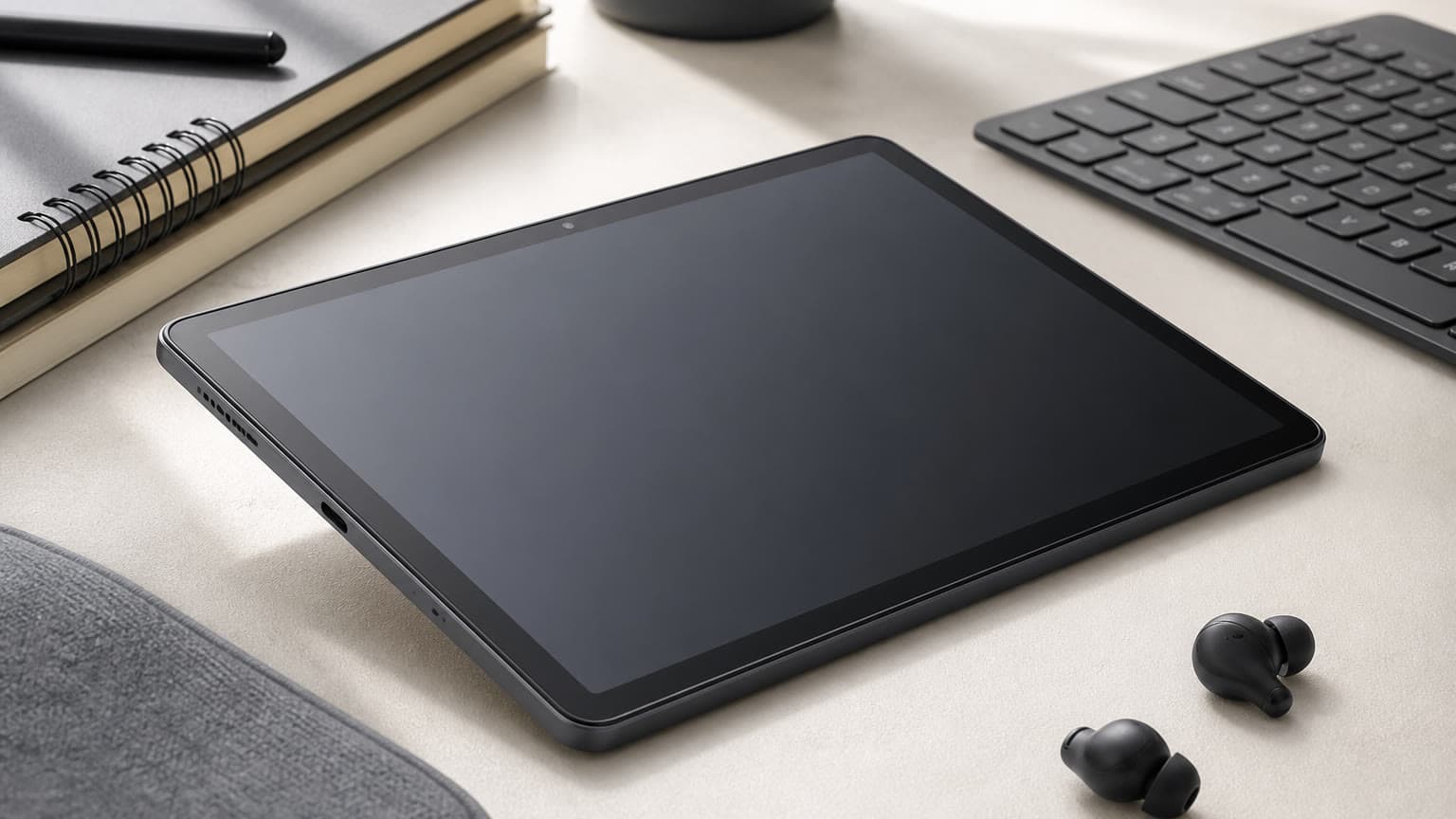
The Tab A11+ 5G is the more comfortable option for desk use, typing, video calls, and multitasking.
Battery, display, and build considerations
Battery is one of the clearest differences in the catalog snapshot. The Tab A11 LTE lists a 5100mAh battery, while the Tab A11+ 5G lists 7040mAh. That does not automatically mean the plus model lasts longer in every situation because it also has a larger, higher-resolution display and 5G hardware. Still, the extra capacity gives it more room for long video sessions, mobile hotspot-style use, online classes, and workdays away from a wall socket. The A11 LTE supports 15W charging, while Samsung lists up to 25W on the A11+ 5G; confirm the included charger before checkout.
Display comfort may matter even more than battery for many buyers. On paper, both tablets list LCD/TFT display technology and 90Hz refresh rate. The A11+ 5G pulls ahead because it combines the larger 11.0-inch size with 1920 x 1200 resolution, making it the better choice for textbooks, PDFs, web pages, and split-screen Android use. The smaller Tab A11 LTE is easier to hold for reading in bed or commuting, but its 8.7-inch panel and 1340 x 800 resolution make it more of a consumption tablet than a desk productivity tablet.
Build material, weight, dimensions, display brightness, display protection, IP rating, USB type, Bluetooth version, and speaker configuration are not listed in the supplied product key specs. That means buyers should avoid assumptions such as “water resistant,” “metal body,” “stereo speakers,” or “USB-C accessory ready” unless the exact product page or box confirms it. This is especially important in Nigeria because similar-looking regional variants can differ in included accessories, SIM configuration, memory, and warranty handling.
Accessory, stylus, and keyboard fit
Many tablet buyers are really asking whether a tablet can replace a small laptop. For this pair, the honest answer is: maybe for light work, but confirm accessories first. The supplied data does not list official stylus support or official keyboard-cover compatibility for either model. That makes both different from premium productivity tablets where pen and keyboard ecosystems are central to the purchase. If handwritten notes, drawing, design sketching, or precise stylus input are required, do not assume either tablet supports the accessory you have in mind. Confirm the exact regional model, supported accessories, and return policy before buying.
For keyboard work, the A11+ 5G still has the advantage because of its larger 11-inch screen. Even if you use a regular Bluetooth keyboard, the bigger display makes typing, editing, and video calls easier. The A11 LTE can pair with a keyboard in many general Android workflows if compatible hardware is used, but the small display limits comfort. If the buyer wants a tablet for WAEC/JAMB study, Google Docs drafts, email, Zoom-style calls, and web research, the plus model is the one to consider first. If the buyer mainly wants reading, streaming, and light note review, the smaller model is enough.
Who should buy each option?
Choose Samsung Galaxy Tab A11 LTE if
Choose the A11 LTE if price and portability matter more than screen space. It is the better fit for a student who already has access to a laptop, a parent buying for a child, a commuter who wants a light entertainment device, or a buyer who wants a Samsung tablet for reading and streaming without spending the extra money required for the plus model. Its LTE positioning also keeps it useful away from Wi-Fi, but buyers should confirm the exact SIM and regional connectivity details before checkout.
Choose Samsung Galaxy Tab A11+ 5G if
Choose the A11+ 5G if the tablet will be used as a more serious everyday screen. It is the better fit for online classes, longer reading sessions, split-screen use, business browsing, content review, video calls, and heavier media storage. The larger battery, larger and sharper display, 5G support, and 256GB storage option give it more room to age well. It is the more expensive tablet, but it is also the model that better answers the “can this do some laptop jobs?” question.
Alternatives worth checking
If neither A11 model feels right, the next step is to compare across the full tablet category. Buyers who want a stronger productivity tablet may need to move beyond this budget Samsung pair into larger tablets with clearer keyboard and stylus ecosystems. Ogabassey’s iPad Pro M4 vs Galaxy Tab S10 Ultra productivity comparison is useful if you are trying to understand what premium tablet productivity looks like before deciding whether a budget model is enough. Buyers considering older Samsung options can also read whether the Samsung Galaxy Tab A8 is still worth buying in Nigeria, especially if an older model appears at a lower price.
The key is to avoid buying only by brand name. A cheaper older tablet can be poor value if storage is too low, battery health is uncertain, software support is unclear, or accessories are hard to find. A newer tablet can also be poor value if it lacks the one feature you actually need, such as confirmed pen input or official keyboard support. Match the device to the job first: school reading, child use, business work, creator sketching, media watching, or laptop replacement.
Verdict
The Samsung Galaxy Tab A11 LTE is the better buy for budget-first shoppers who want a compact Samsung tablet for study, streaming, browsing, and simple everyday use. The Samsung Galaxy Tab A11+ 5G is the better buy for users who can justify the higher starting price because they need the larger 11-inch 1920 x 1200 display, bigger 7040mAh battery, 5G support, and higher 256GB storage option. The two most important differences are screen comfort and connectivity: the A11 LTE is cheaper and easier to carry, while the A11+ 5G is more comfortable for work and better prepared for faster mobile data where coverage exists. If you only need a second screen, buy the A11 LTE after confirming the exact variant. If this tablet will handle school, business, and entertainment as a main device, the A11+ 5G is the stronger choice.
Catalog-linked prices update automatically. Historical and other quoted prices remain as written. Open the product page to confirm the current price, selected variant and availability before buying.