Bassey John is a Performance Marketing Specialist at Ogabassey with cross-industry experience spanning e-commerce, gaming, and real estate. He focuses on paid acquisition, conversion-rate optimisation, and data-driven growth strategy, turning campaign performance into measurable revenue. At Ogabassey he writes about consumer technology, product buying guides, and the Nigerian gadget market to help shoppers make confident, informed decisions.
Google's May 19 I/O 2026 keynote confirmed the direction Android is taking: AI is moving from a separate app into the phone, browser, search, developer tools, wearables and XR devices. For Nigerian buyers, the useful takeaway is not that every phone with an "AI" badge is suddenly future-proof. It is that the next wave of Android features will depend more heavily on chipset class, RAM, on-device AI support, software update policy, battery health, storage, region rollout and after-sales support.
That matters because Android AI is no longer only about asking Gemini a question. Google's own Android pages now frame Gemini Intelligence as a proactive layer for select advanced devices, with requirements that include on-device Nano models, 12GB or more RAM, a qualified chipset and long OS/security support. In plain buying language: a cheap phone may still run the Gemini app, but it may not receive the deeper on-device or system-level AI features that Google showed for 2026.
If you are comparing phones now, start from a current shortlist of Android smartphones on Ogabassey, then judge each model by the practical checklist below instead of by marketing words alone.
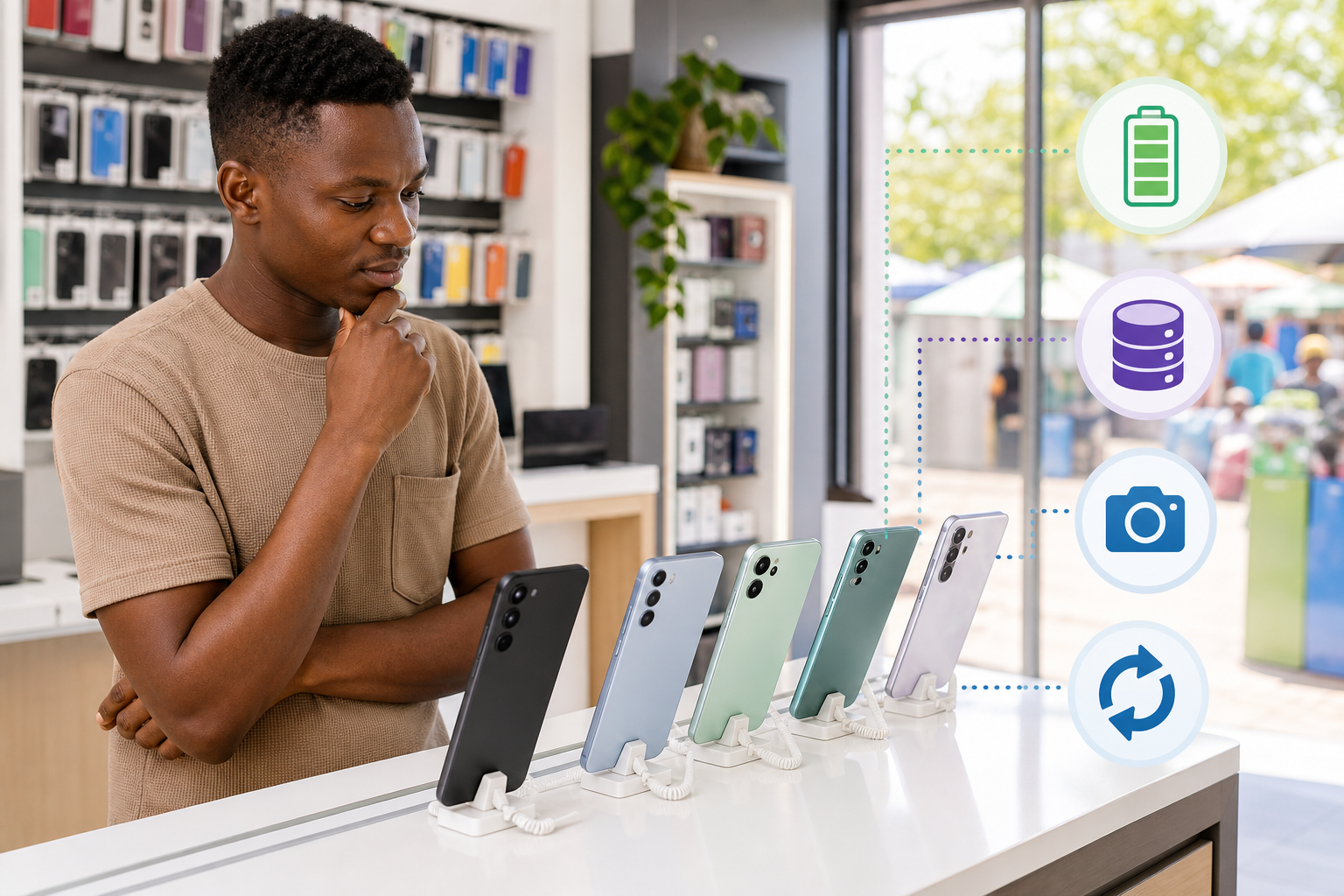
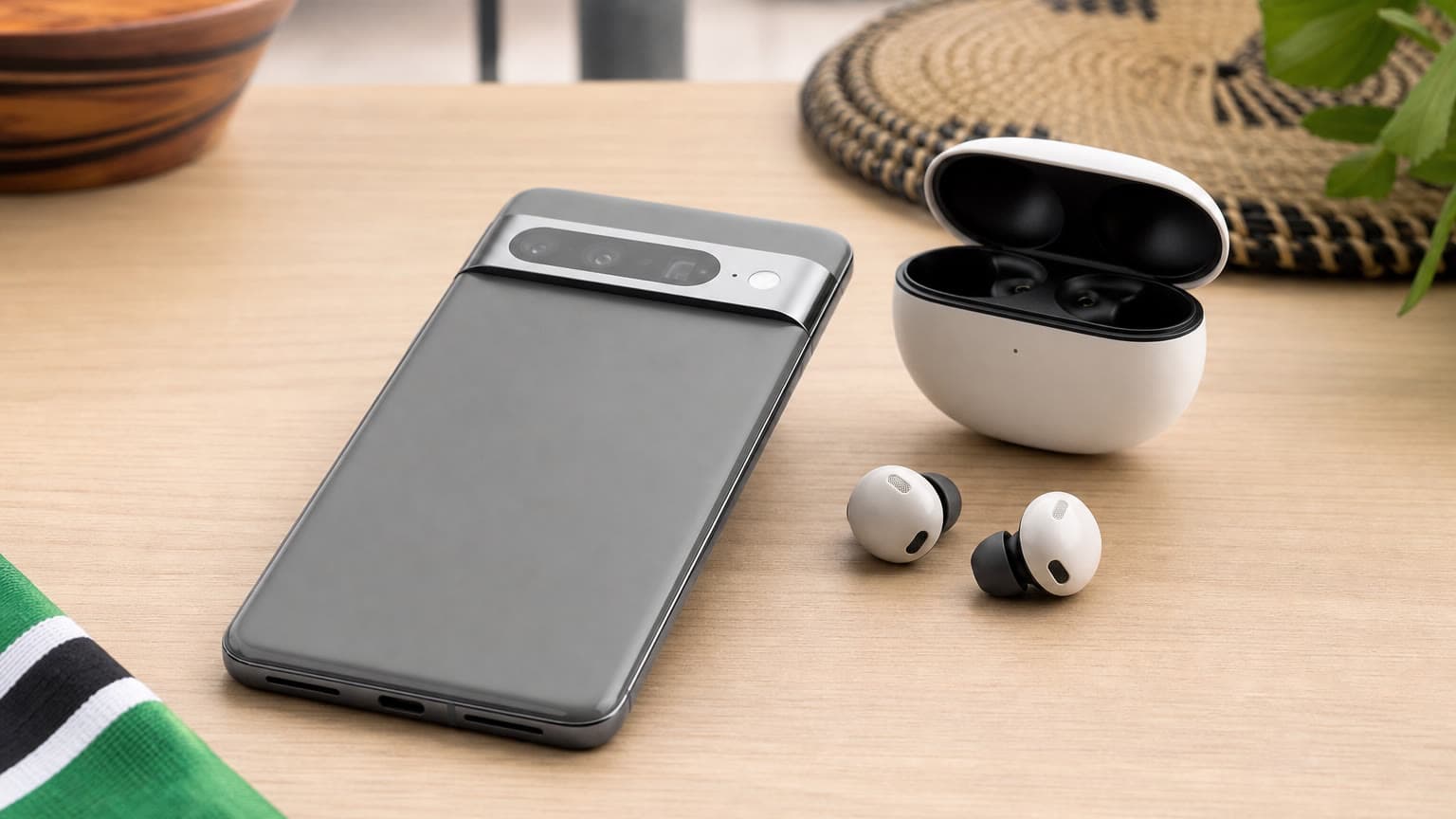
For 2026 phone shopping, balance AI claims with battery, storage, camera quality and update support.
Who this is for
This guide is for Nigerian buyers deciding whether to upgrade after Google I/O 2026, especially students, creators, small-business owners and Android users who keep a phone for three years or more. It is also for anyone choosing between Samsung, Pixel, Tecno, Infinix, Xiaomi, OPPO or a clean used flagship.
If your current phone is slow, short on storage, out of security updates or struggling with banking apps, maps, camera processing and WhatsApp backups, I/O 2026 is a useful signal to upgrade carefully. If your phone is still fast, has good battery health and is receiving updates, the keynote alone is not a reason to rush.
What changed at I/O 2026
Google's developer announcements focused on Android apps becoming easier to build with AI-assisted tools, more adaptive layouts and better performance testing. Google also highlighted Android 17 changes, including performance and system architecture improvements, privacy-related APIs and preparation for developers targeting the new platform. These are developer-facing changes, but buyers should still care because better tooling can eventually improve the apps Nigerians use daily: banking, ride-hailing, delivery, school portals, creator apps, games and business tools.
The consumer-side story is broader Gemini integration. Google's I/O roundup described new models, agents and tools across Search, Android, Google AI Studio and other services. Android XR also moved forward, with Google saying intelligent eyewear is coming later this fall through partners including Samsung, Qualcomm, Gentle Monster and Warby Parker. That makes Android feel less like a phone-only platform and more like a connected AI ecosystem.
The caveat is important: feature rollout is not the same as feature announcement. Availability can depend on phone model, country, language, account type, subscription tier, device certification and whether the feature runs locally or in the cloud. Nigerian buyers should treat AI features as a bonus unless the manufacturer clearly confirms support for the exact model and variant being sold.
Key specs and buying context
RAM and chipset: For a phone you want to keep into 2027 and beyond, 8GB RAM should be the practical floor for comfortable Android use, while 12GB RAM is the safer target if AI features are a priority. A recent flagship or upper-midrange chip is more valuable than a vague "AI processor" label because on-device AI, camera processing and gaming all depend on sustained performance.
Storage: Avoid 64GB for a main phone unless the budget is extremely tight. Android updates, WhatsApp media, offline videos, photos and app caches fill storage quickly. For most Nigerian buyers, 128GB is the minimum to consider, while 256GB is better for creators, students with downloaded lectures, and anyone recording a lot of video.
Battery and charging: AI camera tools, live translation, background assistants, hotspot use and navigation can increase power demand. Look beyond charger wattage. A phone with good battery endurance, available replacement parts and sensible heat control will age better than one that charges fast but runs hot.
Software support: Google's support page says Pixel 8 and later phones receive seven years of updates from first availability on the Google Store in the US. Samsung says the Galaxy S26 series receives seven generations of OS upgrades and seven years of security updates from global launch. Those long promises are useful, but they do not guarantee that every future AI feature will arrive on every supported phone. They mainly reduce the risk of being left behind on security and platform updates.
5G and network fit: 5G is worth paying extra for if you live, study or work in areas of Lagos, Abuja, Port Harcourt or other cities where your network already offers usable coverage. If most of your time is spent in weak 5G areas, a strong 4G phone with better battery, camera and warranty may be the better value.
Originality, warranty and repair: For imported or used phones, confirm network compatibility, battery health, screen originality, Face ID or fingerprint status, camera condition, charging port health and whether the seller provides a real warranty. A bargain Pixel or Galaxy flagship can become expensive if the display, battery or board needs repair and parts are scarce locally.
Trade-offs to watch
The biggest trade-off in 2026 is between "AI-ready" hardware and everyday value. A newer flagship may get more advanced on-device features, but many buyers will get better value from a balanced midrange phone with strong battery life, enough RAM and official local support. Do not sacrifice warranty, clean condition or battery health just to chase a feature that may roll out slowly or require a paid plan.
Camera quality is another trap. AI editing can improve photos, but it cannot fully fix a weak sensor, poor stabilization or bad low-light processing. If you create TikTok, Instagram, YouTube Shorts or product videos for business, prioritize real camera performance, microphone quality, stabilization and storage before AI filters.
There is also a budget split to consider. For school, office work, design, coding, accounting or online classes, a balanced phone plus one of the laptops on Ogabassey may be more useful than spending the full budget on a premium handset. Phones are getting smarter, but they still do not replace a proper keyboard, larger screen and desktop-class workflow for many tasks.
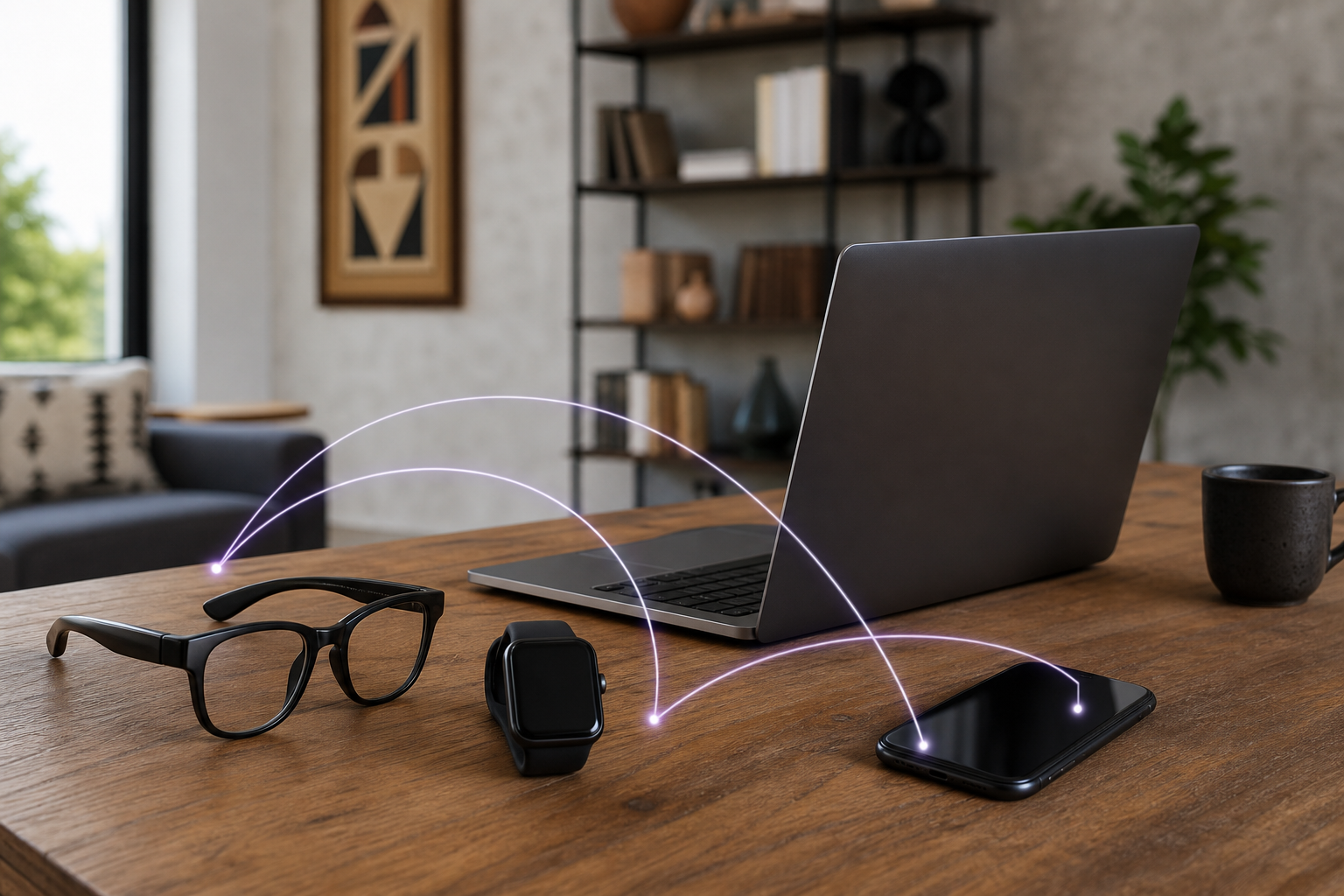
Google's AI push is expanding beyond phones, but wearables and XR still need practical local availability.
Alternatives and comparisons
Samsung Galaxy: Best for buyers who want wide accessory availability, stronger local familiarity, good resale demand and clearer support on recent flagships. Check the exact model, RAM, storage and warranty region before paying.
Google Pixel: Strong for clean Android, fast updates and Google's own AI features, but Nigerian buyers should be careful about import status, repair options, 5G band support and warranty coverage. A Pixel can be excellent value when bought from a trusted seller, but it is not always the safest repair choice.
Tecno and Infinix: Often stronger for local pricing, battery size, dual SIM expectations and service familiarity. They may be better daily-value choices if your priority is battery, storage and affordability rather than being first in line for Google's newest AI features.
Xiaomi, Redmi and POCO: Good for performance-per-naira and fast charging, but compare software policy, ads or bloatware, warranty source and camera consistency. A powerful chip is useful only if the software experience and after-sales path are acceptable.
iPhone: Still a valid alternative if your priority is long resale value, video quality, app polish and ecosystem stability. But this article is specifically about Android after Google I/O 2026; if you want Android flexibility, USB-C accessory range, sideloading options and wider price bands, Android remains the broader field.
Google I/O 2026 makes one thing clear: Android's next few years will reward phones with stronger chips, more RAM, longer updates and better device-level AI support. Nigerian buyers should not buy a phone only because the box says AI. Buy the phone that is strong today, has enough memory and storage, has a believable update path, supports your network, can be repaired locally and fits your real budget.
For most people, the sweet spot is a recent upper-midrange Android or a clean supported flagship with at least 8GB RAM, 128GB storage, good battery health, reliable cameras and a clear warranty. If advanced Gemini Intelligence features matter to you, move closer to 12GB RAM, flagship-class silicon and a model with explicit long-term support. If value matters more, put battery, storage, warranty and repairability first.