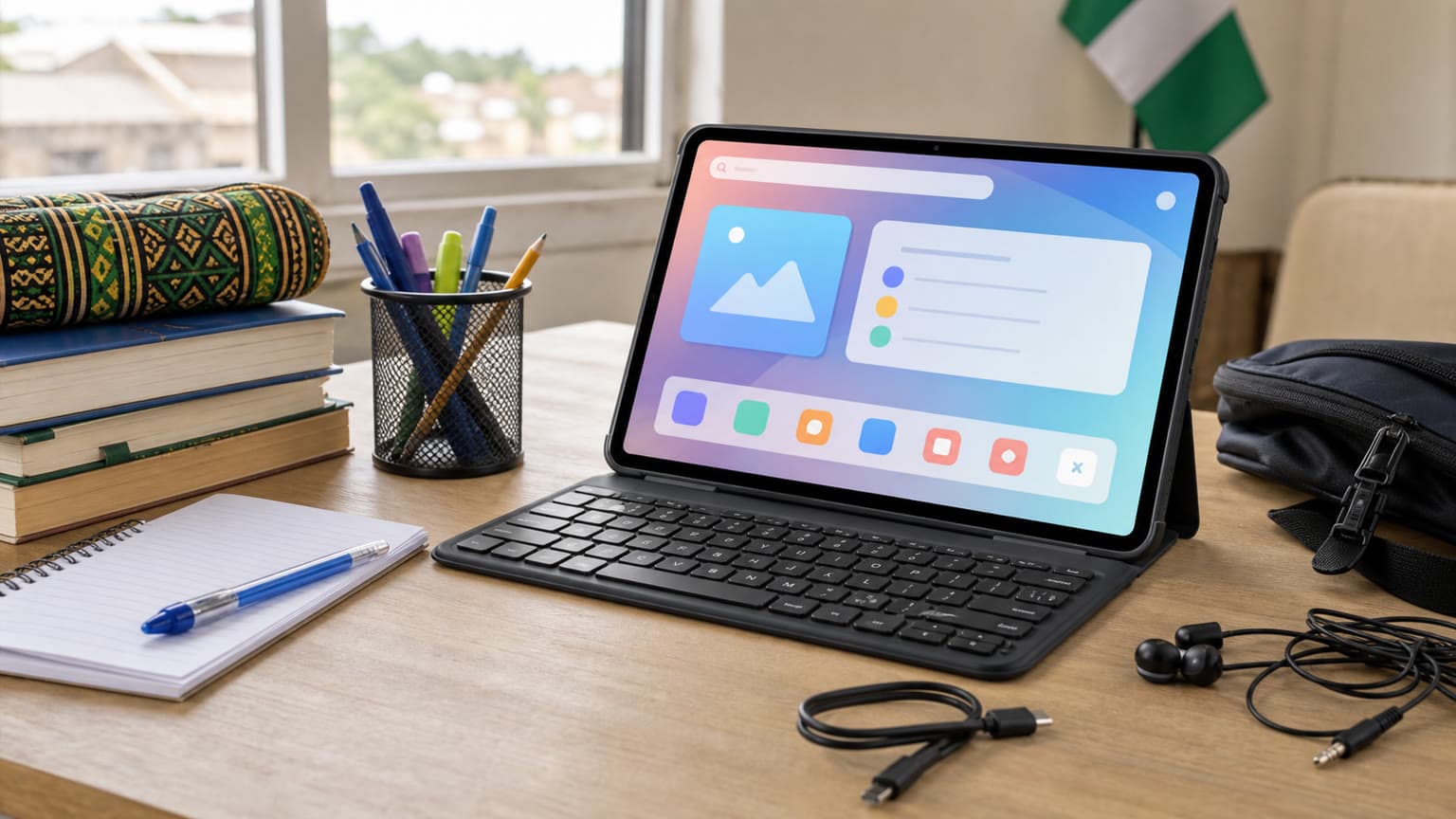
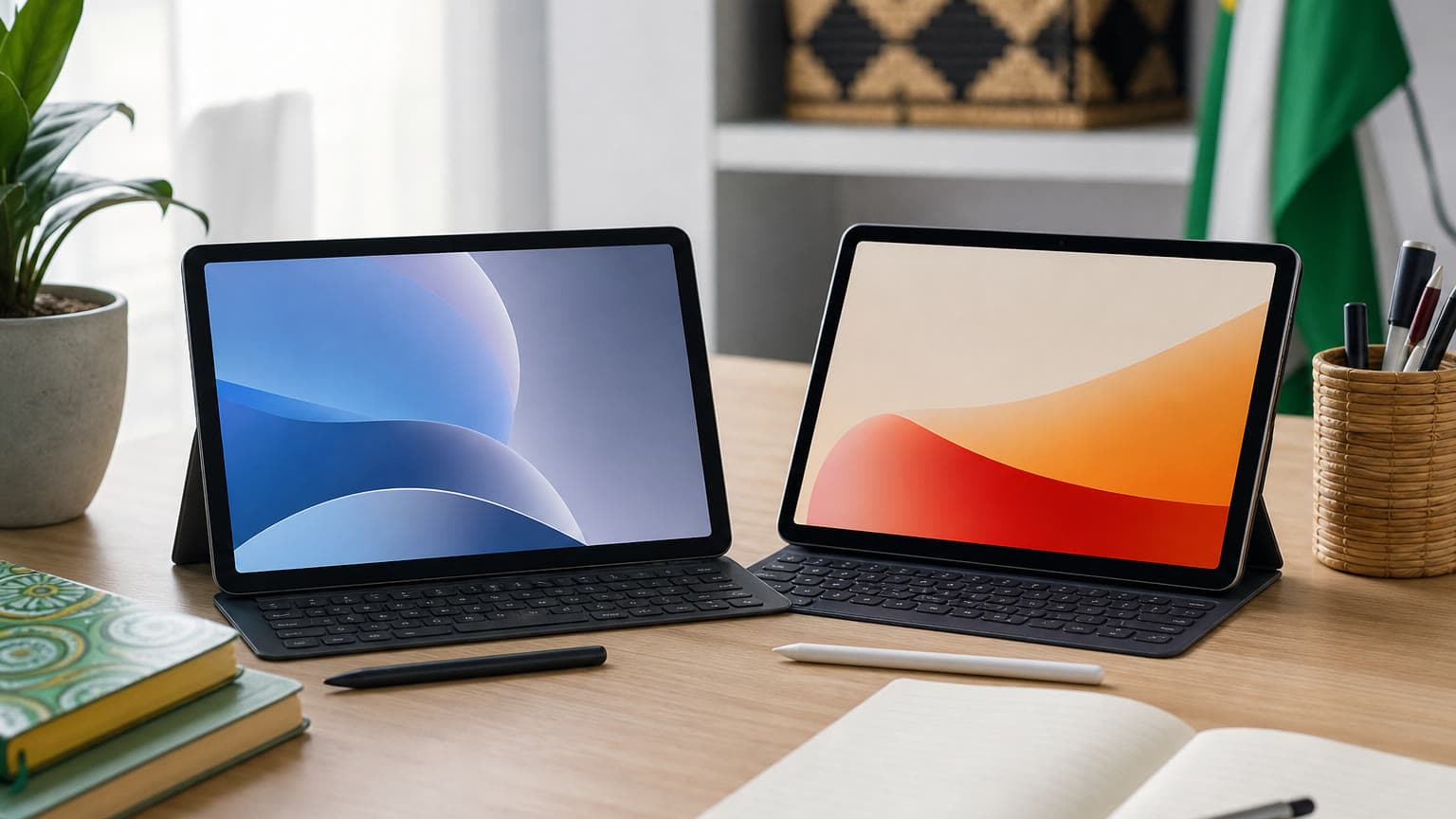
ASUS has a new Android tablet again: the ASUS Pad T3201 pairs a 12.2-inch 2.8K 144Hz OLED screen with a MediaTek Dimensity 8300 chip, 9,000mAh battery, microSD expansion, ASUS Pen 2.0 support and Bluetooth keyboard use. For Nigerian buyers, the real question is availability, warranty route and whether it beats current catalog options.
What changed with the ASUS Pad T3201
The important news is not only that another Android tablet has appeared. The stronger angle is that ASUS is back in the conventional Android slate conversation after years of putting more visible energy into laptops, gaming handhelds and Windows convertibles. REVU Philippines reported the ASUS Pad launch on June 3, 2026, identifying the model as ASUS Pad T3201 and framing it as ASUS returning to the traditional Android tablet market.
ASUS now lists the ASUS Pad T3201 on its global site, which gives the device a firmer source-backed base than a rumor or retailer leak. The official page presents the tablet around entertainment, learning and cross-device use, with a 12.2-inch dual-layer OLED display, 2.8K resolution, 144Hz refresh rate, Dolby Atmos quad speakers, 523g weight, 6.5mm thickness, MediaTek D8300-class chipset, Wi-Fi 6E, 9,000mAh battery, microSD expansion, GlideX, Google Circle to Search, ASUS Pen 2.0 compatibility and Bluetooth keyboard support.
That combination makes the ASUS Pad more interesting than a basic budget tablet. It is trying to sit in the premium Android-media-and-study lane: big screen, high refresh rate, stylus option, keyboard option, expandable storage and enough battery for long viewing or note-taking sessions. It is also not the same kind of purchase decision as a cheap 10-inch classroom tablet. Nigerian buyers should treat it as a potential iPad Air or higher-end Android tablet alternative, not a direct replacement for every entry-level student slate.
There is one caveat: ASUS has not provided a Nigeria-specific launch date, local price or local retail channel in the source material reviewed for this draft. That means this should be treated as source-backed, catalog-pending news rather than a buy-now recommendation for Ogabassey shoppers.
Nigeria availability, warranty and price context
For Ogabassey readers, the first buying question is not whether a 12.2-inch OLED tablet sounds attractive. It does. The practical question is whether the unit will arrive through a warranty route that makes sense in Nigeria. A tablet with an OLED display, stylus support and a thin chassis can be expensive to repair if it arrives through a grey import channel with no straightforward local service backing.
ASUS itself warns on the product page that products may not be available in all markets and that specifications and features can vary by model. That matters for Nigeria because imported configurations can differ in charger bundle, keyboard availability, stylus availability, storage, warranty paperwork and after-sales support. Before paying a preorder deposit or buying from an importer, ask for the exact model number, storage variant, included accessories, warranty terms and whether the seller can process repairs if the display, battery or charging system fails.
The strongest local comparison inside Ogabassey right now is the Infinix XPAD, because it is already a catalog item and sits closer to the practical student-tablet lane. The ASUS Pad T3201 appears more ambitious on screen technology, refresh rate and accessory positioning, but the Infinix XPAD has the advantage of being visible in the current Ogabassey tablet catalog. If a buyer needs a tablet for school, video lessons, light documents and family use now, a catalog-confirmed option can be safer than waiting for an imported launch whose Nigerian price is still unknown.
Buyers comparing across the wider Ogabassey Tablets section should also keep naira pricing risk in mind. A device announced globally without Nigerian pricing can land at a wide range of local prices after FX movement, shipping, VAT, importer margin and accessory bundling. A tablet that looks like a value pick at a converted foreign price can become less compelling if the stylus, keyboard case and warranty support are all separate costs.
Display, battery and accessory fit
The ASUS Pad T3201 is strongest on the parts of the tablet experience people notice every day. The official page highlights a 12.2-inch dual-layer OLED panel with 2.8K resolution, 144Hz refresh rate and a 92% screen-to-body ratio. For movie watching, reading PDFs, drawing notes and split-screen study, that is the spec cluster that should make the device feel modern. REVU also reported 600 nits typical brightness, 8GB LPDDR5X RAM and 128GB or 256GB UFS 3.1 storage with microSD expansion up to 1TB.
The battery story is also useful if the claim holds up in real use. ASUS lists a 9,000mAh battery and says fast charging can reach 50% in 30 minutes. The source-backed wording should stay careful because battery life depends heavily on brightness, refresh rate, Wi-Fi, streaming apps, games and background sync. Still, the hardware direction is clear: ASUS is not positioning this as a tiny couch tablet. It is a large-screen tablet that should be able to handle long sessions away from a wall socket.
Accessory compatibility is where Nigerian buyers should slow down. ASUS mentions ASUS Pen 2.0 and Bluetooth keyboard pairing, and the official page says a protective case comes in the box, while stylus availability and warranty can vary by country or territory. That means a buyer should not assume every imported unit includes the same accessories. A tablet can be less useful for school or creator work if the compatible pen is hard to source locally or if the keyboard layout is not comfortable for daily typing.
If the goal is typing long notes, writing assignments or managing business documents, also check Ogabassey Accessories for keyboards, chargers, sleeves and protective gear that can work with your chosen tablet. A high-end slate without the right case or keyboard can become a fragile entertainment screen instead of a proper work tool.
What to verify before buying or importing
Before treating the ASUS Pad T3201 as your next tablet, verify five things. First, confirm the exact model number. The source-backed model name is ASUS Pad T3201, and that should match the product box or invoice. Second, confirm the storage variant and whether microSD expansion is present on the specific unit being sold. Third, ask whether the ASUS Pen 2.0 is bundled, sold separately or unavailable from that seller.
Fourth, confirm the charger and charging standard. A 45W charging claim is useful only if the buyer receives or already owns a compatible charger and quality cable. Fifth, ask about warranty handling in Nigeria. If the seller cannot explain the repair route for display damage, battery failure, charging-port issues or software support, the purchase carries more risk than a locally supported catalog tablet.
Software support is another open question. The ASUS page references current Android features such as split screen, Circle to Search and GlideX, while REVU states Android 16 out of the box. Those are useful productivity signals, but neither source reviewed here provides a long-term Android version or security-update promise. Buyers who plan to keep one tablet for four or five years should watch for an official update policy before paying a premium.
For students, the safer decision framework is simple: buy the ASUS Pad only if the OLED display, pen support, large screen and cross-device features solve a real daily problem. If the need is mainly online classes, YouTube, PDFs and light notes, a lower-cost catalog tablet may make more sense. If the need is illustration, heavy note-taking, document review and media editing, the ASUS Pad becomes more interesting, but only after price and accessory availability are clear.
Related Ogabassey categories and alternatives
Because the ASUS Pad T3201 is not confirmed in the Ogabassey catalog at the time of this draft, it should not be written as an available Ogabassey product page. The useful role for this article is to flag the launch, explain the practical buying checks and give readers alternatives while catalog reconciliation is pending.
Readers who need an Android tablet now should start with the Infinix XPAD and then compare broader tablet options in Tablets. Readers considering Apple instead should look at existing Ogabassey Apple tablet pages such as the iPad Air M2 or iPad Pro 11-inch M2, especially if app ecosystem, Apple Pencil workflows or long-term software support matter more than expandable storage.
The ASUS Pad T3201 could become a strong option if it lands at a sensible Nigerian price with clear warranty support and available ASUS Pen 2.0 accessories. Until those pieces are confirmed, it is best treated as a watchlist tablet for buyers who want a premium Android screen and do not need to buy immediately.
FAQ
Which tablet should I buy in Nigeria if the ASUS Pad is not available yet?
If you need a tablet immediately, choose a catalog-confirmed option first. The Infinix XPAD is the clearest Android reference in the current Ogabassey tablet catalog, while iPad Air and iPad Pro models make sense for buyers who prefer Apple Pencil, iPadOS apps and longer ecosystem support.
Does the ASUS Pad T3201 support a stylus or keyboard?
ASUS says the Pad T3201 can pair with ASUS Pen 2.0 and a Bluetooth keyboard. However, accessory bundling and warranty can vary by country, so Nigerian buyers should confirm whether the pen, keyboard and case are included before paying.
Is a tablet enough instead of a laptop?
A tablet can replace a laptop for reading, video classes, notes, light documents and media. It is less ideal for heavy spreadsheets, coding, desktop apps and long typing unless the keyboard setup is excellent. The ASUS Pad looks better suited to media, study and light productivity than full laptop replacement.
Related reading: Tecno Mega Pad Pro or Megapad 10: Bigger Screen and Battery vs Lower Tablet Price.
Sources