Bassey John is a Performance Marketing Specialist at Ogabassey with cross-industry experience spanning e-commerce, gaming, and real estate. He focuses on paid acquisition, conversion-rate optimisation, and data-driven growth strategy, turning campaign performance into measurable revenue. At Ogabassey he writes about consumer technology, product buying guides, and the Nigerian gadget market to help shoppers make confident, informed decisions.
Apple has begun a Qwen-backed Apple Intelligence developer trial, with public access planned for December. For Nigerian buyers comparing iPhone 16 and iPhone 17 offers, this does not establish that mainland-China imports will deliver the same AI features locally: purchase region and the exact feature set still matter.
What changed: a beta now, public access in December
Apple’s October 31 announcement sets out a mainland-China rollout using Alibaba’s Qwen within selected Apple Intelligence experiences. Developer testing was scheduled for November 4, followed by public availability through iOS 27.3 in December. Euronews reported on November 4 that the developer trial had begun.
The distinction matters when reading launch headlines. As of November 5, this is a developer trial with a planned public release. It is not evidence that every eligible customer can already activate the features, or that the same configuration is being introduced in Nigeria.
Apple names Siri, Writing Tools and Visual Intelligence as experiences gaining Qwen support. It also explicitly excludes Siri AI and the other next-generation Apple Intelligence features announced at WWDC 2026. Consequently, a seller’s promise of “the latest Apple AI” needs a more precise explanation.
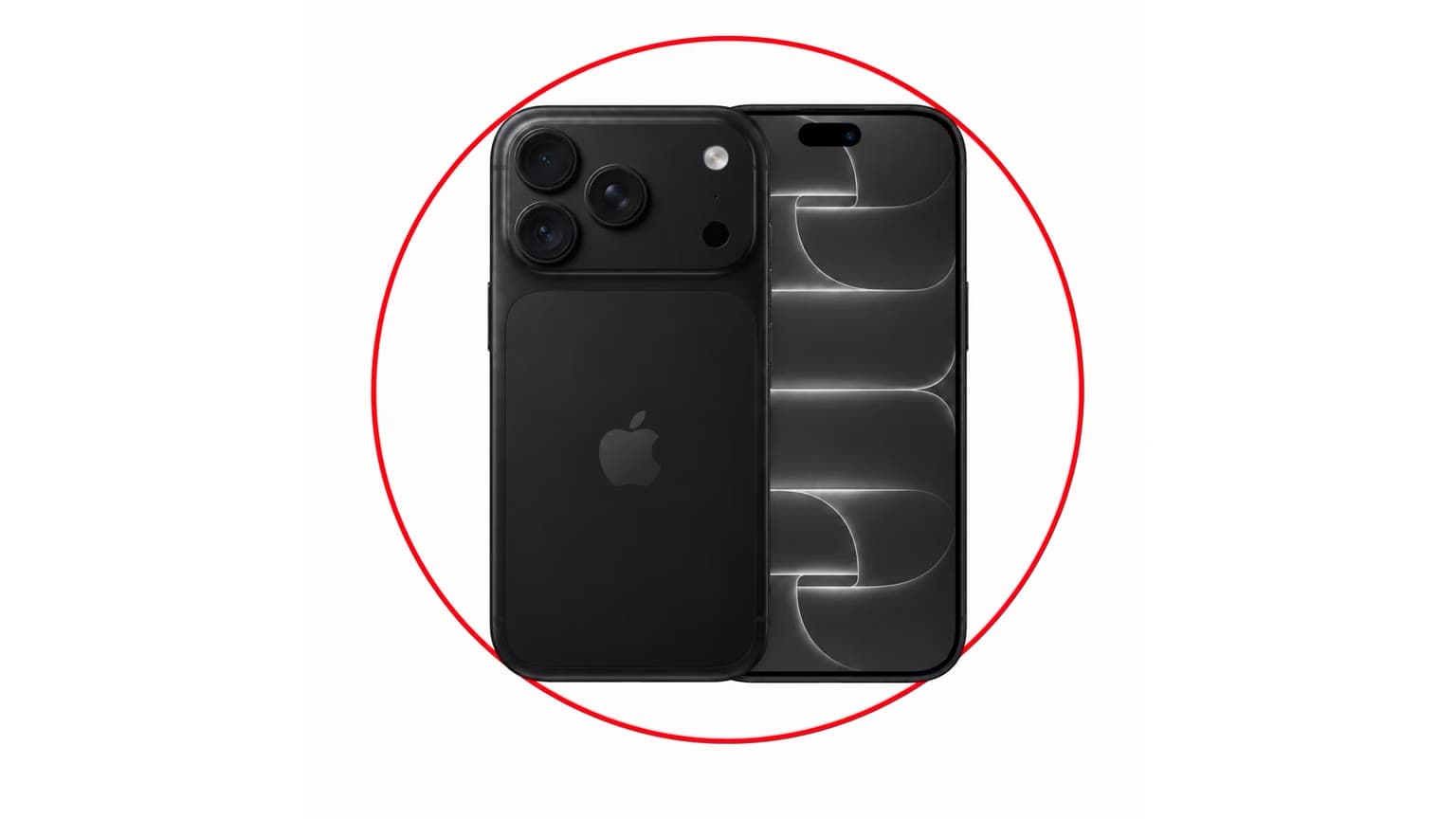
Illustration of regional AI integration, not an Apple interface or a hands-on demonstration. No readable text, logos or UI chrome.
Platform and compatibility: the model name is only one check
Apple’s Nigeria-facing support page, dated October 22, lists iPhone 16 models and later, plus iPhone 15 Pro and Pro Max, among compatible phones. It also says Apple Intelligence currently does not work on supported devices purchased in mainland China. The later rollout announcement should therefore be read alongside that existing restriction.
Apple’s support guidance says previously purchased compatible devices will be able to activate a core set of features in mainland China when the service becomes available there. It does not establish how a mainland-China-purchased phone used in Nigeria will behave after December. That distinction leaves a practical question for anyone choosing between imported variants: where will the promised feature actually work?
Question
What the evidence establishes
Buying implication
Is testing underway?
The developer trial began November 4.
A beta demonstration is different from public availability.
When is public access planned?
December, with iOS 27.3.
Treat the timing as a plan until released.
Does this include Siri AI?
Apple excludes it from this update.
Ask which Siri functions are actually included.
Does this confirm Nigerian access on China imports?
The announcement does not establish that.
Verify the particular handset before paying for AI access.
iPhone price in Nigeria: what this changes about value
The practical local question is whether an AI promise justifies the price difference between two phones. Ogabassey’s supplied demand evidence includes repeated searches for iPhone 16, while iPhone 17 also appears in its scoped buyer demand. Those are real comparison candidates; a regional software announcement does not automatically make either one a better purchase.
Start with the Ogabassey iPhone 16 listing and the iPhone 17 listing, then request offers for matching storage and condition. A lower asking price can reflect a different variant, previous activation, cosmetic grading or seller protection. Without matching those details, the apparent saving is difficult to assess.
The supplied catalog records do not establish storage, condition or written warranty terms for those offers. They also use unmanaged-stock settings, so the recorded zero quantity should not be interpreted as a confirmed sold-out status. Confirm the available unit and its current offer directly before arranging payment or delivery.
Our editorial judgement is to assign no extra purchase value to an unverified future feature. If AI is essential to your work, buy against functions demonstrated on the handset in its intended setup. If AI is optional, decide primarily on the phone’s condition, storage, camera needs and total cost.
Nigeria availability and warranty context
This announcement provides no new Nigerian stock commitment or local warranty programme. Ask who will handle a fault, where the phone must be taken, what documentation is required and whether any seller protection covers software-related returns. Obtain those terms in writing rather than assuming that an overseas launch changes the service arrangement.
A phone can pass ordinary hardware checks while still failing your particular software requirement. Explain that requirement before purchase: for example, access to a named writing feature in English. Ask the seller to distinguish a hardware fault from a feature that is unavailable because of region, account settings or software eligibility.
For existing owners, the trial alone is a weak reason to replace a working phone. First identify the task your current handset cannot perform. An upgrade makes more sense when it solves a present limitation than when its value depends on an unresolved regional rollout.
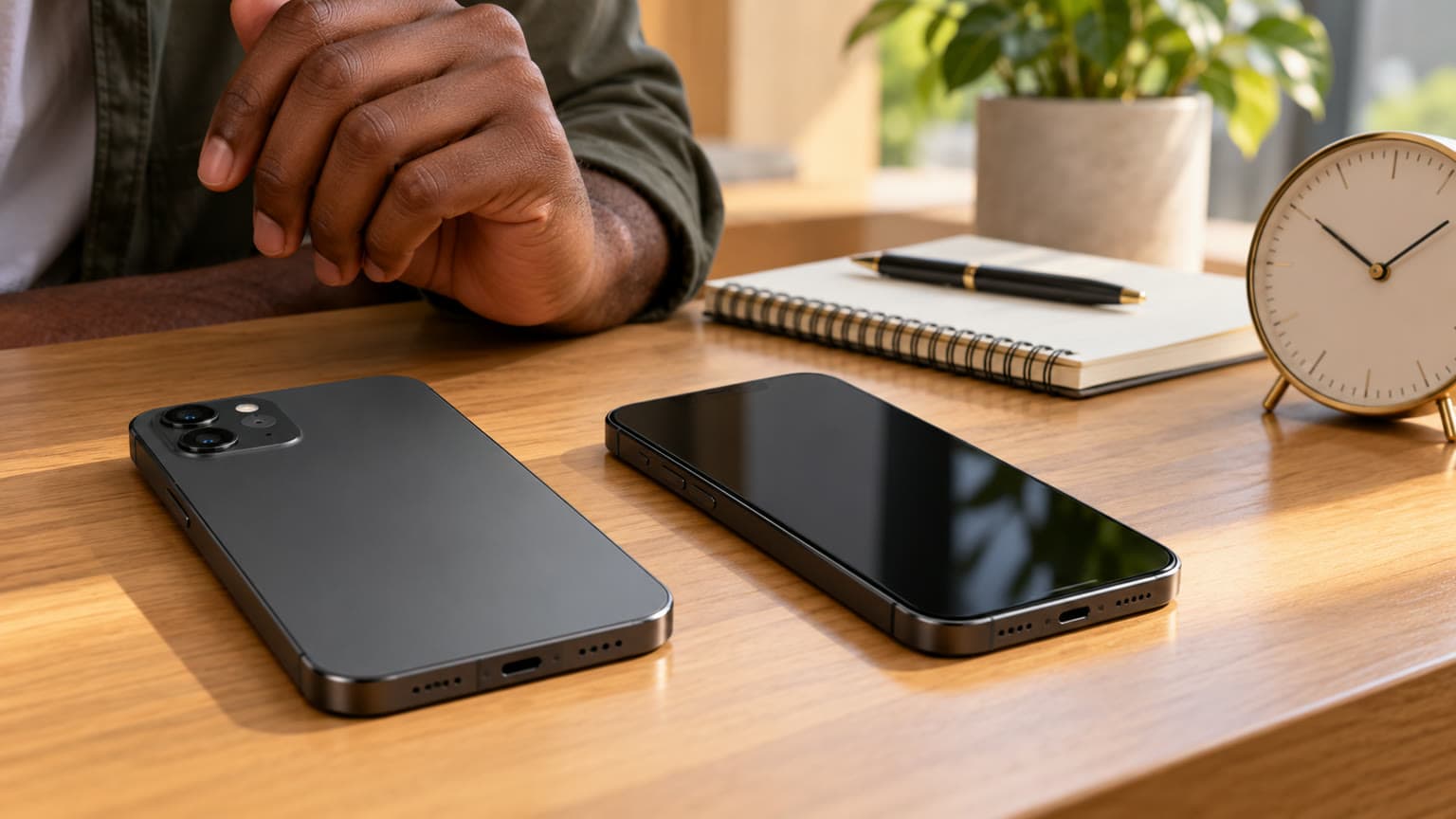
Conceptual buying scene illustrating handset and condition checks. No readable labels, logos or fabricated hardware details.
What to verify before buying
Check the exact handset and its software
Record the model number, original sales region, installed iOS version and the feature being promised. Apple also requires matching supported device and Siri languages. Storage requirements vary: its support page lists up to 14GB for iPhone 17 Pro models and up to 8GB for other supported iPhones. Leave room for your own apps and files as well.
Request a demonstration using the setup you intend to keep. A video from another phone, an announcement screenshot or a feature shown under different account settings does not answer whether your unit meets your needs. This is a purchase verification recommendation, not a claim that Ogabassey has tested the beta.
Keep battery, camera and condition in the decision
Inspect Battery Health, charging behaviour and any available service history on a used or open-box unit. Test the cameras with the kinds of photos and video you actually take. This software announcement supplies no evidence of better battery endurance, faster charging or improved camera hardware, so it should not displace those checks.
Also confirm storage capacity, activation status and the agreed condition grade on the invoice. If two offers differ substantially, ask the seller to explain the difference in those concrete terms. A vague “AI-ready” label is insufficient detail for comparing expensive phones.
Related Ogabassey categories and products
The supplied catalog includes iPhone 16 Plus, iPhone 16 Pro and iPhone 16 Pro Max alongside iPhone 17e, iPhone 17 Pro and iPhone 17 Pro Max. Their inclusion gives buyers alternatives to discuss; it does not verify a particular sales region, condition or feature configuration for an individual unit.
Use the Apple iPhone category to narrow the range, then compare exact offers. If you are deciding between sizes and price tiers, Ogabassey’s Pro versus Pro Max guide provides a related starting point. Confirm current specifications and offers before using any older recommendation to make a purchase.
FAQ
Does iPhone 13 support Apple Intelligence?
No. Apple’s current compatibility list starts with iPhone 15 Pro and Pro Max, followed by iPhone 16 models and later. The announced Qwen rollout does not add iPhone 13 to that list.
Will a mainland-China iPhone get Apple Intelligence in Nigeria?
That is not established by this announcement. Apple’s October 22 support page still restricts mainland-China-purchased devices, while its October 31 announcement describes a rollout for users in China. Verify updated official guidance and the specific handset before purchasing it for AI access.
Should I pay more for iPhone 17 because of Qwen?
The Qwen announcement alone does not justify paying more. Compare matching storage, condition, battery needs, camera requirements and seller protection. Treat any promised AI feature as unverified until its availability on the intended handset and setup is established.
Catalog-linked prices update automatically. Historical and other quoted prices remain as written. Open the product page to confirm the current price, selected variant and availability before buying.