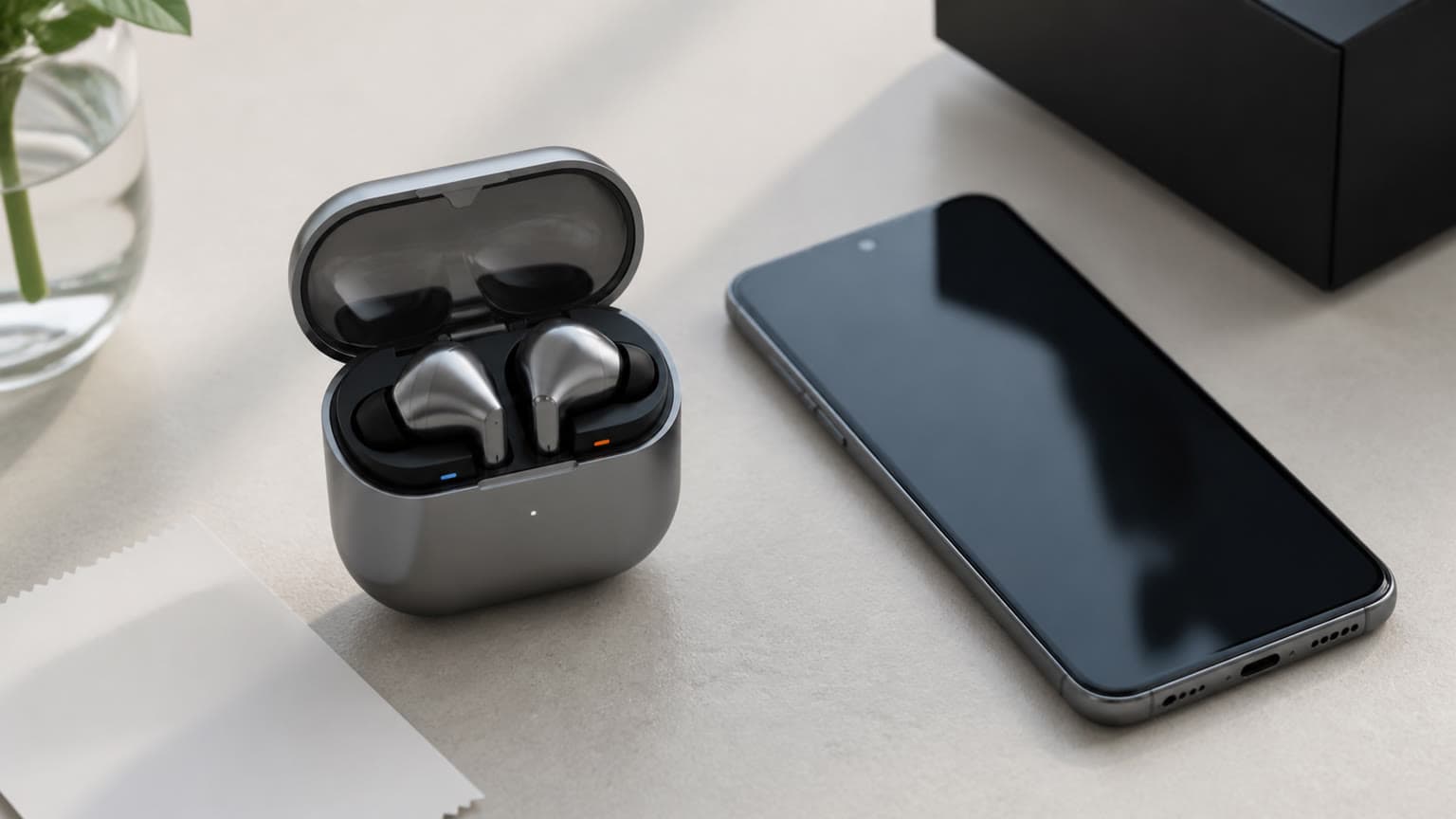
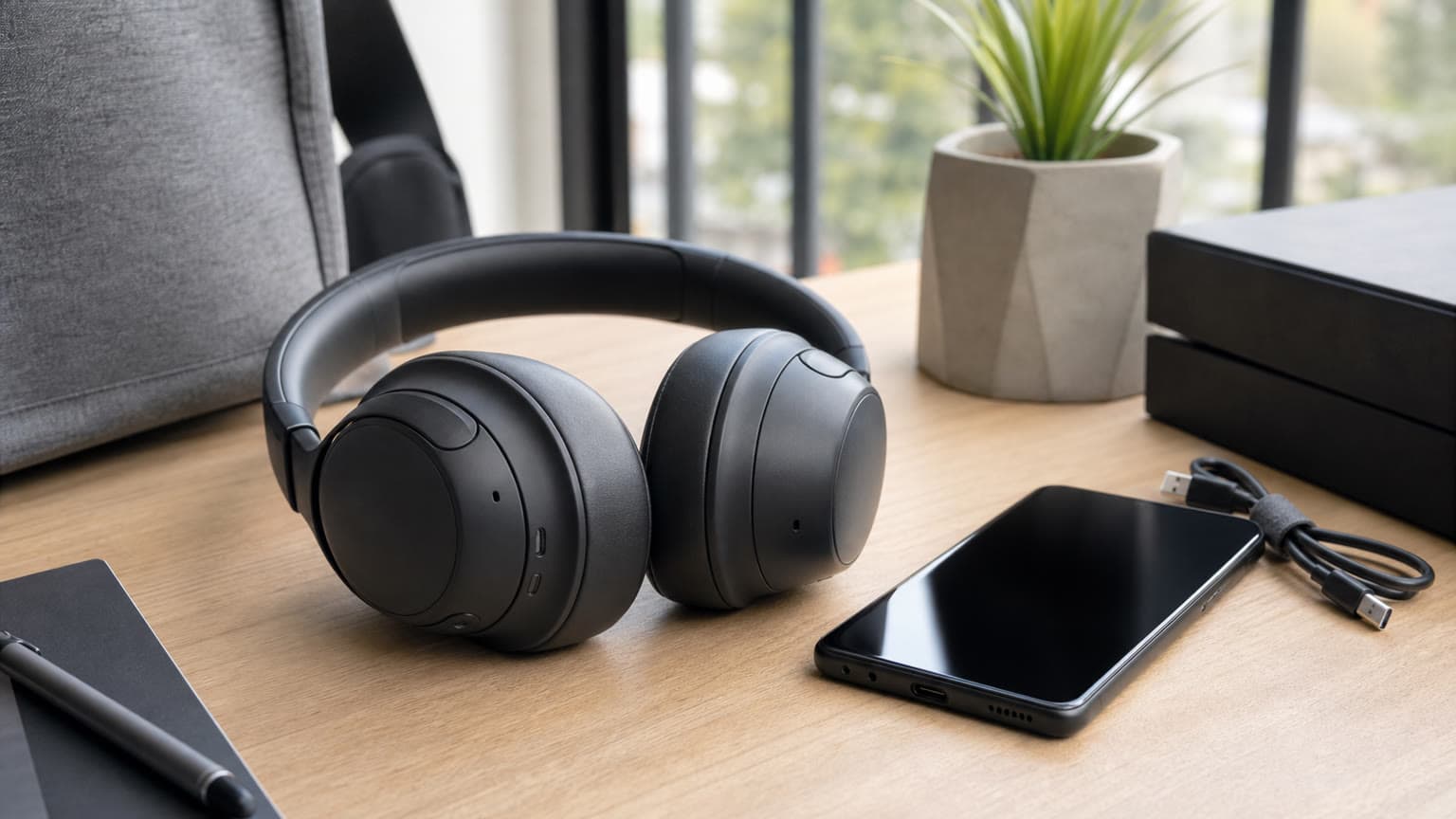
In 2016 and 2017, Apple pushed the phone industry toward wireless audio by removing the 3.5mm headphone jack from the iPhone 7 family and then popularising AirPods. Since then, true wireless stereo earbuds have become a normal phone accessory rather than a luxury add-on. The bigger challenge in 2026 is no longer finding earbuds; it is choosing the right pair for your phone, your ears, your calls, your commute, and your budget.
This guide keeps the original idea simple: if you are buying your first pair of wireless earbuds or upgrading from an older set, do not buy only because the box says “ANC” or because the earbuds look like the ones your friend uses. Start with compatibility, fit, battery, call quality, and after-sales confidence.
Who this is for
This article is for everyday phone users who want a practical pair of earbuds for music, calls, video, workouts, commuting, online meetings, and casual gaming. It is especially useful if you use an iPhone, Samsung Galaxy phone, Google Pixel, or another Android phone and you are unsure whether to buy AirPods, Galaxy Buds, Pixel Buds, or a more universal alternative.
If you are upgrading from wired earphones or older basic Bluetooth buds, the biggest gains will be convenience, pocketability, active noise cancellation, transparency mode, better microphones, auto-pause, Find My-style location features, and multi-device switching. If you already own a recent premium pair, the upgrade only makes sense if you need better battery life, stronger noise control, USB-C charging, hearing-health features, or a more secure fit.
Key specs and buying context
Compatibility should come first. AirPods can work as Bluetooth earbuds with Android phones, but the best AirPods features are built around iPhone, iPad, Mac, Apple Watch, Apple TV, and Apple Vision Pro. Apple’s current AirPods lineup uses H2 or H1 chips depending on the model, and features such as automatic switching, Spatial Audio setup, Siri interactions, Hearing Test, Hearing Aid, Hearing Protection, and some translation features depend on compatible Apple hardware, software version, region, and firmware. For most iPhone users, Apple AirPods Pro 2nd Gen Type C remains the most relevant Ogabassey catalog fit because it has USB-C, strong ANC, transparency mode, touch volume controls, and deep Apple integration.
Do not ignore the newer Apple lineup. By 2026, Apple’s comparison pages position AirPods 4, AirPods 4 with Active Noise Cancellation, AirPods Pro 3, and AirPods Pro 2 differently. Apple AirPods 4 is the better idea if you dislike silicone ear tips and want an open-fit Apple option. Apple AirPods Pro 3rd Gen is the more advanced Pro option where available, with stronger published ANC claims and newer health-focused features. The older Apple AirPods Pro can still be useful as a cheaper pre-owned or clearance option, but only if battery health, authenticity, and warranty are clear.
Samsung and Google users should think the same way. Galaxy Buds can pair with most Bluetooth devices, but the smoothest experience is usually on Samsung Galaxy phones because the app, codec support, quick pairing, and device switching are designed around Samsung’s ecosystem. Samsung Galaxy Buds3 is a better Galaxy-first choice than AirPods if your main phone is a Samsung device. Samsung Galaxy Buds FE is the more value-focused Samsung option when available, especially if you want ANC without paying flagship-earbud money. For Pixel owners, Google Pixel Buds Pro 2 is the natural premium match because Google lists Bluetooth 5.4, Tensor A1, Silent Seal 2.0 ANC, transparency mode, conversation detection, Qi wireless charging, and up to 8 hours of listening with ANC enabled.
Fit changes everything. Standard open-fit earbuds, such as regular AirPods-style designs, sit outside the ear canal. They are often more comfortable for people who dislike pressure in the ear, but they leak more outside noise and usually deliver weaker bass. In-ear models, such as AirPods Pro, Pixel Buds Pro, and many Galaxy Buds models, use silicone tips to create a seal. That seal helps bass, ANC, and call isolation, but it can feel intrusive if your ears are sensitive. If possible, choose earbuds with multiple tip sizes and run the fit test in the companion app.
ANC is not the same as call quality. Active Noise Cancellation reduces what you hear from the environment. Microphone noise reduction improves what the other person hears from you. A pair can be excellent for music on a flight but average for phone calls beside traffic. If calls are a priority, look for multiple microphones, wind reduction, voice pickup features, and real-world review evidence. For business calls, online classes, and voice notes, this matters more than bass claims.
Quick comparison: which ecosystem should you buy into?
| Your main phone | Best starting point | Why it makes sense | Watch out for |
|---|
| iPhone | AirPods Pro 2 USB-C, AirPods 4, or AirPods Pro 3 where available | Fast pairing, automatic switching, Spatial Audio, Find My support, Apple-specific features | Some newer features need recent iOS, compatible devices, latest firmware, and regional support |
| Samsung Galaxy | Galaxy Buds3 or Galaxy Buds FE | Better Galaxy app support, Samsung ecosystem convenience, familiar controls | Premium Galaxy features may be limited outside Samsung phones |
| Google Pixel | Pixel Buds Pro 2 | Google Assistant and Gemini integration, Pixel-friendly setup, strong Android compatibility | Full feature access generally needs a Google account, Android phone, and internet connection |
| Mixed devices | Consider earbuds with reliable Bluetooth multipoint | Useful if you switch between phone, laptop, tablet, and work calls | Multipoint quality varies by brand and codec |
Comfort, battery, and durability
Comfort is personal, so reviews can only guide you halfway. A gym user may prefer a wing-tip or hook design that stays planted during runs. A commuter may prioritise ANC and transparency mode. Someone who wears earbuds for four hours at a desk may prefer a lighter open-fit pair with less ear pressure. Do not force yourself into in-ear earbuds just because they have better ANC on paper.
Battery life should be judged in two ways: per-charge listening time and total case time. A pair that lasts 5 to 8 hours per charge is usually enough for a workday when the case is nearby. The case matters if you travel, forget to charge, or use earbuds heavily for calls. Also check whether the case charges by USB-C, wireless Qi, MagSafe, or Apple Watch charger. USB-C is now the simplest everyday choice because the same cable can often charge your phone, tablet, laptop, and earbuds.
Water resistance is useful, but it is not waterproofing. IP ratings usually cover sweat and splashes under controlled conditions, not swimming, laundry accidents, or charging while wet. If you exercise often, choose at least sweat-resistant earbuds and clean the tips and charging contacts regularly. Dirt, earwax, and moisture can reduce ANC, charging reliability, and microphone performance over time.
Price, value, availability, and warranty
The best-value earbuds are not always the cheapest ones. A cheaper pair becomes expensive if it has weak microphones, poor battery health, uncomfortable tips, or no reliable after-sales path. In 2026, treat earbuds like a battery-powered wearable: confirm whether the product is new, open-box, used, or refurbished; check the case and buds for matching model details; and verify what warranty or return support applies before paying.
For Ogabassey shoppers, the strongest exact product fit in this article is Apple AirPods Pro 2nd Gen Type C. Other linked products, including Google Pixel Buds Pro 2, Samsung Galaxy Buds3, Samsung Galaxy Buds FE, Apple AirPods 4, Apple AirPods Pro 3rd Gen, and Apple AirPods Pro, should be checked for live availability at the time of purchase because catalog stock can change. If you are buying to match a specific phone, also read Pro vs. Pro Max: Which iPhone is Right for You? before choosing an iPhone-and-AirPods setup.
Trade-offs to understand before you buy
- Open-fit comfort vs in-ear isolation: open-fit designs are easier on some ears, but in-ear tips usually provide better ANC and bass.
- Apple features vs Android flexibility: AirPods are excellent with iPhone, but Android users lose some controls and setup features.
- ANC vs battery life: turning on ANC usually reduces listening time compared with noise control off.
- Small case vs long endurance: tiny cases are pocket-friendly, but bigger cases often hold more battery.
- Sound profile vs call quality: bass-heavy earbuds may be fun for music but still poor for calls if the microphones are weak.
- Premium specs vs real fit: the best spec sheet is useless if the earbuds keep falling out or hurt after 30 minutes.
Alternatives worth considering
If you are fully in the Apple ecosystem, start with AirPods Pro 2 USB-C or AirPods Pro 3 where available. If you want a lighter Apple option without silicone tips, AirPods 4 is the cleaner choice. If you use Samsung, Galaxy Buds3 or Buds FE will usually make more sense than AirPods because the software experience is built around Galaxy devices. If you use Pixel, Pixel Buds Pro 2 is the best ecosystem match among the linked options.
If your budget is tight, do not chase every premium feature. Prioritise fit, battery, microphones, and warranty first. If your usage is mainly calls, look for call-quality reviews before sound-quality reviews. If your usage is gym-focused, fit security and sweat resistance matter more than spatial audio. If your usage is commuting or flights, ANC strength and transparency mode become the headline features.
Verdict
For most iPhone users shopping through Ogabassey, Apple AirPods Pro 2nd Gen Type C is still the easiest recommendation because it balances USB-C convenience, ANC, transparency, Apple integration, and daily usability. If the newest Apple features matter and stock is available, compare it with Apple AirPods Pro 3rd Gen. Android buyers should not buy AirPods by default: Samsung users should check Galaxy Buds options, while Pixel users should compare Pixel Buds Pro 2 first.
The simple rule is this: buy earbuds for the phone and life you actually use. Match the ecosystem, test the fit, check battery and call performance, confirm warranty and availability, and only then worry about the extra bells and whistles.
Sources