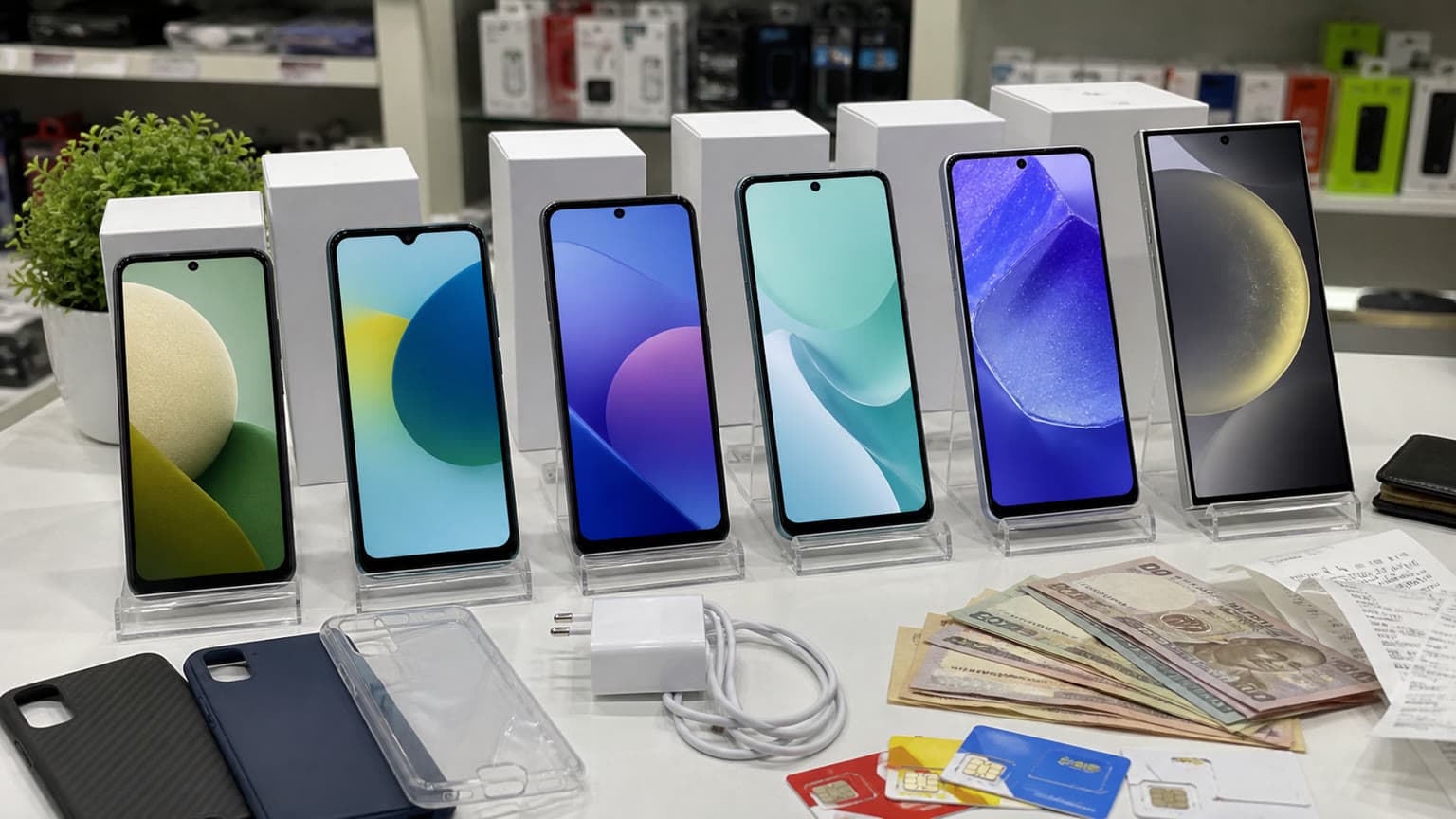
Xiaomi 17 Series: Snapdragon 8 Elite Gen 5, Android 16 and Nigeria Buying Guide
The Xiaomi 17 Series is now a real 2026 flagship line, not just a rumour. Xiaomi has held its February 2026 global launch, and the official global Xiaomi 17 spec sheet confirms the core upgrades Nigerian buyers should care about: Snapdragon 8 Elite Gen 5, HyperOS 3, a compact 6.3-inch OLED display, Leica-branded triple cameras, eSIM support where carriers allow it, a 6,330mAh battery, 100W wired charging and 50W wireless charging.
That also means several early claims around the phone need correcting. The standard global Xiaomi 17 is not a 6.73-inch, 144Hz, 5,500mAh, 120W phone. Those numbers do not match Xiaomi's official global Xiaomi 17 listing. If you are buying in Nigeria, the safer approach is to treat the Xiaomi 17 as a compact premium Android flagship and verify the exact regional variant, charger contents, warranty status and network support before paying.
Who the Xiaomi 17 Series is for
The Xiaomi 17 is best suited to buyers who want flagship speed and camera hardware in a smaller body than most Ultra phones. At 6.3 inches and 191g, it competes more directly with compact flagships such as the base iPhone and Galaxy S models than with giant gaming phones. It makes sense if you want a daily phone for photography, heavy WhatsApp and social use, video calls, mobile gaming, travel, and fast charging without carrying a very large device.
It is less suitable if you want the lowest possible Xiaomi flagship price, the strongest long-zoom camera, or a phone with guaranteed local availability at launch. Nigerian buyers should also be cautious about grey-market imports. A cheaper import may look attractive, but warranty and repair support can become weaker if the unit was not brought in through an official or recognised channel.
Key specs and buying context
| Area | Xiaomi 17 global model | Why it matters in Nigeria |
|---|
| Processor | Snapdragon 8 Elite Gen 5, 3nm | High-end gaming, camera processing, AI features and long-term performance headroom. |
| Software | Xiaomi HyperOS 3 | Modern Xiaomi interface with AI features, Google Gemini support and Android 16-based coverage reported in independent testing. |
| Display | 6.3-inch CrystalRes OLED, 2656 x 1220, 1-120Hz, up to 3,500 nits peak brightness | Bright outdoor visibility, compact size and smoother scrolling without a huge phone body. |
| Memory and storage | 12GB RAM with 256GB or 512GB storage | Choose 512GB if you shoot lots of 4K video or keep large offline media libraries. |
| Rear cameras | 50MP Leica main, 50MP Leica floating telephoto, 50MP ultra-wide | Better all-round camera flexibility than many base-model flagships. |
| Battery and charging | 6,330mAh, 100W wired, 50W wireless | Strong fit for long Lagos commute days, travel and unreliable power windows. |
| SIM support | Dual SIM options include nano SIM plus eSIM, or eSIM plus eSIM, depending on region | Useful for travel and secondary lines, but eSIM must be confirmed with your carrier and exact variant. |
| Durability | IP68 dust and water resistance under lab conditions | Helpful for rain and accidental splashes, but not a reason to use the phone at the beach or pool. |
Performance: why Snapdragon 8 Elite Gen 5 matters
The Snapdragon 8 Elite Gen 5 is the main reason the Xiaomi 17 belongs in the 2026 flagship conversation. Xiaomi lists a 3nm manufacturing process, Oryon CPU cores, Adreno graphics and Qualcomm AI engine support. In practical terms, this is the class of chip you want if you play demanding Android games, edit short videos, use camera-heavy social apps or keep a phone for several years.
For Nigerian buyers, performance is not only about benchmark scores. A powerful chip paired with a large battery can reduce the need to charge during the day. Xiaomi's 3D IceLoop cooling system also matters because high ambient temperatures can expose weak thermal design. Independent testing from TechRadar found the phone remained fast under heavy use and gaming, though real results will depend on your network conditions, brightness, game settings and case.
If you are also comparing Snapdragon laptops, Ogabassey's coverage of Snapdragon X2 Series Windows laptops and Snapdragon X Elite laptops in 2026 can help you separate phone-chip expectations from laptop-chip expectations. They are different product classes, but the same buyer question applies: battery life, app compatibility and real support matter more than chip branding alone.
Camera: Leica triple cameras, not just megapixels
The standard Xiaomi 17 uses three 50MP rear cameras: a main camera with Xiaomi's Light Fusion 950 sensor, a 60mm floating telephoto camera and an ultra-wide camera. The 60mm telephoto is important because many base flagships either skip a telephoto camera or use weaker zoom hardware. For portraits, food, product photos and event shots, that extra focal length is more useful than a simple digital crop.
The Leica partnership is also more than a badge. Leica's February 2026 press release describes the Xiaomi 17 Series around Leica lens design, colour tuning and broad focal-length coverage. The standard Xiaomi 17 gets a 60mm floating telephoto lens that can also focus close for macro-style shots. The Ultra model is the more serious camera phone, especially for long zoom and creator controls, but the standard Xiaomi 17 is the more balanced buy if size and price matter.
Android 16 and HyperOS 3: what to check
Xiaomi's official global spec page lists HyperOS 3 as the operating system, while independent review coverage identifies the Xiaomi 17 software as HyperOS 3 based on Android 16. For buyers, the practical question is not only the Android version on day one. You should also check the promised update policy for the exact regional model you are buying, because software support terms can differ by market and retail channel.
HyperOS 3 brings Xiaomi's own interface, AI writing and speech tools, AI interpreter, AI search, AI image features, Circle to Search with Google and Gemini support. Xiaomi notes that some AI features depend on region, language, compatible apps and internet connection. In Nigeria, that means you should not buy the phone only for a single advertised AI feature unless you have confirmed it works on the global variant you are purchasing.
eSIM, 5G and compatibility in Nigeria
Xiaomi lists dual SIM support with nano SIM and eSIM combinations, but it also warns that eSIM availability varies by country, region and carrier. That distinction matters. A phone can support eSIM at the hardware level and still require carrier activation support, compatible firmware and the right regional SKU.
Before buying, ask the seller for the exact model number and whether the device is the global version. Confirm that it supports the LTE and 5G bands you use most often, especially if you move between cities or travel outside Nigeria. The official global spec sheet includes wide 4G and 5G band coverage, Wi-Fi 7 capability, Bluetooth 6.0 and NFC, but local network experience will still depend on your carrier and location.
Price, availability and warranty advice for Nigeria
As of 31 May 2026, there is reliable global availability information, but official Nigeria pricing for the Xiaomi 17 is not clearly established from Xiaomi's Nigeria pages. TechRadar lists UK pricing from £899 for 12GB/256GB and £999 for 12GB/512GB, which places the phone in premium flagship territory rather than old-school Xiaomi bargain territory. Nigerian street pricing will depend on exchange rate, import channel, storage variant, taxes, seller margin and whether accessories are included.
For warranty, Xiaomi Nigeria's warranty page says products not duly imported, manufactured or acquired from Xiaomi or an official seller are not covered by its warranty terms. It also lists flagship models under a 12+6 month warranty class, with some named models receiving longer promotional coverage. Before paying, ask for a receipt, IMEI, sealed global packaging where applicable, and the seller's written warranty terms. Do not assume a Chinese-market import will receive the same local support as an officially supplied unit.
Trade-offs to know before buying
- It is no longer a cheap flagship alternative. The Xiaomi 17 competes with premium Apple, Samsung and Google phones, so value depends on battery, charging and camera priorities.
- The charger may not be guaranteed in every region. Xiaomi's official spec page says buyers should consult the local seller about power-adapter availability in the box.
- eSIM support is conditional. Confirm with your carrier and seller before treating eSIM as a must-have feature.
- The Ultra is the camera-first model. The standard Xiaomi 17 has strong cameras, but buyers who care about maximum zoom and creator accessories should compare the Xiaomi 17 Ultra.
- Grey-market savings can reduce support. A lower upfront price can be a poor deal if warranty, parts and software region support are unclear.
Alternatives to consider
Xiaomi 17 Ultra: Choose this if camera performance is the main reason you are buying. It is larger and likely more expensive, but it is the better fit for serious mobile photography and video work.
Samsung Galaxy S26: Consider Samsung if you prioritise local availability, broad accessory support, trade-in options and a mature Android ecosystem. Xiaomi has the edge on battery capacity and charging speed on paper, but Samsung may be easier to support locally depending on where you buy.
iPhone 17: Choose iPhone if you are already invested in Apple services, AirDrop, iMessage, Apple Watch or long software support. The Xiaomi 17 offers stronger charging and a telephoto camera on the base model, but ecosystem fit may matter more than specs.
Xiaomi 15 or Xiaomi 15T series: If the Xiaomi 17 launches in Nigeria at a steep premium, last year's Xiaomi flagship or a newer T-series model may offer better value. This is especially true if your main needs are battery life, camera quality and general speed rather than the newest chipset.
Verdict: should you buy the Xiaomi 17 Series in Nigeria?
The Xiaomi 17 Series is worth shortlisting in 2026, but the buying advice has changed now that official details are available. The standard Xiaomi 17 is a compact premium Android flagship with a very strong battery, fast charging, Leica triple cameras, Snapdragon 8 Elite Gen 5 performance, HyperOS 3 and flexible SIM options. It is not the speculative phone described by early leaks, and it should not be sold to Nigerian buyers using incorrect 6.73-inch, 144Hz, 120W or February-availability claims for the standard global model.
Buy it if you want a compact flagship with unusually strong battery and charging hardware. Wait or compare alternatives if the local price is close to Ultra-level money, if you need guaranteed official Nigeria warranty, or if your seller cannot clearly identify the variant. For most buyers, the best Xiaomi 17 deal will be the one with a verified global model, clear warranty support, honest box contents and a price that still undercuts the alternatives you are seriously considering.
FAQ
Is the Xiaomi 17 available globally?
Yes. Xiaomi promoted the Xiaomi 17 Series through its February 2026 global launch, and the standard Xiaomi 17 has an official global product and specs page.
Does the Xiaomi 17 run Android 16?
Xiaomi lists HyperOS 3 officially. Independent review coverage identifies the Xiaomi 17 as running HyperOS 3 based on Android 16. Buyers should still check the software version and update policy on the exact regional unit they purchase.
Does the Xiaomi 17 support eSIM?
Yes, the official global spec page lists nano SIM plus eSIM and eSIM plus eSIM combinations, but Xiaomi also states that availability varies by region and carrier. Confirm with your Nigerian carrier before buying for eSIM use.
What is the Xiaomi 17 price in Nigeria?
There is no clearly verified official Nigeria price from Xiaomi's Nigeria pages as of 31 May 2026. Use global pricing only as a reference, then compare local seller quotes by storage, variant, warranty and included accessories.
Will the Xiaomi 17 come with a charger in the box?
Do not assume it will. Xiaomi's global spec page says package contents can differ by region and advises buyers to consult the local seller about power-adapter availability.
Shop related Ogabassey options: Ogabassey smartphones.
Sources