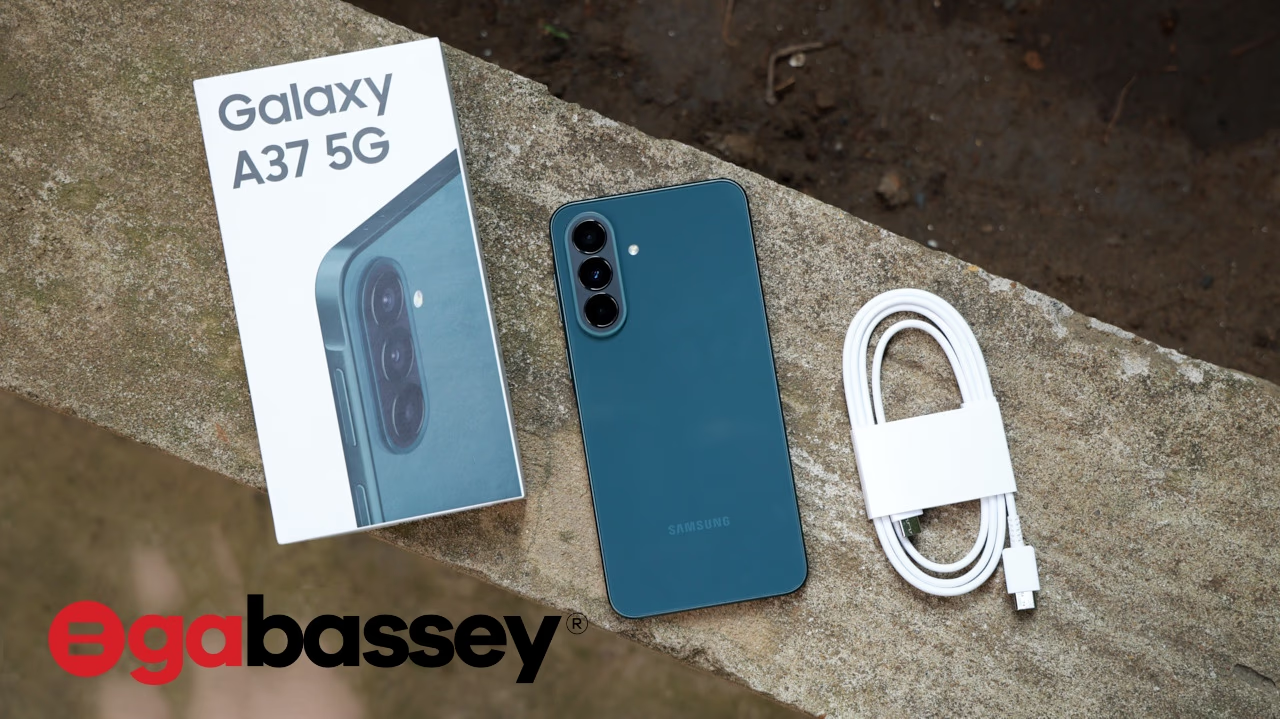
Samsung has always understood that while the S-series flagships grab the headlines, it's the A-series that pays the bills. The Galaxy A37, released in April 2026 alongside its pricier sibling the A57, is the latest entry in that long-running tradition of affordable-but-capable smartphones. After spending time with it, I've come away with a verdict that's a little more complicated than "just buy it."
Design: Quietly Premium
The A37 looks far more expensive than it is. Samsung has carried over the same sleek, minimalistic design language from its flagship lineup — a mirrored glass back, Gorilla Glass Victus+ protection on both front and rear, and a refined translucent camera island that groups the lenses together far more elegantly than the individual rings found on older models like the A34 or A35. It's slim at just 7.4mm thick, and at 196g, it's noticeably lighter than the A55 it closely resembles internally.
One major win here is the IP68 rating, a meaningful upgrade in durability that makes the phone genuinely resistant to submersion. The trade-off is the plastic frame — step up to the A57 and you get an aluminium body, which does feel more solid in hand. But for most buyers, the A37's build will feel like more than enough.
Display: Still One of the Best in Class
Samsung's displays have long been a calling card, and even at this price tier, the A37 delivers. The 6.7-inch Super AMOLED panel (1080 x 2340 pixels) is vibrant and punchy, with the screen hitting around 1,294 nits in outdoor conditions; impressively usable in bright Nigerian sunshine. The 120Hz adaptive refresh rate makes scrolling and animations feel smooth, and HDR video content looks great.
The A57 does edge ahead with a Super AMOLED+ panel, which uses a symmetrical RGB layout for technically sharper rendering. In practice, the difference is nearly imperceptible for everyday use, though it's worth knowing if you're on the fence between the two.
Performance: Functional, Not Flashy
Under the hood is Samsung's own Exynos 1480 chip, a 4nm processor that's actually been around since early 2024 and was previously seen in the A55. It handles everyday tasks like social media, streaming, messaging, and browsing without complaint. Where it stumbles is under pressure: rapid app switching and heavier gaming expose the chip's limits, with slight hesitations that you won't notice at first but will if you're coming from a faster device.
The A37's predecessor, the A36, actually used a Qualcomm Snapdragon 6 Gen 3, which in benchmarks performed comparably. Samsung's decision to move to in-house silicon this generation is more of a lateral step than an upgrade. The A57, meanwhile, gets the newer Exynos 1580, which delivers more headroom for demanding use cases.
Software: Six Years and Counting
This is arguably the A37's strongest pitch. It ships with Android 16 and Samsung's One UI 8.5, the same OS version as the Galaxy S26 Ultra and Samsung has committed to six major OS updates. For budget-conscious buyers who want longevity, that's remarkable value. There are AI-assisted features via Gemini and Perplexity integration, though the full Galaxy AI suite remains reserved for flagships.
Battery: A Reliable All-Day Performer
The 5,000mAh battery comfortably lasts a full day of mixed use. The 45W wired charging hits 64% in 30 minutes and a full charge in just over 70 minutes, though competitors at this price point are beginning to pull ahead. Wireless charging is absent, which is a notable omission in 2026.
Our verdict
At around ₦480,000- ₦550,000 depending on variant, the Galaxy A37 is a well-built, long-lasting, and genuinely good-looking smartphone. Compared to older A-series devices, the A33, A34, or A35 owners will find the camera improvements, IP68 rating, and software longevity a compelling reason to upgrade. Those coming from an A36, however, will find very little reason to make the switch.
The bigger question is the A57. For buyers in markets where pricing between the two is close, the A57's aluminium frame, HDR10+ display, and faster chip make it the smarter long-term buy. The A37 wins on price but only when that gap is meaningful.
If you want reliable Samsung quality without flagship costs, the A37 gets the job done. Just make sure you know exactly what you're paying for.