Bassey John is a Performance Marketing Specialist at Ogabassey with cross-industry experience spanning e-commerce, gaming, and real estate. He focuses on paid acquisition, conversion-rate optimisation, and data-driven growth strategy, turning campaign performance into measurable revenue. At Ogabassey he writes about consumer technology, product buying guides, and the Nigerian gadget market to help shoppers make confident, informed decisions.
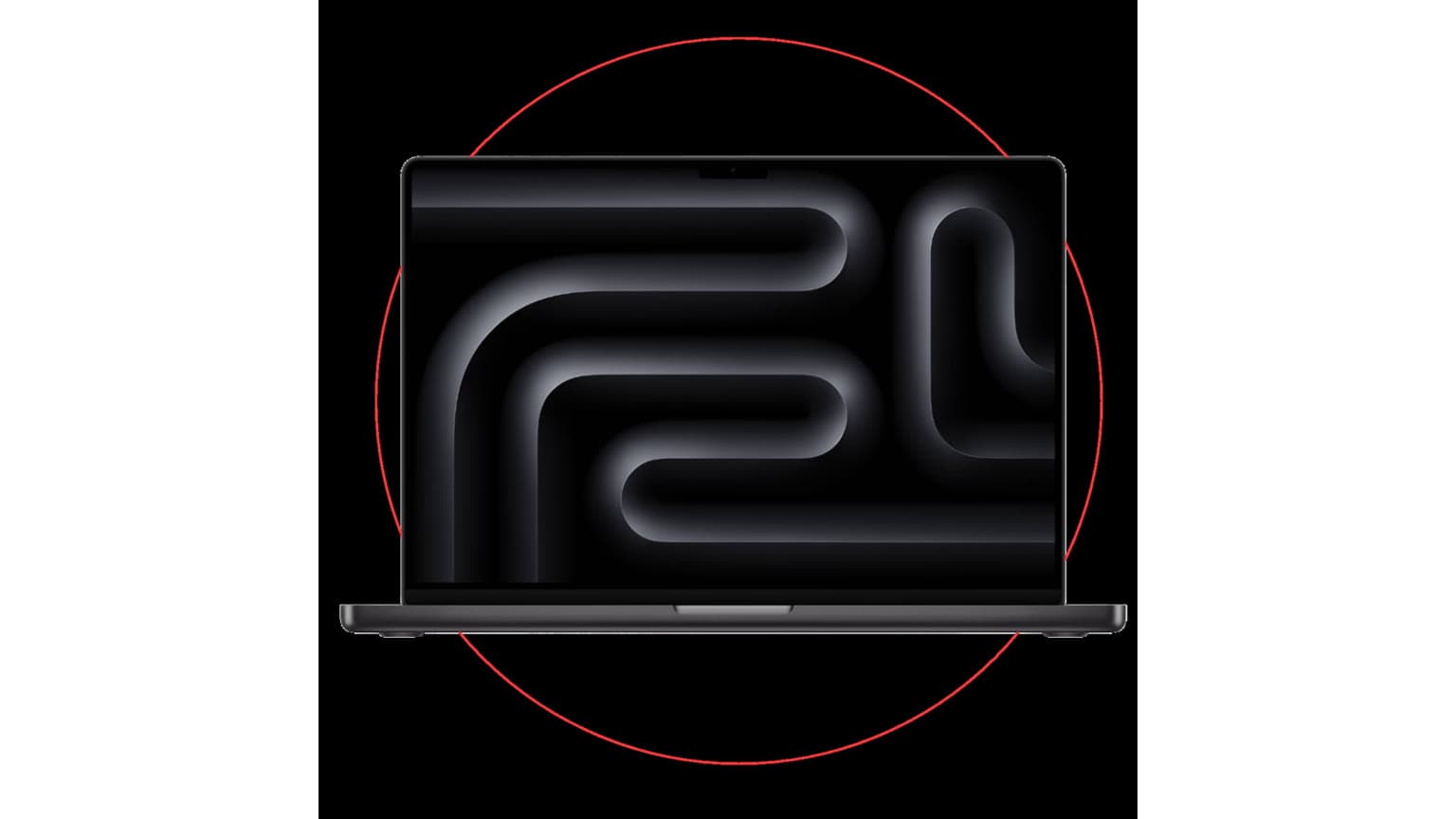
Apple has not officially announced a MacBook Ultra, but fresh June 2026 reporting has made the rumored high-end MacBook redesign more relevant for Nigerian buyers who are deciding whether to buy a current MacBook now or wait. The latest source-backed picture is this: Apple is reportedly preparing a premium MacBook-class laptop with OLED display technology, touch support, possible Dynamic Island-style camera treatment, M6 Pro or M6 Max silicon, a thinner chassis, and potentially built-in cellular connectivity. Some reports frame it as a redesigned high-end MacBook Pro, while others say Apple may use a new MacBook Ultra name.
This draft should be treated as source-backed pre-release coverage, not official-source verified product news. There is no confirmed Apple product page yet, no Nigerian launch notice, and no Ogabassey catalog listing for a MacBook Ultra at the time of writing. That matters because buyers should not make a deposit, trade-in, or import decision based only on rumored names and dates. The useful question is narrower: if the reporting is directionally correct, which buyers should pause, and which buyers are better served by current MacBook options already in the market?
For Ogabassey readers, the short version is practical. If your current laptop is failing, you need a machine for school, NYSC, work, coding, editing, or business travel now, waiting for an unannounced premium model is risky. Start from the current Macbooks category and compare available options such as the MacBook Air M4 or higher-performance MacBook Pro M4 Pro. If you already own a strong M1 Pro, M2 Pro, M3 Pro, or M4-class MacBook Pro and you mainly want the next major screen and design jump, this is the kind of rumor cycle worth watching carefully.
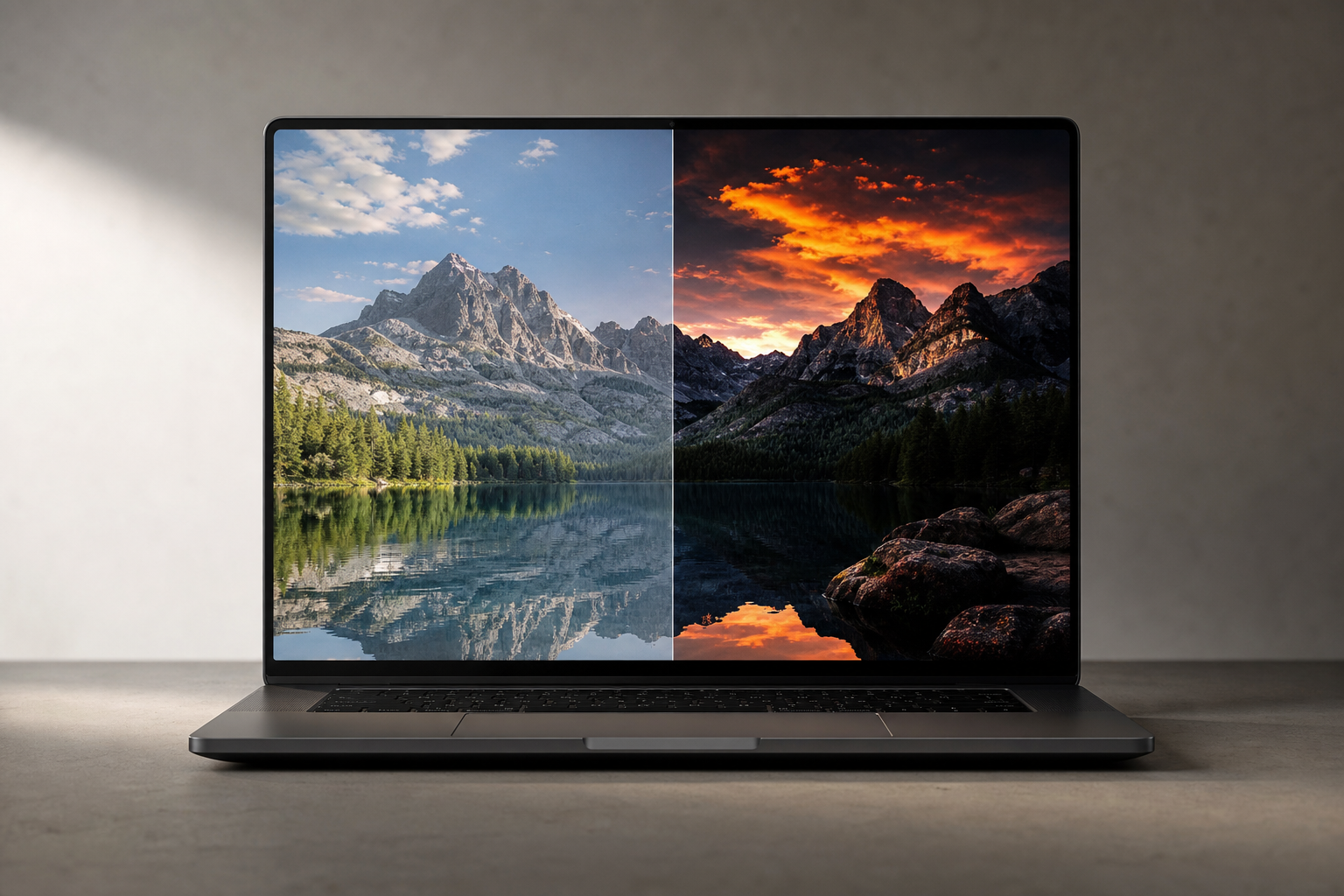
OLED would mainly matter for contrast, color depth and creator workflows, if the reported MacBook redesign ships.
What changed in the MacBook Ultra rumor cycle
The newest June reports tighten three parts of the story: display, timing, and positioning. MacRumors reported on June 5 that Apple may use MacBook Ultra branding for the highest-end redesigned MacBook models, with expected features including OLED, touch support, a Dynamic Island-style area, M6 Pro and M6 Max chips, a thinner design, and possible cellular connectivity. Notebookcheck and 9to5Mac also reported June 4 details from Omdia-linked display supply-chain coverage, including 14.3-inch and 16.3-inch OLED panel sizes and a possible third-quarter 2026 launch window.
The dates are not settled. One line of reporting points to the back half of 2026 or Q3 2026, while another says early 2027 may be more likely because of memory supply constraints. That conflict is exactly why Nigerian buyers should treat this as a planning signal, not a buying commitment. A Q3 2026 reveal could still mean later regional availability, delayed shipments, or early prices that are difficult to justify locally. An early 2027 launch would make waiting a different decision entirely, especially for students and professionals who need a dependable laptop before the next academic or business cycle.
The display story is the strongest buyer-facing change. A move from mini-LED to OLED could improve contrast, black levels, and perceived image depth, especially for video editors, photographers, designers, and film-heavy users. Touch support would be a bigger philosophical shift for macOS laptops. It could help annotation, creative review, and occasional tablet-like gestures, but it does not automatically make the MacBook a better machine for everyone. For office work, coding, writing, accounting, browsing, and remote meetings, keyboard, trackpad, ports, battery health, RAM, and storage still matter more than touching the screen.
Why it matters for Nigerian buyers
Premium Apple laptop launches often arrive in Nigeria with three practical questions: price, warranty confidence, and configuration discipline. A rumored MacBook Ultra would likely sit above current Pro models, so early import pricing could be painful. Buyers should expect the first wave to favor expensive configurations, limited colors, and higher margins before pricing settles. That does not make the product bad; it means the first local units may be poor value unless the buyer truly needs the screen, performance ceiling, or new form factor.
For most Nigerian buyers, the bigger risk is overbuying. A student, office worker, web developer, or small business owner may get better value from a current MacBook Air than from waiting for a premium OLED MacBook. The MacBook Air M4 should remain the more sensible target for portability, battery life, and everyday macOS work if its RAM and storage configuration match the workload. Buyers who edit video, run heavier design apps, compile large projects, or connect multiple displays should compare Pro-class machines such as the MacBook Pro M4 14-inch, MacBook Pro M4 Pro, and MacBook Pro M4 Max before assuming the next Ultra model is necessary.
Used and open-box buyers should be even more careful. A future OLED redesign can make older mini-LED and LCD models look less exciting, but it can also create better prices on existing MacBooks. If the MacBook Ultra becomes real, the smarter move for many buyers may be to watch price drops on current Pro models rather than chase the newest machine. A well-priced M4 Pro or M4 Max MacBook with clean battery health, verified charger, intact display, and trusted warranty route may be a stronger Nigeria value than an expensive first-wave Ultra import.
Platform, compatibility and availability context
The rumored M6 Pro and M6 Max chips would continue Apple Silicon's performance direction, but buyers should separate chip generation from real workload needs. Apple Silicon already handles office work, web development, media consumption, light creative work, and many professional apps well. The reason to wait for M6-class hardware is not simply that it is newer; it is because you expect to benefit from a better display, stronger sustained performance, more efficient battery behavior, or a configuration not available today.
macOS compatibility is another deciding factor. Nigerian buyers who rely on Windows-only accounting software, engineering tools, some games, or hardware utilities should not let the Ultra rumor override software fit. If your workflow is Windows-first, check the wider Laptops category and compare suitable Windows alternatives before locking yourself into macOS. If you are buying for gaming, a MacBook Ultra rumor should not distract you from dedicated GPU options in Gaming Laptops. Apple Silicon is strong, but game library support and Windows compatibility can still decide the better purchase.
Availability is the part no rumor can solve. Ogabassey catalog availability is not confirmed for MacBook Ultra because the product has not been officially launched or added to the catalog. When a launch becomes official, the catalog should be reconciled against real model numbers, keyboard layout, charger type, RAM, SSD, warranty route, and condition. Until then, readers should treat all claimed Nigerian prices, pre-order timelines, and guaranteed stock promises from unofficial sellers with caution.
For Nigerian buyers, charger, warranty route, serial history and configuration matter as much as the launch headline.
What to verify before buying or waiting
Use this checklist before choosing a current MacBook or deciding to wait for the rumored model. First, confirm your workload. If you mainly write, browse, attend meetings, manage spreadsheets, code moderately, and carry the laptop daily, the Air line may still be enough. If you edit 4K video, produce music, render graphics, or keep many external displays and pro apps open, Pro-class hardware is easier to justify.
Second, check RAM and storage before screen hype. Many buyers regret a low-RAM or low-storage MacBook more than they regret missing the newest display. Apple laptops are not upgrade-friendly after purchase, so the configuration you buy is usually the configuration you live with. For local resale value, balanced RAM and SSD choices often matter more than chasing the first generation of a new design.
Third, inspect power and warranty details. A premium imported MacBook should come with a proper charger, clean serial history, clear receipt trail, and a credible support route. Confirm the keyboard layout, plug type, battery cycle count for used units, display condition, hinge behavior, ports, speakers, and whether any repairs were done. OLED would add another future inspection point: screen uniformity and burn-in policy should be checked once real units exist.
Fourth, do not pay based on a name alone. MacBook Ultra may become a real product name, or the same hardware may arrive as a high-end MacBook Pro. Either way, the final value will depend on official specs, Nigerian pricing, warranty path, and whether older M4 or M5 machines become discounted. Buyers comparing current and future Apple Silicon options can also read Ogabassey's broader Apple Silicon guide, Apple Silicon Power Rankings, for context on how older chips still fit real workloads.
Related Ogabassey categories and products
If you need a MacBook now, start with current catalog categories instead of waiting on an unannounced product. Browse Macbooks for Apple laptops, Laptops for broader Windows and macOS choices, and Desktops if your workload is mostly fixed-location creative or office work. For a lower-cost Apple route, used Intel models such as the MacBook Air 13-inch (2020 Intel) or MacBook Pro 13-inch (2020 Intel) may still appear in buyer conversations, but they should be judged carefully against Apple Silicon models for battery life, heat, software support, and resale confidence.
The cautious buyer verdict is simple: watch the MacBook Ultra story, but do not freeze a necessary purchase because of it. The rumor is strong enough to matter for high-end creators and Pro users who can wait. It is not strong enough to justify risky pre-orders, invented Nigerian availability claims, or delaying a laptop needed for school or work. Until Apple confirms the product, treat this as a watchlist item and compare it against real catalog options when the official specs and local availability become clear.
Catalog-linked prices update automatically. Historical and other quoted prices remain as written. Open the product page to confirm the current price, selected variant and availability before buying.