Bassey John is a Performance Marketing Specialist at Ogabassey with cross-industry experience spanning e-commerce, gaming, and real estate. He focuses on paid acquisition, conversion-rate optimisation, and data-driven growth strategy, turning campaign performance into measurable revenue. At Ogabassey he writes about consumer technology, product buying guides, and the Nigerian gadget market to help shoppers make confident, informed decisions.
Continue shopping smartphones
Compare Itel verified prices, condition grading, and key specs in smartphones.
The itel Power Go 320Wh costs ₦93,500 and is listed in stock in Ogabassey’s supplied 14 November 2026 snapshot. It suits compatible USB and DC essentials during outages, but has no AC socket. Buy it for verified phone, router or USB-C laptop needs; choose an AC-equipped alternative for appliances requiring wall-plug power.
Who this is for: keeping essential devices connected
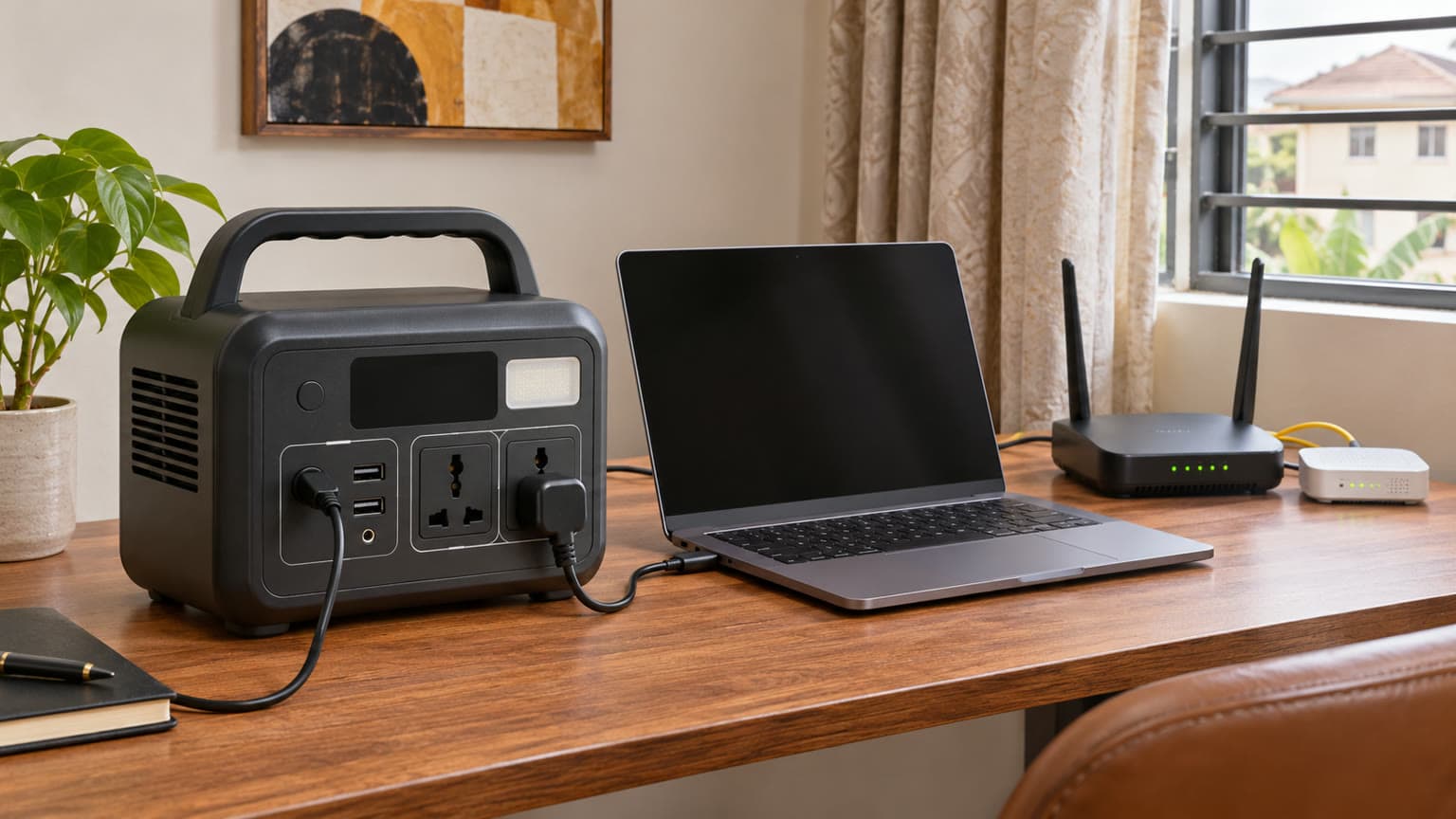
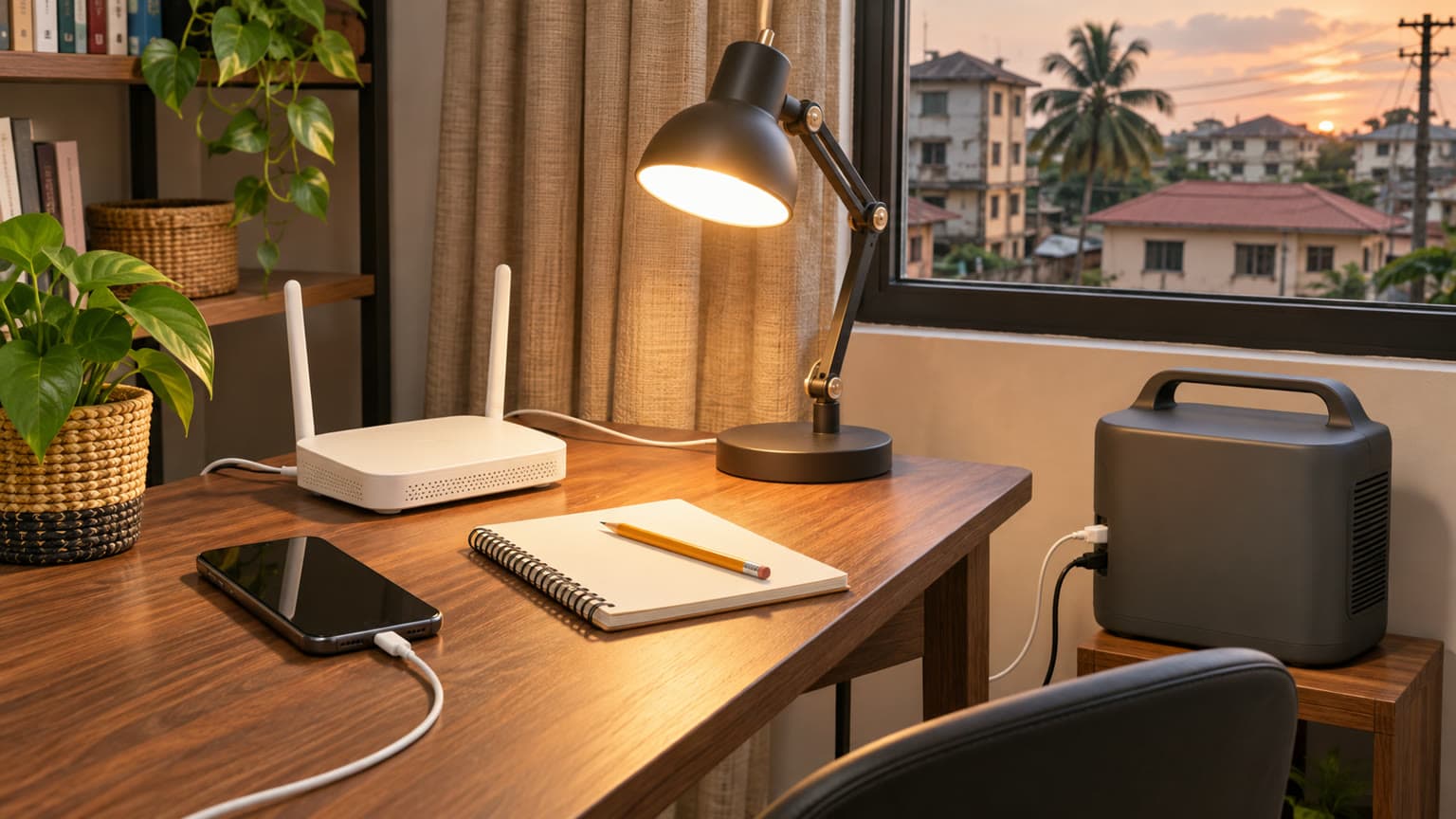
The useful question is whether this station can supply the devices you actually need during an outage. For someone working through mobile data, that could mean a phone and a compatible router. For another buyer, it could mean a laptop that accepts suitable USB-C charging. These are different requirements, even when both buyers describe their need as backup power.
The original Power Go is a sensible candidate when every essential device can use its USB or DC connections. It is a poor fit if your plan depends on plugging an ordinary AC charger, television or extension board into it. The catalog explicitly distinguishes this model from Power Go Pro, which adds AC output. A larger battery figure cannot compensate for a missing connection.
Our buyer judgement is to start with a short device list before choosing a station. Write down each device’s input voltage, required power and connector. Then decide which devices must run together. This approach helps avoid spending ₦93,500 on stored energy that your most important appliance cannot access.
Illustration of checking connections and electrical requirements before buying backup power.
Key specs and buying context
This is a catalog-verified buying guide supported by the manufacturer’s IESS-320T datasheet, rather than a hands-on review. The table separates documented attributes from purchase details that still require confirmation.
itel Power Go: entity, attribute and value
Entity
Attribute
Value and buying implication
itel Power Go
Current Ogabassey price
₦93,500 in the supplied snapshot dated 14 November 2026, 05:21 UTC; check the live product card for the current offer.
itel Power Go
Availability
Listed in stock; inventory policy: unmanaged catalog stock.
itel Power Go
Condition
New.
itel Power Go
Category
Portable Power Stations.
itel Power Go
Model
IESS-320T; confirm the supplied unit matches.
itel Power Go
Battery energy and chemistry
320Wh, LiFePO4.
itel Power Go
Outputs
USB and DC; no AC wall socket.
itel Power Go
Total output ceiling
130W, according to the manufacturer datasheet; individual port limits also apply.
itel Power Go
USB-C output
Up to 65W; device and cable compatibility must be checked.
itel Power Go
Charging input
Up to 100W through a compatible supported source.
itel Power Go
Package
Solar panels and installation are excluded; complete accessory list: Not listed in the supplied snapshot.
itel Power Go
Warranty and trust
Manufacturer datasheet advertises a one-year warranty; applicable Ogabassey coverage, exclusions and claim process: Not listed in the supplied snapshot.
itel Power Go
Alternative
Power Go Pro when AC output is required; its current Ogabassey price is not supplied in this assignment.
Open the itel Power Go 320Wh product page for the current offer and selected package. The body price is an editorial snapshot, not a promise that checkout pricing or availability will remain unchanged. The supplied catalog record was last updated on 30 October 2026; the later first-party snapshot reports the same price.
Compatibility: can it power your router, phone or laptop?
Phones, including itel A100 and itel A100c
If you arrived while researching an itel A100 or itel A100c, this product is a separate backup battery station, not a phone model. Phone compatibility depends on the charging connection and supported electrical requirements. An itel logo on both devices does not establish a particular fast-charging speed, and this assignment contains no verified charging specification for either phone.
Check your phone’s charging requirements and use an appropriate cable. The station’s maximum output is a ceiling, not a claim that a phone will accept that amount. Buy for the number of devices you need to support and the required charging arrangement, rather than assuming every connected phone receives the same power.
Routers require more than a matching plug
Read the router’s input label before ordering a cable. Voltage, connector dimensions and polarity must match the intended station output. Check current requirements too. A barrel connector that physically fits can still be electrically unsuitable. If your internet setup uses both a router and a separate optical network terminal, include both devices in the load list.
Router backup also raises a continuity question: will the connection remain active when mains power disappears? Automatic UPS operation and transfer behaviour are not established by the supplied evidence. Do not assume uninterrupted internet merely because a station can power the router. Ask for confirmation of the exact operating arrangement if avoiding a reboot is essential.
USB-C laptops need a compatible power profile
A laptop must support charging through the relevant USB-C port; some USB-C ports only handle data or display output. Check the laptop manufacturer’s input requirement and the cable’s capability. Even when charging works, a demanding laptop may consume energy faster than the station supplies it under heavy use.
A laptop that requires its AC charging brick cannot connect that brick directly to this original Power Go. That is a reason to compare an AC-equipped station. The supplied compatible-products list is empty, so this guide does not certify any particular phone, router, laptop or accessory pairing.
Trade-offs: battery energy is different from output power
The 320Wh figure describes stored energy. It does not mean the station can supply a 320W appliance. Conversely, an output rating describes how much power can be supplied at a moment, rather than how long the battery will last. Both limits matter, alongside the rating of the particular port you use.
For illustration, a hypothetical compatible load drawing a steady 20W would give an ideal calculation of 320Wh divided by 20W, or 16 hours. At 50W, the same arithmetic gives 6.4 hours. These are loss-free calculations, not tested runtimes or product promises. Usable energy, conversion losses, battery condition and changing device demand affect the result.
The practical takeaway is to protect the essential workload first. Charging extra devices from the same battery reduces the energy available to your router or laptop. If your priority is finishing a work session, decide which devices can wait until mains power returns.
Charging arrangements deserve the same attention. A USB-C connector alone does not establish that an existing charger will recharge this station at its maximum input. Confirm the supported charger, cable and supplied accessories. Solar panels are excluded, so anyone planning solar backup needs a separate compatible panel and the appropriate connection equipment.
Do not select a panel from its advertised wattage alone. Its electrical characteristics and connection must match the exact unit’s requirements. Panel placement and daylight also affect charging. This guide does not promise a fixed solar recharge time or simultaneous charging and discharging behaviour.
Illustration of the connection choice: USB and DC essentials or devices requiring an AC socket.
Alternatives: choose the connection before the capacity
Decision table for common backup requirements
Your requirement
Option to consider
Decision
Several verified USB/DC essentials
itel Power Go 320Wh
Suitable candidate if individual connections and combined demand meet its limits.
A device requiring an AC wall socket
itel Power Go Pro
The catalog identifies Pro as the AC alternative; verify its exact output, package and current price.
Only occasional phone charging
A suitable conventional power bank
Compare complete cost and required capacity before paying for a larger station.
Longer backup or several AC appliances
A larger appropriately specified station or inverter system
Build a load list and compare energy, continuous output and startup requirements.
Internet that must survive an outage without rebooting
A verified router UPS arrangement
Confirm voltage, connections and continuity behaviour rather than assuming Power Go provides UPS operation.
Browse Ogabassey’s Portable Power Stations category to compare connection types and capacity. Power Go Pro is a relevant named alternative because it addresses the original model’s missing AC socket. Its current price and full specifications are not supplied here, so there is no supported price-premium calculation in this draft.
The value test is whether the complete setup solves your outage problem. Include compatible cables, a charging source, any separately purchased panel and delivery in your budget. A station with a lower headline price can become a poor purchase if the necessary accessories are missing or its connections exclude your main device.
Availability, warranty and delivery: what to confirm
The supplied first-party record marks Power Go as in stock under unmanaged inventory. Its numeric stock count of zero does not mean it is sold out: this catalog policy does not cap availability using that count. Confirm fulfillment availability and the exact revision before paying, especially when you need backup power by a particular date.
Ask OgaBassey to confirm the unit’s model label, included charging equipment and written warranty terms. The manufacturer datasheet’s warranty statement does not by itself establish the merchant’s claim procedure, covered accessories or exclusions. Keep the invoice and obtain the service contact applicable to the supplied energy product; phone service arrangements should not be assumed to cover a power station.
Delivery charges and a guaranteed delivery date are not supplied in the assignment. Obtain the cost and timing for your address, and clarify what happens if the delivered model or package differs from the order. Those details affect the real purchase cost and whether the product arrives in time for your intended use.
Verdict
At the recorded ₦93,500 price, the itel Power Go is a focused candidate for compatible USB/DC backup. Its clearest advantage is providing 320Wh of stored energy for essentials without requiring you to choose an AC arrangement. Its decisive limitation is the absence of an AC socket. Buy after verifying your device list; compare Power Go Pro or another suitable AC-equipped option when a wall-plug appliance is central to the purchase.
FAQ
What is the itel Power Go 320Wh price in Nigeria?
Ogabassey’s supplied 14 November 2026 snapshot lists ₦93,500 and in-stock availability. Inventory is unmanaged, so a numeric stock count of zero does not mean sold out. Check the linked live product card for the current price and confirm fulfillment before ordering.
Can the itel Power Go power a router or laptop?
Potentially, if the device matches the station’s supported connection and electrical requirements. Router voltage, polarity and connector fit matter. A laptop must support an appropriate USB-C charging profile, or another verified DC connection. A laptop requiring an AC charging brick needs an AC-equipped alternative.
Can it charge an itel A100 or itel A100c?
Check the phone’s charging requirements against the station’s USB output and use a suitable cable. This guide does not verify either phone’s charging profile or promise a fast-charging speed. The Power Go price is for the backup station, not either handset.
Does Power Go include an AC socket or solar panel?
The original Power Go has no AC wall socket, and solar panels are excluded from the supplied catalog package. The catalog identifies Power Go Pro as the alternative for AC output. Confirm its exact specifications and separately verify any proposed solar panel’s compatibility.
Catalog-linked prices update automatically. Historical and other quoted prices remain as written. Open the product page to confirm the current price, selected variant and availability before buying.