Bassey John is a Performance Marketing Specialist at Ogabassey with cross-industry experience spanning e-commerce, gaming, and real estate. He focuses on paid acquisition, conversion-rate optimisation, and data-driven growth strategy, turning campaign performance into measurable revenue. At Ogabassey he writes about consumer technology, product buying guides, and the Nigerian gadget market to help shoppers make confident, informed decisions.
Choose the iPhone 15 Plus for its larger screen, battery advantage and lower listed price; choose the iPhone 15 Pro for smoother scrolling, a dedicated zoom camera and a smaller body. For Nigerian buyers, the supplied Ogabassey snapshot lists ₦800,000 and ₦1,050,000 respectively, with condition and variant checks essential before payment.
Decision summary: what does the Pro premium buy?
The useful question is whether the Pro’s extra features match something you will use regularly. The Plus gives you a 6.7-inch display, while the Pro has a 6.1-inch display with a higher refresh rate. Someone reading documents, watching lessons or reviewing spreadsheets may prefer the larger screen. Someone who values smooth scrolling and easier one-handed handling may prefer the Pro.
Our editorial recommendation is to start with the Plus if your priorities are screen space and spending less. Move to the Pro when its dedicated 3x camera, compact dimensions or Apple Intelligence compatibility solves a specific need. This is a catalog-grounded comparison with selected Apple specifications checked against official support pages; it is not a hands-on performance or battery test.
Compare the selected configurations on the Ogabassey iPhone 15 Plus listing and Ogabassey iPhone 15 Pro listing. Both records are marked used, and their descriptions also list Open Box options. Neither starting figure should be treated as a brand-new sealed-unit quotation.
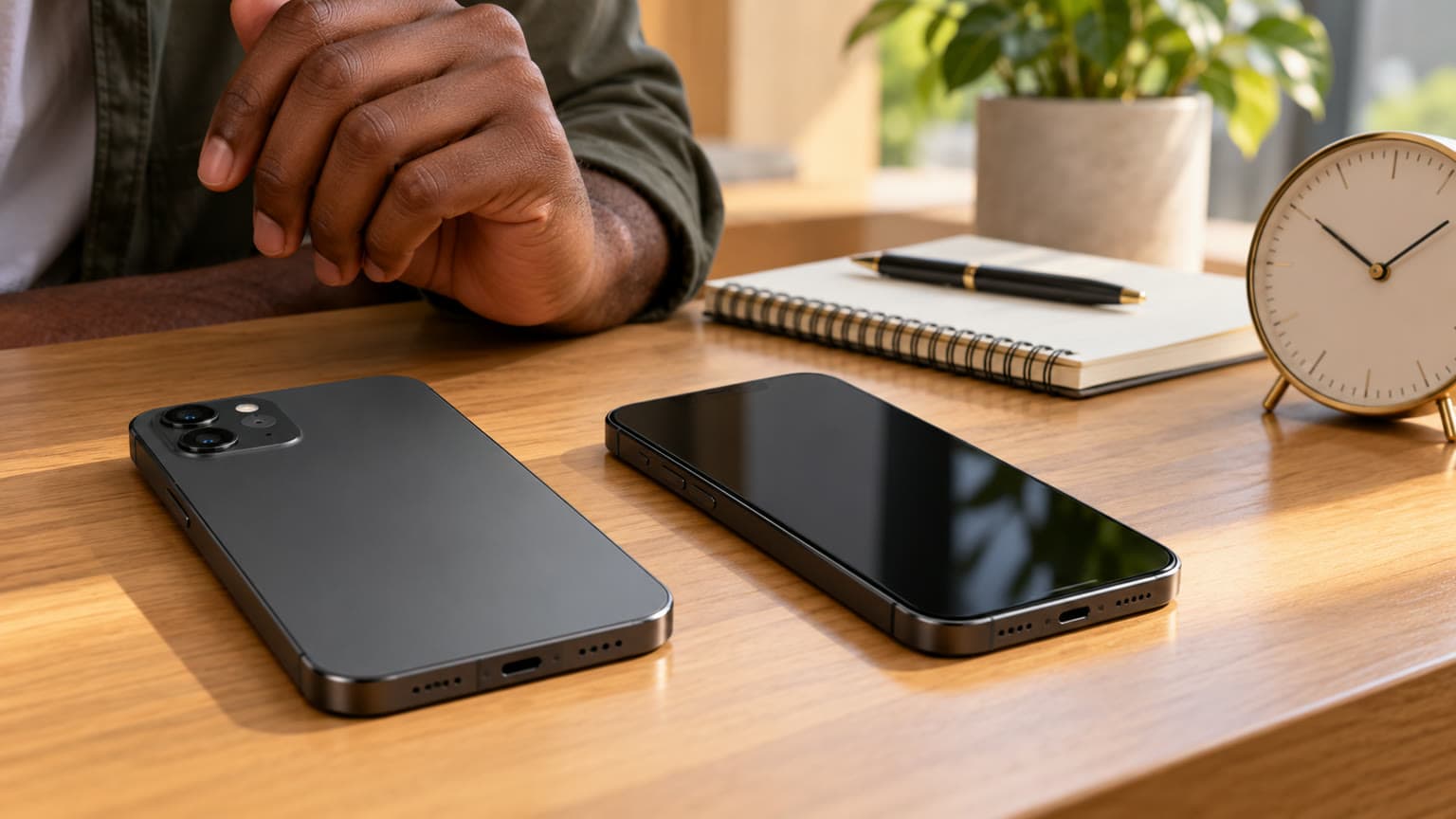
Illustration: the 6.7-inch Plus and 6.1-inch Pro offer different viewing and handling priorities.
iPhone 15 Plus vs iPhone 15 Pro specifications
The table below uses the supplied comparison matrix. Storage represents its listed 128GB configuration, rather than every selectable option. The camera row needs one clarification: the Pro’s 2x view comes from its main sensor; it is not a fourth physical rear camera. The separate 3x telephoto is the meaningful hardware difference.
Attribute
iPhone 15 Plus
iPhone 15 Pro
5G support
Yes; bands vary by model
Yes; bands vary by model
Dimensions
160.9 × 77.8 × 7.80 mm
146.6 × 70.6 × 8.25 mm
Weight
201g
187g
Build
Aluminum, Ceramic Shield front, color-infused glass back
Titanium design, Ceramic Shield front, textured matte glass back
SIM
Physical SIM and eSIM variants listed; support varies by region
Physical SIM tray on non-US models; eSIM support varies by region
4K Dolby Vision HDR up to 60 fps; ProRes, Action mode and spatial video listed
Optical image stabilisation
Yes
Yes
Front camera
12MP
12MP
Stereo speakers
Yes
Yes
3.5mm headphone socket
No
No
Wi-Fi
Wi-Fi 6 with 2×2 MIMO
Wi-Fi 6E
Bluetooth
5.3
5.3
RAM figures are catalog-listed secondary specifications; Apple does not publish RAM in these technical specification sheets. Likewise, the table’s video entries reflect what the matrix lists, so a feature appearing in only one cell does not automatically establish that the other phone lacks it.
Price in Nigeria: compare equivalent units before choosing
In Ogabassey’s supplied first-party snapshot, checked as of 3 November 2026 at 05:20 UTC, the product-level prices are ₦800,000 for the Plus and ₦1,050,000 for the Pro. That is a ₦250,000 difference, or 31.25% of the Plus price. These are dated editorial snapshots. Open the linked live product cards for the current offer and confirm the selected storage, condition and SIM variant.
There is a reason to avoid calling that difference a universal Pro premium. The supplied variant ranges are ₦800,000–₦1,230,000 for the Plus and ₦825,000–₦1,630,000 for the Pro. The record does not map every price to a precise configuration. A cheaper Pro option could therefore differ in condition or another selectable attribute; it is not evidence that an equivalent Pro costs only ₦25,000 more.
Ask for matching quotes: same storage, comparable cosmetic grade, battery condition and written warranty or return terms. If the Pro’s extra cost forces you to accept a weaker battery or unclear repair history, the better-kept Plus can be the more sensible purchase. That is a buying judgement, not a claim about the condition of any particular listed unit.
Both products are marked in stock in the snapshot. Their inventory is unmanaged, so the numeric stock count of zero does not mean sold out. It also does not establish how many units are ready for dispatch. Confirm availability and delivery timing for your chosen configuration before paying.
Battery, display and build: the Plus has a different advantage
Which has better battery life?
Apple rates the Plus for up to 26 hours of local video playback and the Pro for up to 23 hours. Its streamed-video rating is up to 20 hours for both. These manufacturer figures support a battery advantage for the Plus in one workload, rather than a promise that it will last three hours longer through every working day.
For a used purchase, the actual battery deserves more attention than the model name. Apple’s battery guidance says iPhone 15 models running supported software can show maximum capacity, cycle count and first-use information under Settings, Battery, Battery Health. Request those details for the actual unit. A model-level endurance advantage cannot tell you how an individual battery has aged.
Do you want a bigger display or smoother motion?
The Plus’s larger screen is useful for subtitles, lecture videos and reviewing documents without as much zooming. The Pro’s higher refresh rate favours buyers who notice scrolling smoothness. Both have the same listed pixel density, so the Plus’s higher total resolution mainly accompanies its larger panel; it does not mean a denser screen.
The Pro is also 14g lighter and appreciably narrower. That makes it the more practical candidate if the Plus feels awkward to hold or carry. Try the size with a protective case before deciding: a large display is only an advantage if you are comfortable using it throughout the day.
Charging is not a strong reason to pay more
Apple describes both as capable of reaching roughly 50% charge in around 30 minutes with a 20W-or-higher adapter under its test conditions. Both support MagSafe charging up to 15W. Treat those as conditional charging claims, and confirm which cable and adapter accompany the selected used or open-box unit. A USB-C connector alone does not establish an accessory’s charging capability.
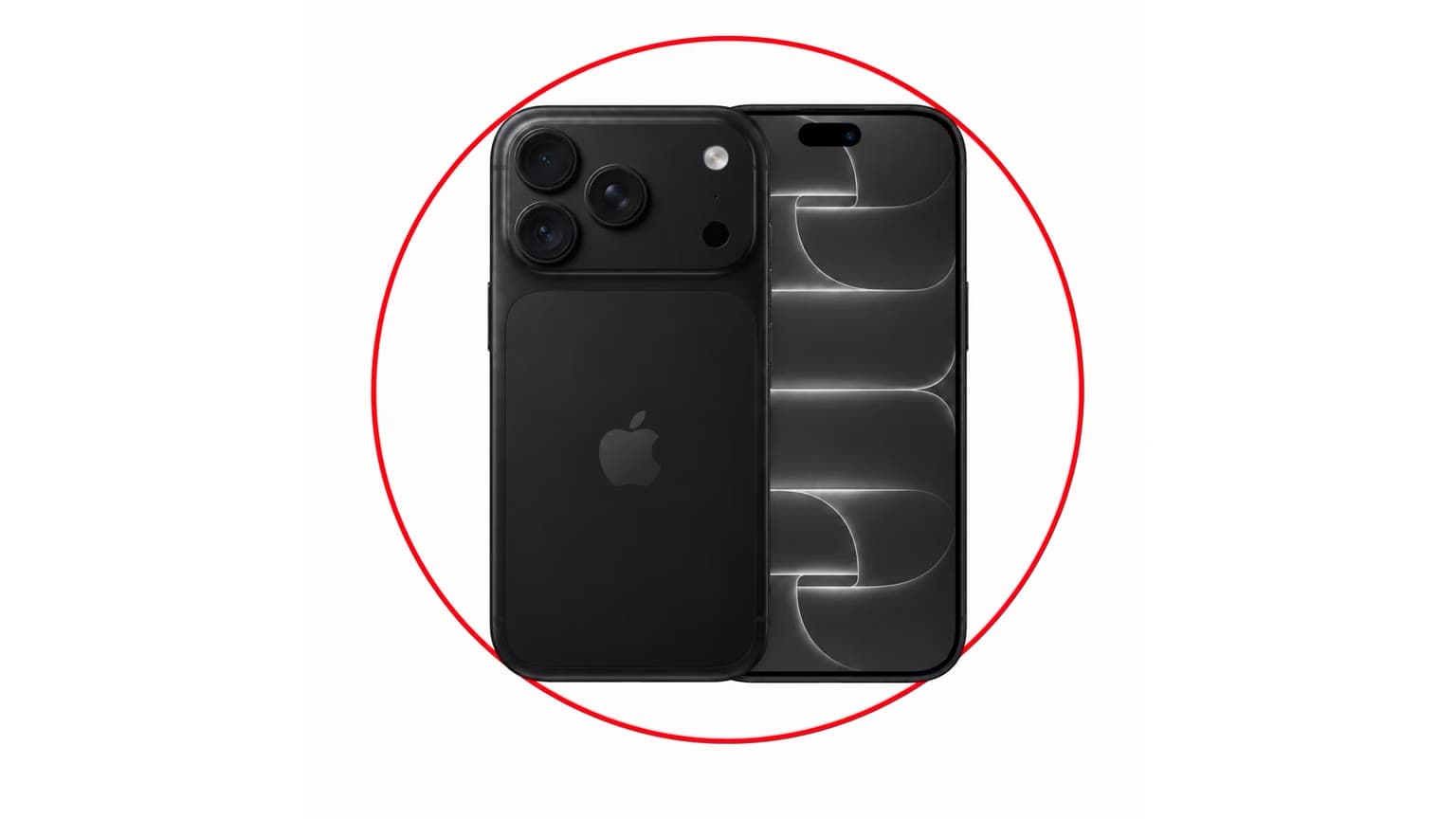
Illustration: the Pro adds a dedicated 3x telephoto camera. Hardware should follow verified product references.
Camera verdict: pay for the 3x lens when you need it
Both phones list a 48MP main camera, an ultra-wide camera and 4K Dolby Vision recording. The Plus therefore covers the essential camera modes for everyday photographs, family videos and routine social posts. Choosing it does not mean giving up high-resolution capture simply because its rear camera module has fewer lenses.
The Pro’s dedicated 3x telephoto is the clearest reason for a photographer to spend more. It gives you another framing option when you cannot move closer to a subject. Its 2x setting, like the Plus’s, uses the main sensor. Do not confuse the 15 Pro’s dedicated 3x camera with the different zoom specification of the 15 Pro Max.
ProRes is another Pro advantage in the supplied record, but it matters most when your editing workflow uses it. A buyer recording short clips and uploading them directly should first consider storage, lighting and battery condition. Paying for a specialist recording format without a plan to use it is unlikely to be the best allocation of the budget.
Performance and daily use: decide by workload and storage
The matrix lists A16 Bionic with a five-core GPU for the Plus and A17 Pro with a six-core GPU for the Pro. Both have six-core CPUs. Those specifications establish different hardware, but they do not provide measured app-opening times, sustained gaming results or thermal performance for the used units on offer.
For calls, messaging, browsing and document work, our recommendation is to weigh display comfort and device condition before paying for the higher-tier chip. For demanding games or creative work, the Pro is the stronger hardware candidate, although this draft has no benchmark evidence to quantify the improvement.
Storage can change the decision more than RAM. The catalog lists 128GB, 256GB and 512GB options for the Plus, with a 1TB option additionally listed for the Pro. Neither accepts a memory card. Compare the price of your required capacity before choosing: a camera-focused buyer who continually runs out of storage may benefit more from an adequately sized configuration than from the Pro badge alone.
Software support and Apple Intelligence
Apple lists iPhone 15 Pro models among Apple Intelligence-compatible devices; the iPhone 15 Plus is outside that supported group. Availability depends on software, language and region, so confirm the particular feature you want. This compatibility difference is a stronger reason to choose the Pro than assuming every future iOS feature will arrive on both phones.
No fixed final software-support date is established by the supplied evidence. Do not buy either on a promised number of remaining updates. Check current compatibility for your essential apps and the installed software before completing a used purchase, especially if work depends on banking, authentication or business applications.
Nigerian SIM compatibility, warranty and repair considerations
Both models support 5G, so paying more for the Pro does not unlock a network generation missing from the Plus. For use in Lagos, Abuja or elsewhere, the relevant questions are your operator’s coverage, plan and support for the exact regional model. The snapshot does not establish street-level coverage or guarantee service on every Nigerian network.
The regional SIM configuration matters particularly for imported units. US-market models use eSIM, while physical-SIM configurations vary elsewhere. If you use MTN, Airtel or Glo, verify the operator’s current activation options for your line and inspect the actual phone’s tray and model details. Do not infer physical-SIM support solely from the words iPhone 15 Plus or iPhone 15 Pro.
Ask for the serial number and IMEI to match the device and invoice, a demonstration of activation, and any disclosed parts or service history. Check Face ID, cameras, speakers, microphone and charging on the unit being purchased. Open Box is a condition label; it does not supply a battery-health guarantee or establish remaining manufacturer coverage.
Warranty duration, return windows and repair-part prices are not listed in the supplied comparison evidence. Obtain the terms in writing and ask what happens if a fault appears after delivery. If repair budgeting affects your choice, request an assessment through Ogabassey Phone Repairs. There is no evidence here to declare either model cheaper to repair or to promise replacement-part availability.
Who should buy each option?
Your priority
Best fit
Trade-off
Large display and lower product-level price
iPhone 15 Plus
Larger body and 60Hz refresh rate
Battery endurance
Plus, subject to actual battery health
Manufacturer ratings vary by workload
Compact handling and smooth scrolling
iPhone 15 Pro
Smaller viewing area and higher listed product price
Dedicated zoom camera and ProRes
iPhone 15 Pro
Extra cost needs a useful camera workflow
Apple Intelligence compatibility
iPhone 15 Pro
Specific features remain software, language and region dependent
Warranty confidence and repair budget
The unit with clearer terms and history
No comparative repair costs or warranty duration supplied
Alternatives worth comparing
If neither combination fits, browse the Ogabassey iPhone 15 family to compare the available configurations, then widen the search through the Apple iPhone storefront. A different storage or condition option may address your budget more directly than switching between these two models.
For readers deciding between an older Pro and a newer everyday iPhone, the related iPhone 15 Pro vs iPhone 17 comparison addresses that separate choice. If you are open to Samsung, Tecno, Infinix, Xiaomi or Google Pixel, use the wider smartphone catalogue to shortlist actual models at your budget. This evidence does not support naming one of those brands the winner without comparing specific devices.
Verdict
Buy the iPhone 15 Plus for its 6.7-inch screen and lower supplied product-level price; buy the iPhone 15 Pro for its 6.1-inch, up-to-120Hz display, 187g body and dedicated 3x telephoto. Those are meaningful differences in the comparison matrix. At the snapshot’s ₦250,000 product-level gap, the Plus is our value recommendation for large-screen everyday use, while the Pro earns its premium for compact handling, camera flexibility or Apple Intelligence compatibility. Let the selected unit’s battery condition and written terms settle a close decision.
FAQ
Which phone is best for my budget in Nigeria?
The supplied snapshot lists the iPhone 15 Plus at ₦800,000 and iPhone 15 Pro at ₦1,050,000 as of 3 November 2026, 05:20 UTC. Choose the Plus for a larger screen at the lower product-level price. Compare matching storage, condition and battery health before treating the difference as a like-for-like premium.
Does the iPhone 15 Plus have better battery life than the 15 Pro?
Apple rates local video playback at up to 26 hours for the Plus and 23 hours for the Pro, with streamed video rated up to 20 hours on both. Actual results vary. On used units, check battery health and cycle count before choosing.
Is the iPhone 15 Pro camera worth paying extra for?
It can be if you need the dedicated 3x telephoto or ProRes recording. Both models list 48MP main cameras and 4K Dolby Vision video, so the Plus remains a reasonable everyday camera choice. The Pro premium is easier to justify when you regularly use its additional options.
Is 5G worth paying extra for in Lagos or Abuja?
Both phones already support 5G, so the Pro premium does not buy exclusive 5G access. Check your operator’s coverage, plan and exact regional-model compatibility. Your usual locations and SIM requirements matter more than choosing Pro over Plus for this feature.
Catalog-linked prices update automatically. Historical and other quoted prices remain as written. Open the product page to confirm the current price, selected variant and availability before buying.