Bassey John is a Performance Marketing Specialist at Ogabassey with cross-industry experience spanning e-commerce, gaming, and real estate. He focuses on paid acquisition, conversion-rate optimisation, and data-driven growth strategy, turning campaign performance into measurable revenue. At Ogabassey he writes about consumer technology, product buying guides, and the Nigerian gadget market to help shoppers make confident, informed decisions.
The Infinix HOT 70 Pro starts at ₦420,200, while the Note Edge starts at ₦417,300 in Ogabassey’s supplied 4 November 2026 snapshot. The Note Edge is the stronger starting choice for its curved AMOLED display and larger battery; choose the Pro for its reported 144Hz display or expandable storage only after confirming the exact unit.
Decision summary: which phone fits your budget?
These two new Infinix phones begin just ₦2,900 apart, so the useful question is what your selected configuration delivers. The Note Edge combines a listed 6.78-inch 1.5K curved AMOLED screen, 6500mAh battery and 8GB RAM. The HOT 70 Pro offers a different proposition: a reported 6.76-inch 144Hz IPS LCD, 6000mAh battery and microSD support, with more uncertainty around its regional specifications.
Our editorial preference is the Note Edge for buyers who prioritise watching videos, reading and battery capacity. The HOT 70 Pro becomes more interesting if memory expansion matters or you specifically want its design. That recommendation is based on catalog evidence and specification differences, without hands-on battery, camera or gaming tests.
There is an important price distinction: ₦420,200 is the HOT 70 Pro’s 6GB/128GB entry configuration. Its 8GB/256GB configuration is listed at ₦503,800. Do not attach the entry price to the comparison matrix’s 8GB/256GB specification. The Note Edge has 8GB RAM with 128GB or 256GB storage options, and a supplied price range of ₦417,300–₦463,500.
Price and value: compare the actual configuration
The prices below are editorial snapshots from the supplied first-party signal dated 4 November 2026 at 05:18 UTC. They are not a fresh checkout quote. Neither product has a supplied last-price-sync timestamp, and their individual catalog update dates are older. Open the linked live product cards for the current offer, selected storage and fulfilment details.
The Note Edge’s supplied maximum variant price is ₦40,300 below the HOT 70 Pro’s listed 8GB/256GB price. That gives buyers considering the higher-memory Pro a reason to inspect the Note Edge’s 256GB offer before paying. It does not establish a permanent saving or a promotion: neither product has transaction-history evidence supporting a price-drop claim.
Both records are marked in stock under unmanaged inventory. That means the HOT 70 Pro’s numeric stock count of zero does not automatically mean unavailable. Equally, the Note Edge’s count of ten should not be interpreted as a live promise of ten dispatchable units. Confirm configuration, delivery timing and accessory contents before payment.
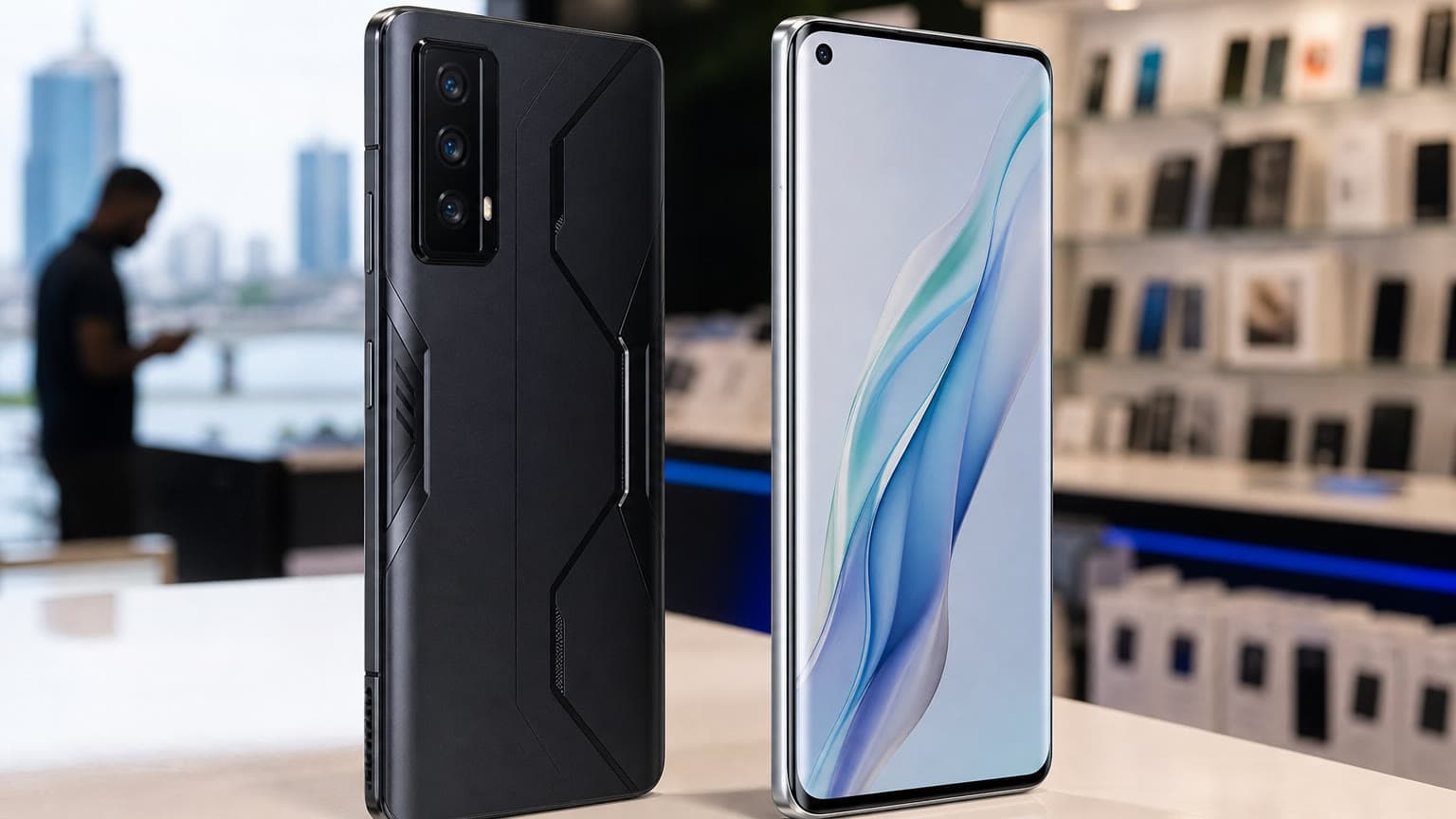
Compare the selected RAM and storage configuration before comparing starting prices. Illustration.
Specification comparison: what the catalog actually says
This table selects 24 rows from the supplied comparison matrix. The HOT 70 Pro’s Kenya-market reports remain qualified; storing a reported specification in the catalog does not turn it into official Nigerian-unit verification. Storage choices described above come from the product descriptions and variant records, while this table preserves the matrix’s missing Note Edge storage value.
Attribute
Infinix HOT 70 Pro
Infinix Note Edge
Model
X6896
X6887
Network technology
5G / 4G / 3G / 2G reported; confirm local bands for selected unit
5G SA/NSA, Dual 4G VoLTE
5G support
Yes
Yes
Build
Dynamic Shine Design with Active Matrix Cube; temperature-reactive back cover on Thermo Orange only
Not listed
Protection
IP68 reported by Kenya retail/social listings; unconfirmed for selected unit
IP65
Display type
FHD+ IPS LCD reported by Kenya-market listings
3D curved AMOLED
Screen size
6.76 inches
6.78 inches
Resolution
FHD+ reported; exact pixel count not officially confirmed
2644 x 1208 pixels (1.5K)
Refresh rate
144Hz
120Hz
Operating system
Android 16
Android 16
Chipset
MediaTek Dimensity 7100 5G reported by Kenya retail listing; verify final market unit
MediaTek Dimensity 7100
CPU
Octa-core reported; exact clocks not officially confirmed
Octa-core up to 2.4GHz
RAM in matrix
8GB; entry-priced variant has 6GB
8GB
Internal storage in matrix
256GB
Not listed
Memory card slot
microSD card slot reported
No
Main camera
50MP
50MP
Rear camera features
Sony IMX882 AI main camera reported by Kenya retail listing
f/1.8 aperture, LED flash
Selfie camera details
13MP reported; conflicting 8MP listings exist, so verify boxed unit
f/2.2 aperture
Bluetooth
5.4
5.4
NFC
Yes
Yes
FM radio
FM Radio
No
Fingerprint sensor
Fingerprint sensor reported
In-display fingerprint sensor
Battery capacity
6000mAh
6500mAh
Wired charging
45W
45W
Performance and daily use: does 144Hz make the Pro faster?
A higher refresh-rate ceiling does not establish a faster processor or better sustained gaming. The catalog names the Dimensity 7100 for both phones, but the HOT 70 Pro chipset identification remains a regional retail report. We have no comparable benchmark results, thermal measurements or frame-rate tests that establish a performance winner.
The practical distinction starts with RAM and storage. At the supplied starting prices, you are considering a 6GB HOT 70 Pro against a Note Edge range listed with 8GB RAM. Buyers who move between messaging, documents and several apps should consider that memory difference before treating 144Hz as the deciding specification. Actual app retention still depends on software behaviour.
For large offline music libraries, downloaded lessons and videos, the Pro’s reported microSD slot could be valuable. Confirm it on the selected unit before buying a card. The Note Edge is listed without a card slot, so choose internal storage around your expected ownership period. Neither a memory card nor advertised virtual RAM should be treated as a substitute for physical RAM.
Is 5G worth paying extra for in Lagos or Abuja?
Both phones are listed with 5G, so 5G alone does not justify paying more for the HOT 70 Pro. Check the exact regional model’s supported bands against your operator and the places where you use data. The supplied records do not contain enough band detail to promise compatibility with every Nigerian network or consistent indoor coverage.
For calls, WhatsApp and ordinary browsing, a reliable connection and suitable data plan matter more than the badge. If you intend to use the phone as a hotspot for work, confirm network fit before choosing either model; no supplied evidence establishes which sustains hotspot use longer.
Battery, display, and build: the meaningful trade-offs
The Note Edge’s listed battery is 500mAh larger, approximately 8.3% more nominal capacity than the Pro’s 6000mAh. That favours it on capacity for buyers who face long periods away from charging. It does not prove 8.3% more runtime: screen settings, signal strength, apps and power management can change the outcome.
Both list 45W wired charging, so the Pro has no listed wattage advantage. Equal charging ratings also do not establish equal charging times. Ask which charger and cable are included and whether they support the phone’s required charging protocol. There is no supplied evidence for a full-charge time or gaming-temperature advantage in Nigerian ambient conditions.
The display choice is more substantial than the small screen-size difference. The Note Edge offers listed curved AMOLED technology and a specified 1.5K resolution. The Pro has a higher reported 144Hz ceiling but an IPS LCD description and an unconfirmed exact pixel count. Buyers prioritising display technology should favour the Note Edge; buyers prioritising 144Hz should first confirm the Pro panel specification and app support.
Do not make water resistance the reason to pay extra for the Pro. Its IP68 claim is attributed to retail/social reports, while the Note Edge’s catalog lists IP65. This evidence does not support declaring the Pro the verified durability winner. The Thermo Orange back-cover effect is also colour-specific, so it should not be expected on every Pro colour.
Battery capacity and display technology are separate decision criteria; neither substitutes for measured runtime. Illustration.
Camera and software: where a winner is not established
Both phones list a 50MP rear camera, but resolution alone cannot settle image quality. The Pro’s reported Sony IMX882 identification needs unit confirmation. The Note Edge’s detailed catalog lists a 13MP front camera, 2K video at 30fps and no optical image stabilisation. Comparable Pro video and stabilisation evidence is missing, so there is no defensible camera winner here.
If you record products for a small business or make social videos, request sample footage from the exact model where possible. Check focus, stabilisation and audio in the situations you use most. A missing camera field means unknown; it should not be scored as an absent feature.
Both descriptions list Android 16 with XOS 16. The supplied evidence does not establish a model-specific Android upgrade count, security-support end date or update schedule for Nigerian units. Buyers keeping a phone for several years should request those details before payment. Also review notification settings and preinstalled apps during setup; this comparison has not tested either phone’s software behaviour.
Warranty, originality and repairability in Nigeria
Both catalog listings describe new devices. Confirm that condition on the invoice, match the model and IMEI across the phone and packaging, and obtain written warranty and return terms. New condition alone does not establish a particular local warranty entitlement.
Carlcare Nigeria provides an IMEI warranty-check facility and identifies itself as the official repair service provider for Infinix. Use that facility to investigate the individual device’s coverage. It does not establish that every imported unit has identical Nigerian coverage, or that either model has a particular warranty duration.
There is no supplied evidence comparing screen-replacement prices, battery availability, repair turnaround or model-specific parts stock. A curved screen is a design consideration, but we cannot assign it a repair-cost penalty without a quote. If replacement cost matters to your budget, seek an exact-model assessment through Ogabassey’s phone repair service before deciding.
Who should buy each option?
Choose the Note Edge for display technology and battery capacity
The Note Edge is our first shortlist for a student, commuter or everyday media user choosing between these two offers. Its advantages are concrete: a listed AMOLED panel, larger battery, 8GB RAM across the described configurations and the lower entry price. Its compromises are the lack of expandable storage, a curved screen that may not suit every buyer, and unresolved long-term software-support details.
Choose the HOT 70 Pro when its specific features matter
The Pro deserves consideration if confirmed microSD support, FM radio, its design or the reported 144Hz display would improve your daily use. Its disadvantages are a higher listed 8GB/256GB price and more qualification around technical claims. Get written confirmation of the model, physical RAM, storage, display, selfie camera and relevant features before fulfilment.
Alternatives: HOT 70 and Note 60 Pro are separate decisions
Searches for “infinix hot 70” and “infinix hot 70 price in nigeria” can lead buyers to confuse the standard model with the Pro. The standard HOT 70 is a launched product, supported by Infinix’s official product page. This assignment does not supply its price or a complete standard-model comparison, so ₦420,200 must not be presented as its price.
Use the Ogabassey Infinix HOT family hub to distinguish those listings. If you want a broader shortlist, the Infinix smartphone range provides the relevant brand context without assuming every HOT or Note model shares these specifications.
For “infinix note 60 pro price in nigeria”, this snapshot supplies no verified Note 60 Pro offer. Consult the separate Note 60 Pro price and buyer guide and check its evidence date. Its price cannot be inferred from the Note Edge. Buyers focused on gaming can also use the GT 30 Pro versus Note Edge comparison to assess a different shortlist.
Verdict
Start with the Note Edge for value unless a confirmed HOT 70 Pro feature changes your decision. The matrix lists a curved AMOLED display against the Pro’s reported IPS LCD, and a 6500mAh battery against 6000mAh, while both list 45W charging. The Pro’s reported 144Hz refresh rate and microSD support offer distinct reasons to choose it, but neither establishes better overall performance. Compare exact variants and resolve its specification uncertainties before paying the higher 8GB/256GB price.
FAQ
What is the Infinix HOT 70 price in Nigeria?
The supplied snapshot does not establish the standard HOT 70’s price. It lists the separate HOT 70 Pro from ₦420,200 for 6GB/128GB as of the supplied 4 November 2026 signal. Confirm the model name and current configuration before using that figure.
Is the Infinix HOT 70 Pro better than the Note Edge?
The Note Edge is our editorial preference for its listed AMOLED display, 6500mAh battery and lower starting price. The HOT 70 Pro may suit buyers who need its reported microSD support or 144Hz display, subject to exact-unit confirmation. No supplied hands-on evidence establishes a camera or gaming winner.
What is the Infinix Note 60 Pro price in Nigeria?
No verified Note 60 Pro price is included in this comparison’s product snapshot. It is a different model from the Note Edge, whose supplied starting price is ₦417,300. Check the separate Note 60 Pro guide and a current offer rather than transferring the Note Edge’s price.
Do both phones have a confirmed Nigerian warranty?
The catalog describes both phones as new but does not supply their warranty duration or confirmed individual coverage. Obtain written terms and check the device IMEI through Carlcare Nigeria’s warranty facility before relying on a warranty claim.
Catalog-linked prices update automatically. Historical and other quoted prices remain as written. Open the product page to confirm the current price, selected variant and availability before buying.