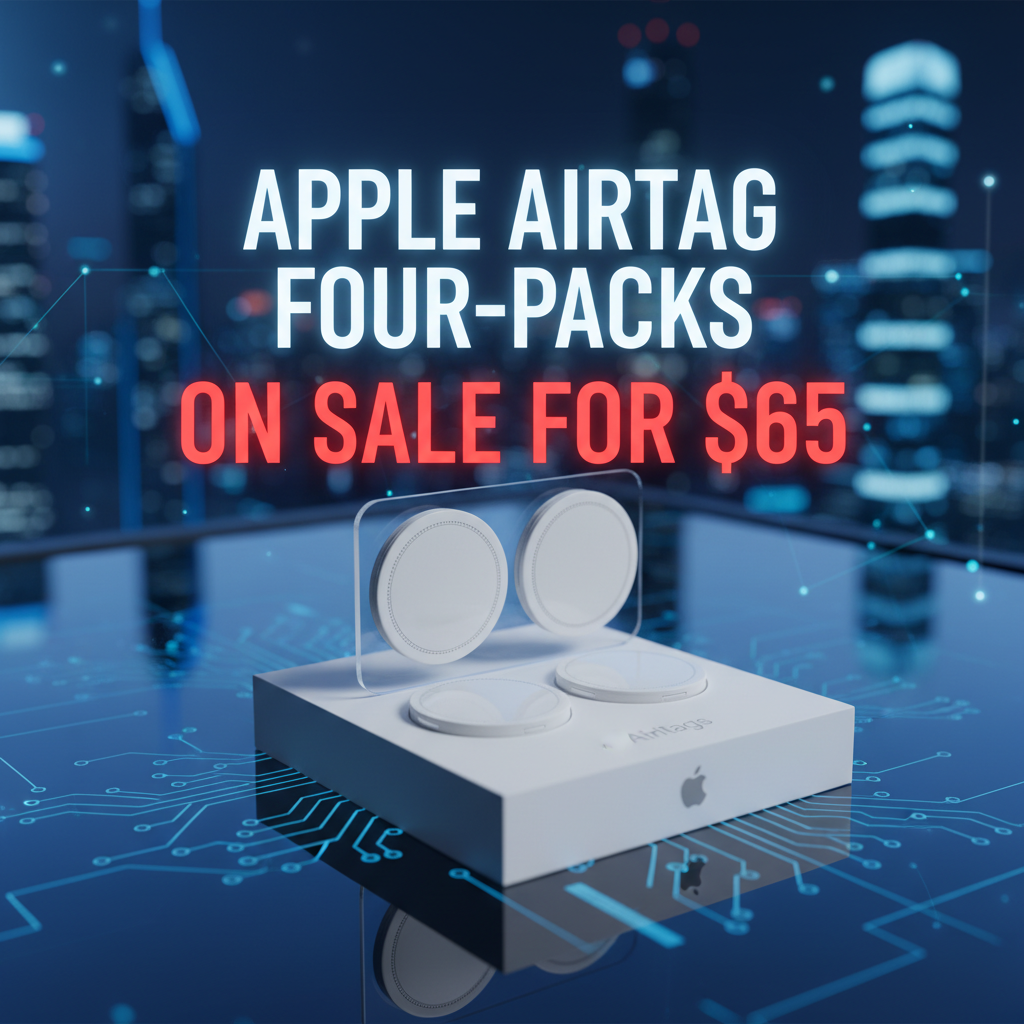
Apple's AirTag 4-pack is still one of the easiest tracker buys for iPhone households, but the headline price needs context in 2026. Apple lists the 4-pack at $99, while seasonal retail discounts have repeatedly pushed it into the roughly $60 to $65 range. At $65, you are paying about $16.25 per tracker, which is a strong value if you have several bags, keys, cases, or shared family items to cover.
The important caveat is availability. AirTag discounts move quickly, and a deal that was live when an article was first drafted may be gone by the time you check out. Treat $65 as a buy-now target price, not a permanent price. If the 4-pack is closer to Apple's $99 list price, it can still make sense for an all-iPhone household, but it is worth comparing single-pack pricing and competing trackers first.
Who this AirTag 4-pack is for
The 4-pack is best for people already using iPhone, iPad, Apple Watch, or Mac devices daily. AirTags work through Apple's Find My network, so they are strongest when the owner lives inside Apple's ecosystem and wants simple item tracking without a monthly subscription.
It is especially useful for travel and family logistics. One pack can cover a checked bag, carry-on, keys, and backpack. Families can also share an AirTag with up to five additional people, which helps when more than one person needs to find a shared car key, luggage set, camera bag, or school bag.
If you use an older but still capable iPhone, compatibility matters. Precision Finding works with iPhone 11 and later models that include Ultra Wideband support, excluding iPhone SE models and Apple's iPhone 16e. That makes the AirTag a particularly good match for readers still using an iPhone 11, because the phone can show directional guidance when the AirTag is nearby rather than only showing a last known map location.
Key specs and buying context
Each AirTag uses Bluetooth, Apple's U1 Ultra Wideband chip, NFC for lost-mode contact information, and a user-replaceable CR2032 coin-cell battery. Apple rates battery life at about one year under typical use. The tracker is also rated IP67 for dust and water resistance, meaning it can tolerate accidental splashes, rain, and brief immersion, but it is not designed as a rugged waterproof beacon.
The best reason to buy AirTags is not the hardware alone. It is the Find My network. When an AirTag is away from you, nearby Apple devices can anonymously help update its approximate location. That makes AirTags more useful for luggage, backpacks, and lost everyday items than a basic Bluetooth key finder with a smaller app network.
There is no built-in keyring hole, so budget for holders if you plan to attach AirTags to keys, pet carriers, bike bags, or luggage handles. For bags and suitcases, a simple loop or adhesive holder is usually enough. For keys, choose a more secure case because the AirTag's smooth, loose-disc design is easy to drop if carried bare.
Price and availability check
At Apple's standard $99 4-pack price, each AirTag costs $24.75. At $65, the cost drops to about $16.25 each. That is the point where the 4-pack becomes much more compelling than buying one tracker at a time, especially if you already know you need at least three tags.
If the current retailer price is above $75, wait unless you need trackers immediately before a trip. AirTags are discounted often enough that patient buyers usually get another chance. If the price falls near $60, that is an excellent value for iPhone users and better than most single-tracker purchases.
Ogabassey currently has an earlier AirTag 4-pack deal note covering the same discount range. Use that as a deal-history reference, but make the purchase decision based on the live retailer price, warranty terms, and return window at checkout.
Trade-offs to know before buying
AirTags are not GPS trackers. They do not have their own cellular connection, so they depend on nearby Apple devices and Bluetooth range. In airports, cities, schools, offices, and shopping areas, that network can be very effective. In remote areas with few Apple devices nearby, location updates may be delayed or unavailable.
They are also not ideal for Android-first households. Android phones can receive unwanted-tracker alerts and can read an AirTag's NFC lost-mode page, but they cannot set up an AirTag or use Apple's Find My app as the owner. If your household mixes iPhone and Android heavily, consider whether a cross-platform tracker is more practical.
Privacy and safety also matter. AirTags are made for belongings, not people. Apple includes unwanted-tracking alerts, sound alerts, and guidance for disabling an unknown tracker, but buyers should still use them responsibly and tell family members when a shared item contains a tracker.
Alternatives worth comparing
Tile trackers remain a better fit for households that do not want to be locked into Apple devices. Tile also offers models with built-in keyring holes, which can be more convenient for keys without buying accessories.
Chipolo's Find My-compatible options are worth checking if you want Apple Find My support in a different shape, especially wallet-card formats. Some Chipolo models are easier to attach or slide into a wallet, though not every model offers the same precision-location experience as AirTag.
Samsung Galaxy SmartTag models are the natural alternative for Samsung Galaxy users. They are not the right substitute for iPhone owners, but they make more sense if your phone and household devices are already tied to Samsung's ecosystem.
Verdict
At around $65, the Apple AirTag 4-pack is still an easy recommendation for iPhone users in 2026. The deal is strongest for travelers, families, students, and anyone who can immediately use three or four trackers. The Find My network, replaceable battery, IP67 rating, sharing support, and Precision Finding on compatible iPhones give it real utility beyond a simple Bluetooth tag.
Skip it if you are mainly on Android, need live GPS tracking, or only need one tracker. For Apple users who want several item trackers and can catch the 4-pack near $60 to $65, this remains one of the better small-accessory buys.
Sources