Apple did not invent the eSIM, but the company pushed it into everyday phone buying. The big change started with the US versions of the iPhone 14 series: no physical SIM tray, no quick SIM swap, only eSIM activation. In 2026, that matters more than it did when this article first ran because many imported iPhones in Nigeria and other markets are US variants, and buyers now see eSIM-only iPhones beside regular models with a nano-SIM tray.
The short answer: an eSIM-only iPhone can be a smart buy if your network supports eSIM, the phone is unlocked, and you are comfortable activating or transferring your line through your carrier. It is not the best choice if you regularly move SIM cards between phones, use a smaller network that cannot provision eSIM quickly, or need a backup phone that accepts your physical SIM in an emergency.
Who this is for
Buy an eSIM-only iPhone if you travel often, use two numbers, want fewer moving parts, or are buying a clean US-market iPhone 14 or newer at a better price than the physical-SIM version. It is especially sensible for users who keep one main Nigerian line and add a travel data plan when they land abroad.
Be more careful if you are buying used or refurbished. First, confirm that the iPhone is not SIM-locked to a foreign carrier. Second, confirm your preferred Nigerian carrier can activate eSIM on that exact phone. Third, check that the model supports the bands you need for local 4G and 5G. If you are still deciding whether to replace your current phone, Ogabassey’s guide on when to upgrade your smartphone is a useful companion read.
What eSIM means in plain English
eSIM means embedded SIM. Instead of putting a removable plastic SIM card into a tray, your carrier installs a digital SIM profile on a chip already built into the phone. On an iPhone, activation usually happens through carrier activation, eSIM quick transfer, a carrier app, or a QR code from the network.
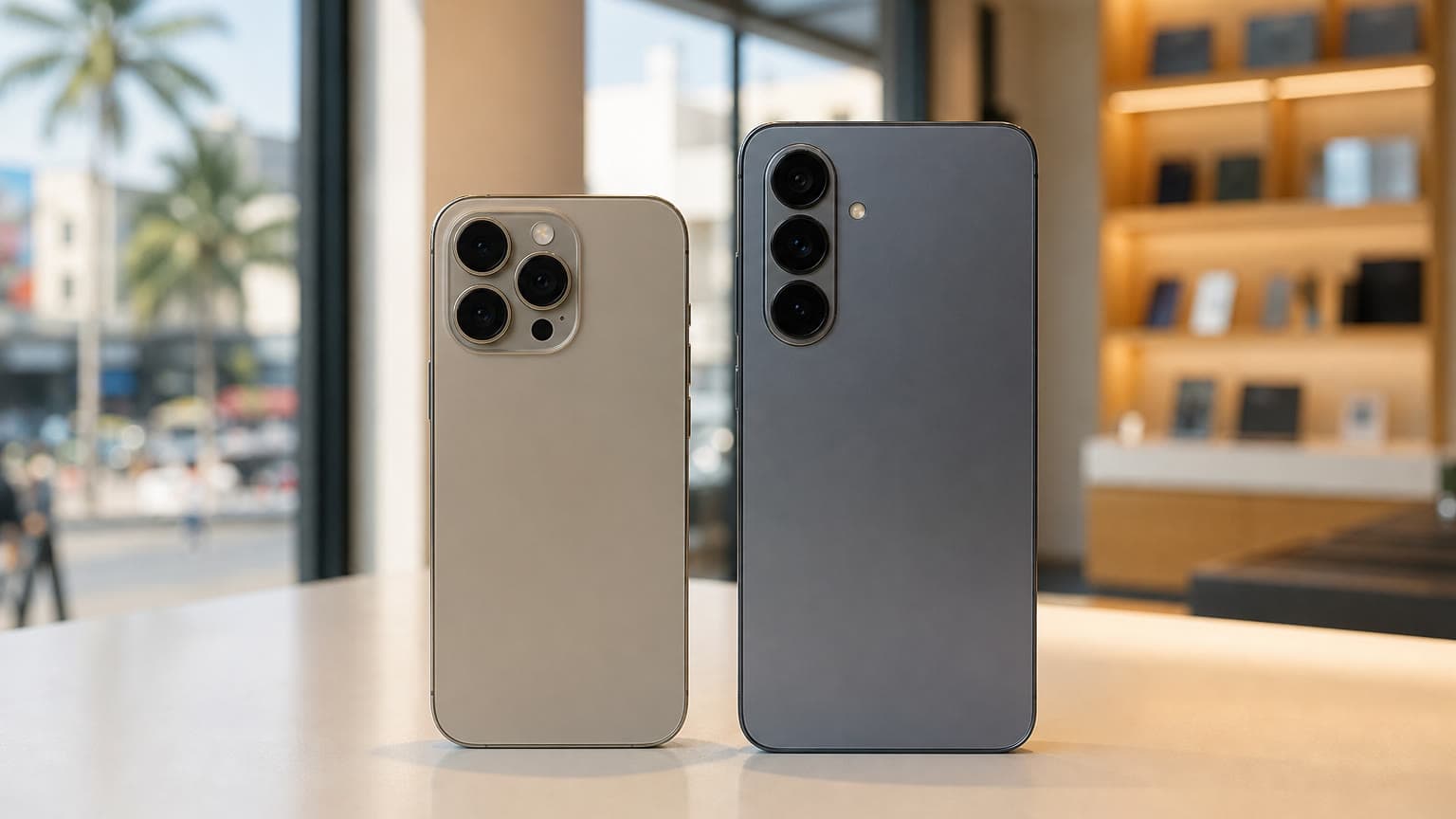
The important practical detail is this: eSIM support is not the same as eSIM-only. Many iPhones support eSIM while still keeping a physical SIM tray. US-market iPhone 14, iPhone 15, iPhone 16, and newer US models removed the tray completely, so you must use eSIM. Most non-US iPhone 14 models still combine nano-SIM and eSIM, which may be easier for buyers who want maximum flexibility.
Key specs and buying context for iPhone buyers
If you want eSIM on an Apple phone, do not start with the iPhone X. It is still a classic iPhone design for people who want Face ID and an OLED display on a tighter budget, but it does not support eSIM. For eSIM, Apple’s practical starting point is the iPhone XR/XS generation.
The iPhone XR is the better older reference point because it supports one physical nano-SIM plus eSIM in many regions. It is not an eSIM-only phone, so it works well for buyers who want to test eSIM without losing the comfort of a SIM tray. The downside is age: in 2026, battery health, storage size, and long-term software support should weigh heavily before you buy.
The iPhone 14 is the real eSIM-only turning point. US units have no physical SIM tray, while many international units keep a physical SIM tray plus eSIM. That makes model origin part of the buying decision, not just color, storage, and battery health. Before paying, check Settings for carrier lock status, inspect the model variant, and ask the seller to show that the phone can reach the Add eSIM screen.
Reason 1: switching networks is cleaner
With eSIM, you can store multiple cellular profiles and switch between them in settings. You cannot use every stored line at once, but modern iPhones can keep more than one profile available and use two lines simultaneously on supported models. This is useful if one network is strong at work, another is better at home, or you want a business line and a personal line on the same phone.
For Nigerian buyers, the carrier experience still matters. MTN Nigeria’s eSIM support page describes QR-code activation through customer care and normal SIM registration around the digital profile. That means eSIM is real and usable, but it is still a carrier-managed process. Do not assume every outlet, every plan type, or every replacement request will be instant.
Reason 2: travel data is easier and often cheaper than roaming
This is the strongest everyday reason to like an eSIM iPhone. When travelling, you can keep your main number active for calls, banking alerts, and WhatsApp, then add a local or travel data eSIM for the country you are visiting. You avoid hunting for a SIM shop at the airport, and you avoid handing over your main physical SIM just to test a new network.
The catch is that travel eSIMs are usually data-first. Some do not include a local phone number or SMS. If your bank requires SMS OTP on your Nigerian line, keep that main line active and treat the travel eSIM as your data line. Also install the travel eSIM before you need it, because QR-code setup and account verification are easier while you still have reliable Wi-Fi.
Reason 3: the price can be attractive, but only for the right buyer
The original argument was simple: eSIM-only iPhones can be cheaper. That can still be true in 2026, especially where US imports sell below equivalent physical-SIM variants. But price should not be the only reason. A cheap locked iPhone, a phone tied to unpaid carrier financing, or a model your carrier cannot activate is not a bargain.
Use the discount as a tiebreaker, not the full decision. If two clean iPhone 14 units are available and the eSIM-only version is cheaper, unlocked, and compatible with your network, it can be the better value. If you need to swap SIM cards often, the physical-SIM model may be worth paying extra for.
Reason 4: eSIM improves SIM theft resistance
A physical SIM can be removed from a stolen phone and placed in another device. An eSIM cannot be pulled out with a SIM ejector pin. That makes it harder for a thief to quickly move your line into another phone for calls, banking messages, or account recovery attempts.
This is not complete protection. Your real security still depends on a strong passcode, Face ID, Find My iPhone, carrier account protection, and quick reporting if the phone is stolen. eSIM helps with one specific risk: physical SIM removal. It does not replace good device security.
The trade-offs people forget
The first trade-off is repair and emergency flexibility. If your phone screen breaks, you cannot simply remove the SIM and place it into a spare phone unless that spare phone also supports eSIM and your carrier can transfer the line. With a physical SIM, that emergency move takes seconds.
The second trade-off is resale. A buyer who depends on a physical SIM may reject a US eSIM-only iPhone even if the phone is clean. That can reduce your resale audience in markets where eSIM support is still uneven.
The third trade-off is setup friction. If you wipe the phone, change phones, or delete an eSIM by mistake, you may need the carrier to reissue or transfer the profile. Some carriers support smooth iPhone-to-iPhone transfer; others still rely on QR codes, store visits, or customer care. Before buying an eSIM-only iPhone, ask your carrier what happens when you lose the phone, replace it, or upgrade.
Alternatives to consider
If you want the safest Apple option, consider an international iPhone 14 or newer model with both nano-SIM and eSIM. You still get eSIM for travel and dual-line use, but you keep a physical tray for emergencies.
If budget matters more than eSIM-only design, the iPhone XR can be a good low-cost entry into eSIM support, provided battery health and storage are acceptable. If eSIM is not important at all and you only want a cheaper older iPhone, the iPhone X can still make sense for basic use, but do not buy it expecting eSIM support.
For buyers comparing used iPhones, also read Ogabassey’s refurbished iPhone mythbuster and the guide to the best iPhones under ₦500,000. Those articles help separate clean refurbished value from risky imported stock.
Verdict: should you buy the eSIM-only iPhone?
Yes, buy an eSIM-only iPhone if it is unlocked, your carrier supports eSIM activation, the price advantage is real, and you are comfortable managing your line digitally. For frequent travellers and dual-line users, it can be more convenient than a traditional SIM-tray phone.
Do not buy one blindly because it is cheaper. In 2026, the smarter question is not “does this iPhone have eSIM?” It is “can my carrier activate this exact model quickly, and can I live without a physical SIM tray when something goes wrong?” If the answer is yes, the eSIM-only iPhone 14 and newer US models are worth considering. If the answer is no, choose a model with both nano-SIM and eSIM.
Sources