Bassey John is a Performance Marketing Specialist at Ogabassey with cross-industry experience spanning e-commerce, gaming, and real estate. He focuses on paid acquisition, conversion-rate optimisation, and data-driven growth strategy, turning campaign performance into measurable revenue. At Ogabassey he writes about consumer technology, product buying guides, and the Nigerian gadget market to help shoppers make confident, informed decisions.
Samsung's One UI 8.5 rollout is now a real buying factor for Galaxy shoppers, not just a software headline. Reports say the stable update began on May 6, 2026, first in South Korea, with wider regional expansion following. Nigerian buyers should check model, region code, warranty path, and update status before paying.
What changed with One UI 8.5
The practical news is that One UI 8.5 has moved beyond the Galaxy S26 launch family and is reaching older high-end Galaxy phones and tablets in phases. Android Central reported on May 6, 2026 that Samsung started the stable rollout for eligible Galaxy devices, beginning with the Galaxy S25 series and then moving to recent Galaxy S, Galaxy Z, and Galaxy Tab S models. TechRadar reported the same rollout on May 7, noting that the update had already shipped with the Galaxy S26 series and was now opening up to earlier devices.
For a buyer in Nigeria, that changes how you inspect a Samsung phone before payment. A device that is physically clean, has good battery health, and carries a strong price can still be the wrong buy if it is on a region build that will wait longer for updates, if it is a grey import without local warranty support, or if the seller is promising One UI 8.5 on a model that has not received it yet.
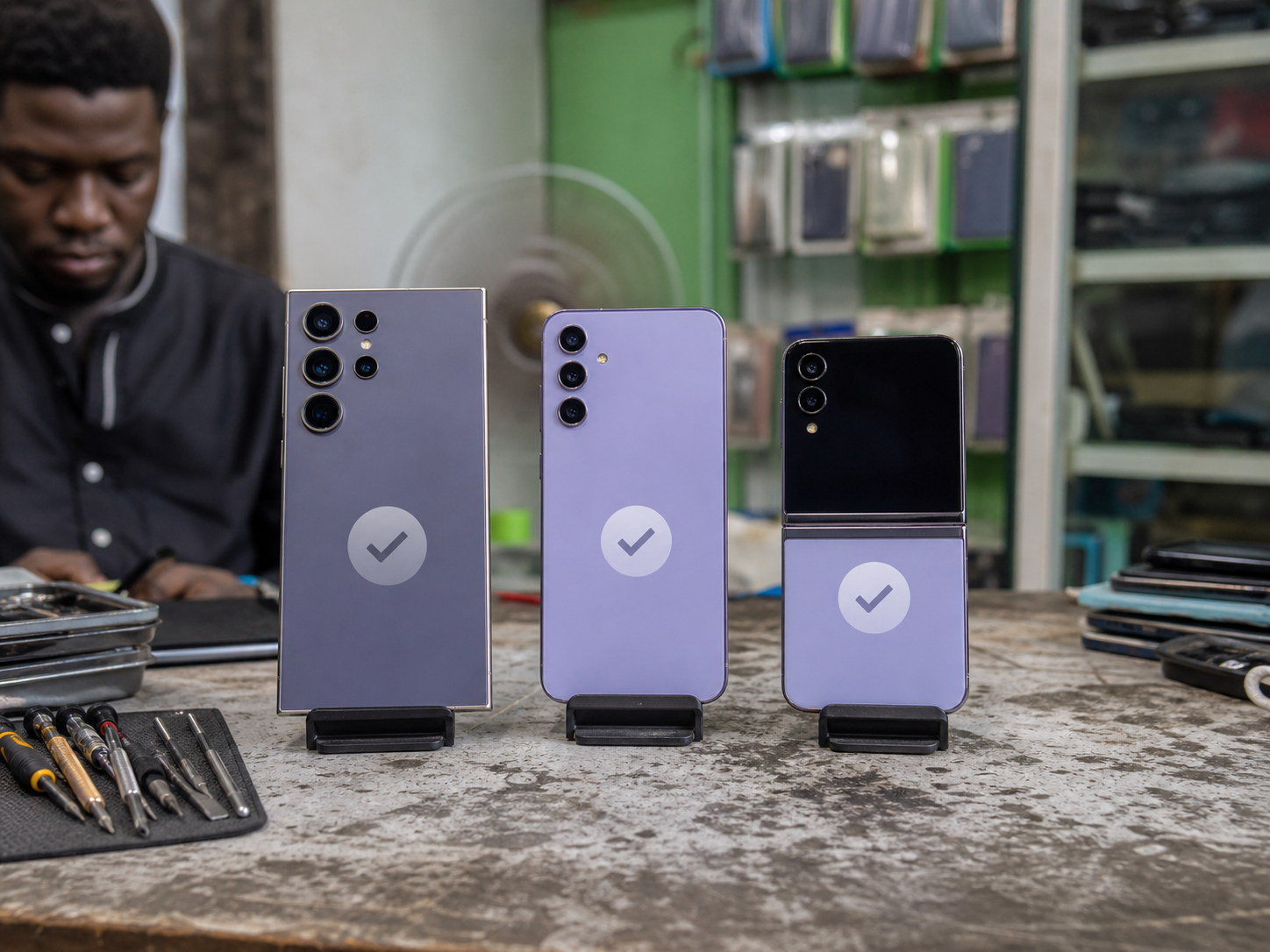
The reported first wave focuses on recent premium models: Galaxy S25 family, Galaxy S24 family, Galaxy Z Fold 7, Galaxy Z Flip 7, Galaxy Z Fold 6, Galaxy Z Flip 6, and newer Galaxy Tab S models. TechRadar also says other models were already in beta or expected later, including the Galaxy S23 series, Galaxy Z Fold 5, Galaxy Z Flip 5, Galaxy S23 FE, and Galaxy A36. That wider list matters, but buyers should treat it as rollout context, not a guarantee that every unit on a Nigerian shelf has the update today.
If you are browsing current Samsung options, start from the Ogabassey Smartphones category, then confirm the exact model number and software screen before making a final decision. For buyers comparing newer premium models, the Samsung Galaxy S26 Ultra remains a useful reference point because One UI 8.5 shipped with the S26 generation from launch, while older devices are receiving it through rollout waves.
Check the exact software screen and model number before paying for a Samsung phone.
Why the update matters for Nigerian Galaxy buyers
One UI 8.5 is not only about new icons or a refreshed settings panel. The reports point to Galaxy AI additions, communication and creative tools, Quick Share improvements, Photo Assist updates, battery-saving refinements, file-sharing improvements through Samsung's My Files experience, security fixes, and general stability work. Some features may be limited by model, chipset, region, or Samsung's feature policy, so the update should be treated as a package of potential improvements rather than a single identical experience across every Galaxy phone.
That distinction is important in Nigeria because many Galaxy phones are bought across mixed channels: official retail, open-market importers, UK or US used stock, Dubai imports, and refurbished devices. Two phones with the same public name can behave differently if their model codes, carrier origins, storage variants, or region firmware differ. A Galaxy S24 Ultra from one market may receive a rollout earlier than a carrier-tied unit from another market. A Galaxy A-series phone may receive a lighter AI feature set even when it eventually gets the same named platform update.
Software support also affects resale value. A recent Samsung phone with a clear update path is easier to recommend for students, business users, creators, and family buyers who want a device to last several years. A cheaper older flagship can still be good value, but the buyer should know whether they are buying camera hardware, display quality, and build quality at the expense of a shorter update runway. That is why a clean older option such as the Samsung Galaxy S21 or Samsung Galaxy S22 Ultra should be judged differently from a newer model that is closer to Samsung's latest software roadmap.
There is also a repair angle. A phone that needs board work, screen replacement, or battery repair may still run the update after service, but buyers should avoid devices with unknown parts history, broken biometrics, abnormal heat, or update errors. If a used Galaxy phone cannot complete a normal software update on stable Wi-Fi, that is a red flag worth checking before money changes hands. For hardware checks and post-purchase support, the Ogabassey phone repairs page is the safer next step than guessing from a seller's assurance.
Compatibility and availability context
The safest way to interpret the current rollout is simple: One UI 8.5 is active, but availability is phased. The sources agree that the first wave began in South Korea and that more regions are expected after that. Neither source confirms a Nigeria-specific date, so this draft should not claim that every Nigerian Galaxy unit has received the update as of June 14, 2026.
Buyers should separate three questions. First, is the model eligible according to Samsung's rollout path and credible reporting? Second, has this particular unit received the update on its own software channel? Third, will the feature you care about actually work on that model? Those are not the same question. A device can be eligible but not yet updated. A device can be updated but miss some Galaxy AI features. A seller can also flash firmware or reset a phone, which may hide an update problem until after purchase.
For midrange buyers, the Galaxy A-series needs extra caution. TechRadar names Galaxy A36 among models connected to One UI 8.5 beta context, but that does not mean every A-series phone should be marketed as a full Galaxy AI device. If you are considering the Samsung Galaxy A36 5G, verify the current software version and do not pay flagship money just because a seller mentions AI features. The value case should still rest on battery life, display quality, 5G support, warranty, storage, and price.
Software support, warranty path, and repair condition should be checked together.
What to verify before buying a Galaxy phone now
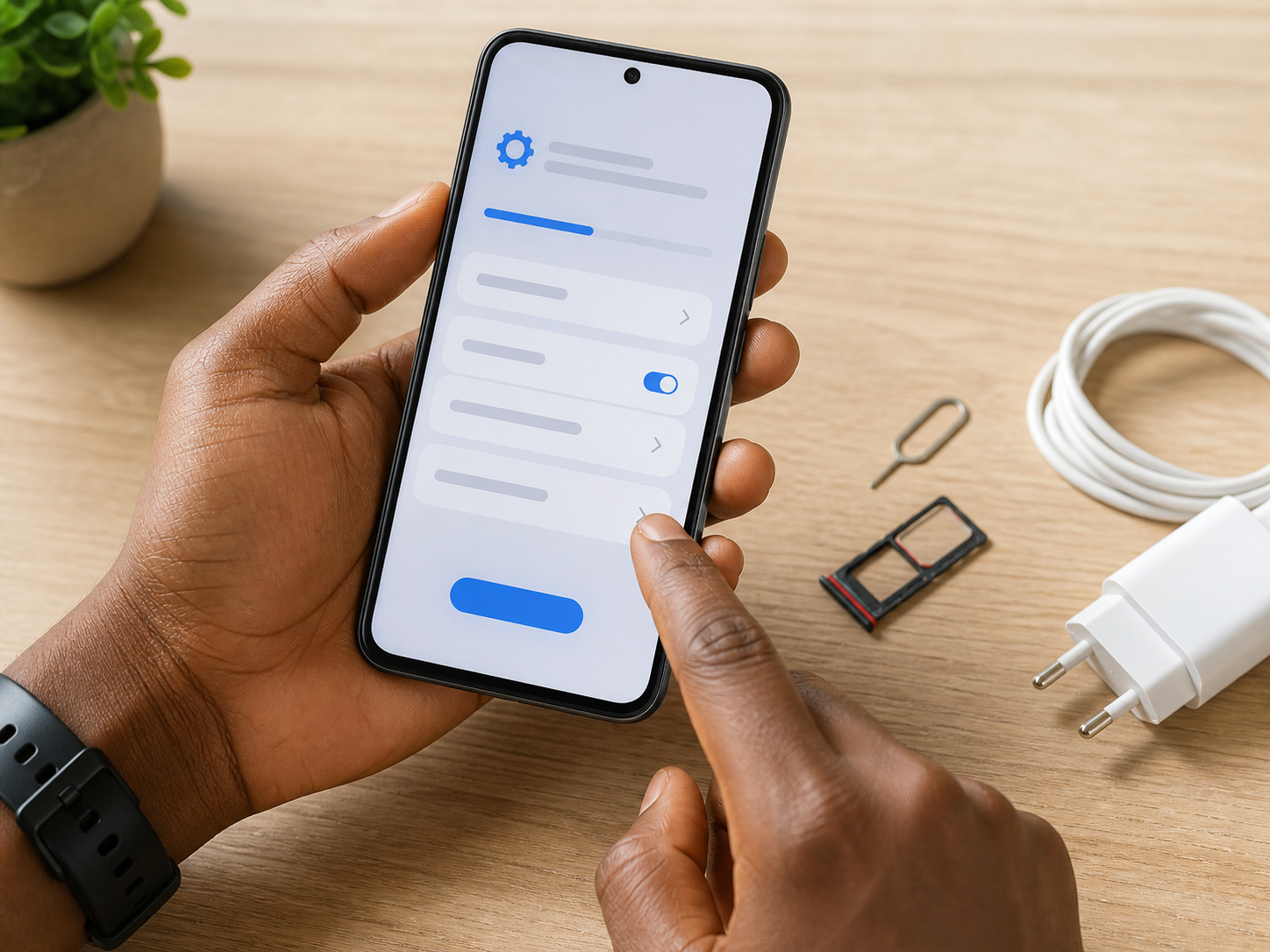
Use this checklist when inspecting a new, used, or imported Samsung phone. Open Settings, then Software update, and check whether the device is already on One UI 8.5 or waiting for it. Check the exact model number in About phone, not only the retail name printed on the box. Confirm the storage and RAM variant because software and AI features are not the only reason prices differ. Ask whether the unit has local warranty support or is an imported unit with seller warranty only.
For 5G, do not assume the name alone is enough. Nigerian buyers in Lagos, Abuja, Port Harcourt, and other coverage areas should still confirm band support, SIM behavior, eSIM needs, and network-lock status. A phone can have excellent cameras and a strong update policy yet still be frustrating if it is locked, missing a charger, overheating, or carrying a weak battery after heavy use.
Price discipline matters too. The One UI 8.5 rollout may push some sellers to raise prices on recent Galaxy S and Galaxy Z phones, especially if they describe the update as a premium AI upgrade. Do not pay only for a software promise. Pay for a verified combination: model condition, display health, battery behavior, warranty path, update eligibility, storage, camera needs, and repair confidence.
For buyers who want the cleanest path, a newer official-channel Galaxy is easier to recommend than a cheaper imported unit with unclear firmware. For buyers on a tighter budget, a previous-generation Samsung can still make sense if the price reflects the shorter software horizon and if core hardware is healthy. Ogabassey should reconcile this story with catalog availability when new eligible models are added or when Nigeria-specific update timing becomes clearer.
If your priority is long-term support and the latest Galaxy AI baseline, newer S-series devices deserve first attention. If your priority is price, an older flagship may still be useful, but check support status carefully. If your priority is repairability, avoid models with damaged folding screens, unknown board history, or parts scarcity unless the discount is large enough to justify the risk.
FAQ
Which Samsung phones are first in line for One UI 8.5?
Reports name recent premium models first, including the Galaxy S25 family, Galaxy S24 family, Galaxy Z Fold 7, Galaxy Z Flip 7, Galaxy Z Fold 6, Galaxy Z Flip 6, and newer Galaxy Tab S models. Rollout timing still depends on region, carrier, and model code.
Should I buy a Samsung phone in Nigeria before it receives One UI 8.5?
Only if the price, condition, warranty, and update path make sense without relying on a promised future update. If the update is central to your purchase decision, check the software screen on the exact unit before paying.
Is 5G worth paying extra for in Lagos or Abuja?
It can be worth it if your area, network plan, and phone bands align. Do not pay extra for 5G just because the box says 5G; confirm network support, SIM status, battery condition, and whether the phone is locked to another market.
Will every Galaxy phone get the same One UI 8.5 AI features?
No. The reports indicate that features can vary by model and device class. Premium Galaxy S, Z, and Tab S devices are more likely to receive the fuller feature set, while some A-series models may get a more limited experience.
Catalog-linked prices update automatically. Historical and other quoted prices remain as written. Open the product page to confirm the current price, selected variant and availability before buying.