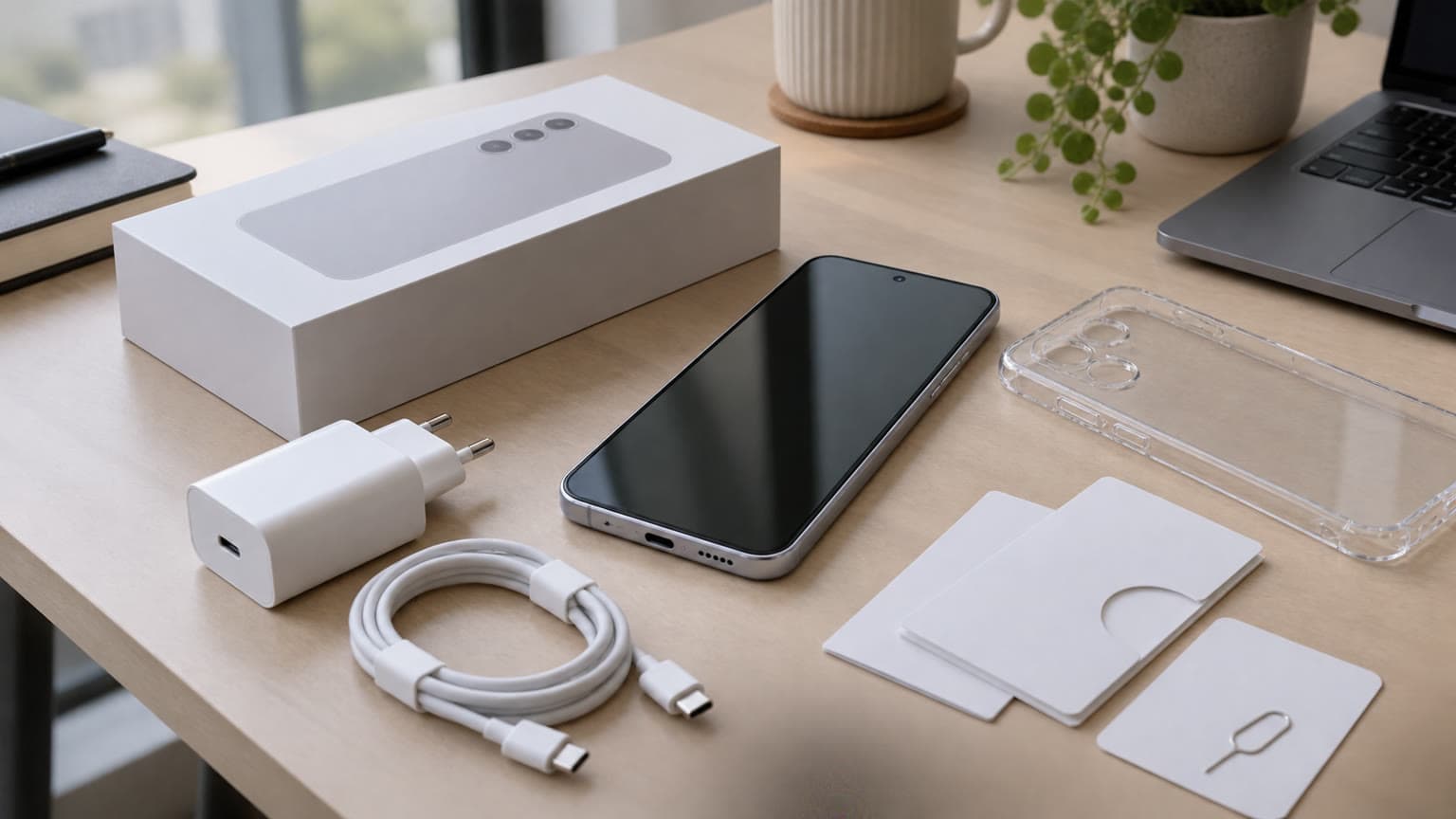
The Samsung Galaxy S26 Plus arrived on March 11, 2026, solidifying its place as the "Goldilocks" of the lineup. It effectively bridges the gap for users who find the base S26 too small and the Ultra too bulky or expensive. While it shares the same $100 price hike as its smaller sibling, the S26 Plus justifies its existence with a significantly larger battery, faster charging, and a stunning QHD+ display.
Related guide: Considering the flagship instead? See our Samsung Galaxy S26 Ultra Nigeria buyer guide.
Key Specifications at a Glance
Feature | Samsung Galaxy S26 Plus |
Display | 6.7-inch Dynamic LTPO AMOLED 2X, QHD+ (1440p), 1–120Hz |
Processor | Snapdragon 8 Elite Gen 5 (US) / Exynos 2600 (Global) |
RAM/Storage | 12GB RAM / 256GB or 512GB UFS 4.0 |
Battery/Charging | 4,900 mAh; 45W Wired / 20W Qi2 Wireless |
Cameras | 50MP Wide, 12MP Ultrawide, 10MP Telephoto (3x Optical) |
Build | Gorilla Glass Victus 2, Armor Aluminum Frame |
Software | Android 16 / One UI 8.5 (7 years of updates) |
Design and Display: Immersive and Sharp
Unlike the base S26, which stuck to FHD+, the S26 Plus retains its QHD+ resolution, offering a crisp 516 ppi. The 6.7-inch panel is exceptionally bright at 2600 nits, making it perfectly legible even under the harsh Lagos midday sun. While it misses out on the Ultra's "Privacy Display" (which limits viewing angles for security), the near bezel-less design makes for a highly immersive experience for gaming and video editing.
Performance: Sustained Power
The S26 Plus benefits from a larger internal surface area, allowing for better heat dissipation than the base model. This makes it a superior choice for heavy tasks like rendering 4K video in CapCut or long sessions of Destiny Rising. The transition to 12GB of RAM as the baseline ensures that multitasking between productivity apps and Galaxy AI tools—like the new AI Document Scanner—remains fluid.
Camera: Software Over Hardware
The hardware stack remains the same 50MP/12MP/10MP setup from the S25 Plus, but the processing has matured. The standout feature this year is Horizon Lock, which uses the ultrawide sensor and AI to act as a virtual gimbal, keeping your video perfectly level even if the phone rotates 360 degrees. It’s a game-changer for creators on the move.
Comparison: Samsung S26 Plus vs. Large-Screen Rivals
Feature | Samsung Galaxy S26 Plus | Apple iPhone 17 Air | Google Pixel 10 Pro XL |
Direct Rivalry | The balanced powerhouse. | The "design-first" alternative. | The "camera-first" heavyweight. |
Screen Size | 6.7-inch QHD+ | 6.6-inch OLED | 6.8-inch QHD+ |
Thickness | 7.7 mm | ~5.5 mm (Record Thin) | 8.8 mm |
Weight | 190g | ~165g | 221g |
Cameras | Triple (50MP/12MP/10MP) | Single 48MP Rear | Triple (50MP/48MP/50MP) |
Battery Life | ~24-28 hours | ~18-20 hours (Thinness tax) | ~30+ hours |
Samsung S26 Plus vs. iPhone 17 Air
This is no longer a spec-for-spec fight. The iPhone 17 Air is an engineering marvel focused on being the thinnest phone ever made, but it sacrifices battery life and multiple camera lenses to get there. If you need a telephoto lens or a battery that lasts through a heavy workday, the S26 Plus is the objectively more "pro" choice here.
Samsung S26 Plus vs. Pixel 10 Pro XL
The Pixel 10 Pro XL is the heavyweight champion, literally and figuratively. It offers a superior 5x periscope zoom and a slightly larger battery. However, the S26 Plus feels like a much more refined piece of hardware; it’s over 30g lighter and noticeably thinner. For those who want a large screen without the "brick" feel, Samsung has the upper hand.
Our Verdict
The Samsung Galaxy S26 Plus is the best choice for users who want the "Ultra" screen and battery experience without the "Ultra" price or the boxy corners of the S26 Ultra.
Pros:
Stunning QHD+ LTPO display.
Much faster 45W charging compared to the base S26.
Lightweight and ergonomic for its size.
Cons:
No major camera hardware upgrades over the S25 Plus.
$100 price increase makes it a significant investment.
Still lacks the Ultra's anti-reflective "Gorilla Armor 2."
Samsung Galaxy S26 Plus review: the short verdict
The Samsung Galaxy S26 Plus makes the most sense for buyers who want the larger screen and stronger battery experience without paying Ultra money. It is not the “best Samsung” on paper, but it is the easier daily phone for people who want a big display, flagship speed, long software support and a lighter body than the Ultra.
For Nigerian buyers, the decision is less about the global launch story and more about three checks: exact storage, official warranty route, and whether the price gap to the base Galaxy S26 or Galaxy S24 Ultra is justified on the day you are buying.
Samsung Galaxy S26 Plus vs S26 vs Ultra: who should buy which?
| Model | Best for | Why it matters |
|---|
| Galaxy S26 | Compact flagship buyers | Lower entry price, easier one-hand use, still flagship-class performance. |
| Galaxy S26 Plus | Big-screen buyers who do not need Ultra features | Better middle point for battery, display size and price balance. |
| Galaxy S26 Ultra | Camera, S Pen and maximum-spec buyers | Usually costs more, but gives the strongest Samsung feature set. |
What to verify before paying in Nigeria
- Storage: 256GB is the safer minimum for a flagship buyer; 512GB makes sense if you shoot many videos.
- SIM and network: confirm physical SIM/eSIM support and 5G band compatibility with your network.
- Warranty: ask whether the unit is official local stock, open-box import, or grey-market import.
- Battery health: for open-box units, confirm cycle count and visible battery behavior before paying.
- Price comparison: compare against the live Samsung Galaxy S26 and Samsung Galaxy S24 Ultra listings if available.
Why competitors outrank thin reviews
Search results for this query are dominated by full review pages from large phone publishers. To compete, a Nigeria-focused review must answer what those global reviews do not: local price sensitivity, warranty risk, network compatibility, charger availability, trade-in value, and alternatives that buyers can actually purchase.
FAQ
Is Samsung Galaxy S26 Plus better than S26?
It is better if you want a larger display and stronger battery comfort. The base S26 is better if you want a smaller flagship and lower price.
Should I buy S26 Plus or S26 Ultra?
Buy the S26 Plus for value and comfort. Buy the Ultra if camera zoom, S Pen features and maximum specs matter enough to justify the price jump.
Is the S26 Plus a good used or open-box buy?
It can be, but only after checking warranty route, battery condition, SIM compatibility, display condition, storage size and whether all accessories are included.