The battle for the mid-range crown in 2026 has reached a boiling point. On one side, we have the Samsung Galaxy A57, the newly-released, refined, slim aesthetic king. On the other, the Redmi Note 15 Pro Plus, a "spec-beast" designed to offer raw power and insane charging speeds.
In the midrange market, where every penny must be accounted for, choosing between "Samsung Reliability" and "Redmi Overkill" is the ultimate dilemma. Let’s break down how these two titans stack up.
The Mid-Range Philosophy: Two Different Worlds
The Galaxy A57 is for the person who wants a "mini S26." It’s incredibly thin (6.9mm), runs the latest Android 16, and promises 6 years of software updates. It’s the safe, premium choice for the long haul.

The Redmi Note 15 Pro Plus is for the power user. It ignores "slimness" to cram in a massive battery, a 200MP camera, and charging speeds that make Samsung look like it’s living in the past.
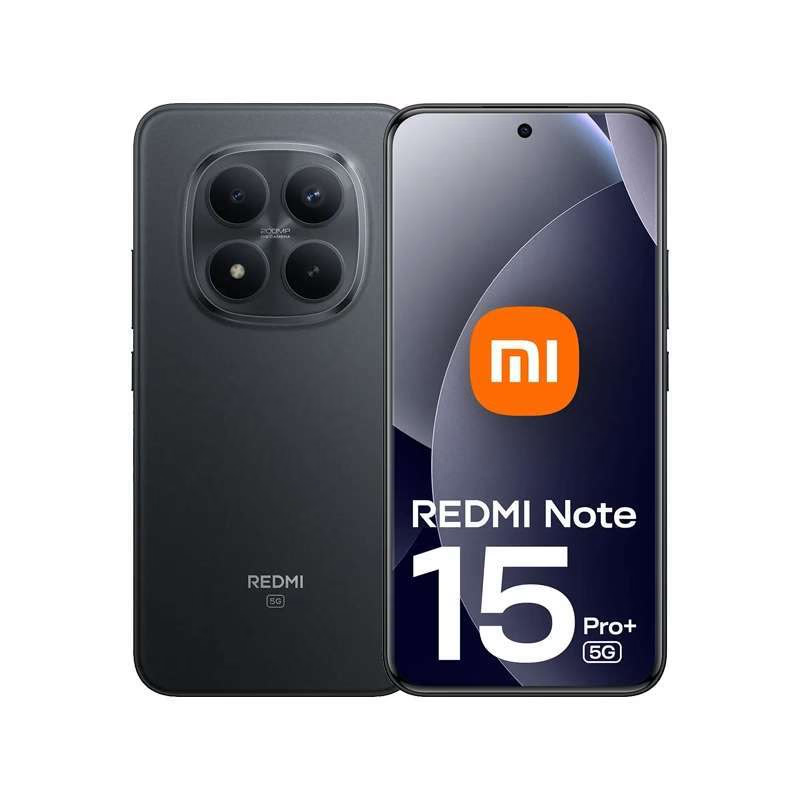
Head-to-Head: The Spec Sheet
Feature | Samsung Galaxy A57 | Redmi Note 15 Pro+ |
Display | 6.7" Super AMOLED+, 120Hz | 6.83" CrystalRes AMOLED, 120Hz |
Peak Brightness | 1900 nits | 3200 nits |
Processor | Exynos 1680 (4nm) | Snapdragon 7s Gen 4 (4nm) |
Main Camera | 50MP OIS (Flagship Sensor) | 200MP OIS (Extreme Detail) |
Battery | 5,000 mAh | 6,500 mAh (Silicon-Carbon) |
Charging | 45W Wired | 100W HyperCharge |
Durability | IP68 (Standard) | IP69K (Extreme Protection) |
Software | Android 16 (One UI 8.5) | Android 15 (HyperOS 2) |
Weight/Thickness | 179g / 6.9mm | 207g / 8.2mm |
1. Display & Durability: Brightness vs. Elegance
Xiaomi wins on raw numbers here. The 3200 nits peak brightness on the Redmi means you can read your screen clearly even under the harshest sunlight. However, the Samsung is significantly lighter and thinner, making it much more comfortable for one-handed.
In terms of toughness, the Redmi pushes boundaries with an IP69K rating, meaning it can technically survive a high-pressure hot water spray. The A57’s IP68 is more than enough for a drop in the sink, but Redmi is the clear winner for "rugged" users.
2. Performance & Longevity: The Software Gap
While the Snapdragon 7s Gen 4 in the Redmi is a gaming champ, the Exynos 1680 in the Samsung is no slouch and it’s skightly faster in benchmarks, Samsung strikes back with Android 16 out of the box and an industry-leading 6 years of OS updates. If you plan to use your phone until 2032, the Galaxy A57 is the only logical choice. Redmi’s HyperOS is faster for gaming but historically receives fewer major Android version jumps.
3. The Camera Duel: 50MP vs. 200MP
Don't let the numbers fool you.
Redmi's 200MP sensor is an absolute monster for zooming in on details and cropping photos without losing quality.
Samsung's 50MP sensor (derived from their flagship tech) focuses on color accuracy, skin tones, and superior night-time processing.
4. Battery: The "No-Contest" Zone
This is where Redmi embarrasses the competition. The Note 15 Pro Plus features a massive 6,500 mAh silicon-carbon battery paired with 100W charging. You can go from 0% to 100% in about 30 minutes. Samsung’s 45W is "fast," but it still feels like a slow crawl compared to Xiaomi’s "HyperCharge."
Our Verdict: Which one should you buy?
Buy the Samsung Galaxy A57 if: You value brand prestige, a slim and lightweight design, and you want a phone that will stay updated and "modern" for over half a decade. It is the sophisticated choice.
Buy the Redmi Note 15 Pro Plus if:
You are a heavy gamer or content creator who needs a screen that never dims, a battery that never dies, and a camera that can zoom into the next street. It is the ultimate "value for money" powerhouse.
Related reading: The Mid-Range King Returns: Samsung Galaxy A57 Officially Hits the Market.
Samsung Galaxy A57 vs Redmi Note 15 Pro Plus: quick verdict
Choose the Samsung Galaxy A57 if software support, brand trust, resale value and Samsung ecosystem comfort matter more. Choose the Redmi Note 15 Pro+ if you want stronger charging, bigger headline specs and more hardware value for the money.
Price and availability in Nigeria
The Redmi Note 15 Pro+ 5G has a live Ogabassey catalog reference around ₦612,000. Start from the Redmi Note 15 Pro+ 5G product page, then compare against the regular Redmi Note 15 Pro if the Pro+ price is high. If you want Samsung instead, compare against current Samsung A-series and S-series options in the catalog before paying for a model that is not yet widely available.
Decision table
| Buyer priority | Better pick | Reason |
|---|
| Fast charging and spec value | Redmi Note 15 Pro+ | Better for buyers who chase hardware per naira. |
| Software trust and resale value | Samsung Galaxy A57 | Samsung usually has stronger mainstream confidence and resale recognition. |
| Camera hype | Redmi Note 15 Pro+ | But verify real photo quality, not only megapixels. |
| Safer long-term choice | Depends on warranty | A local-warranty Samsung can beat an import Redmi; a well-priced Redmi can beat an overpriced Samsung. |