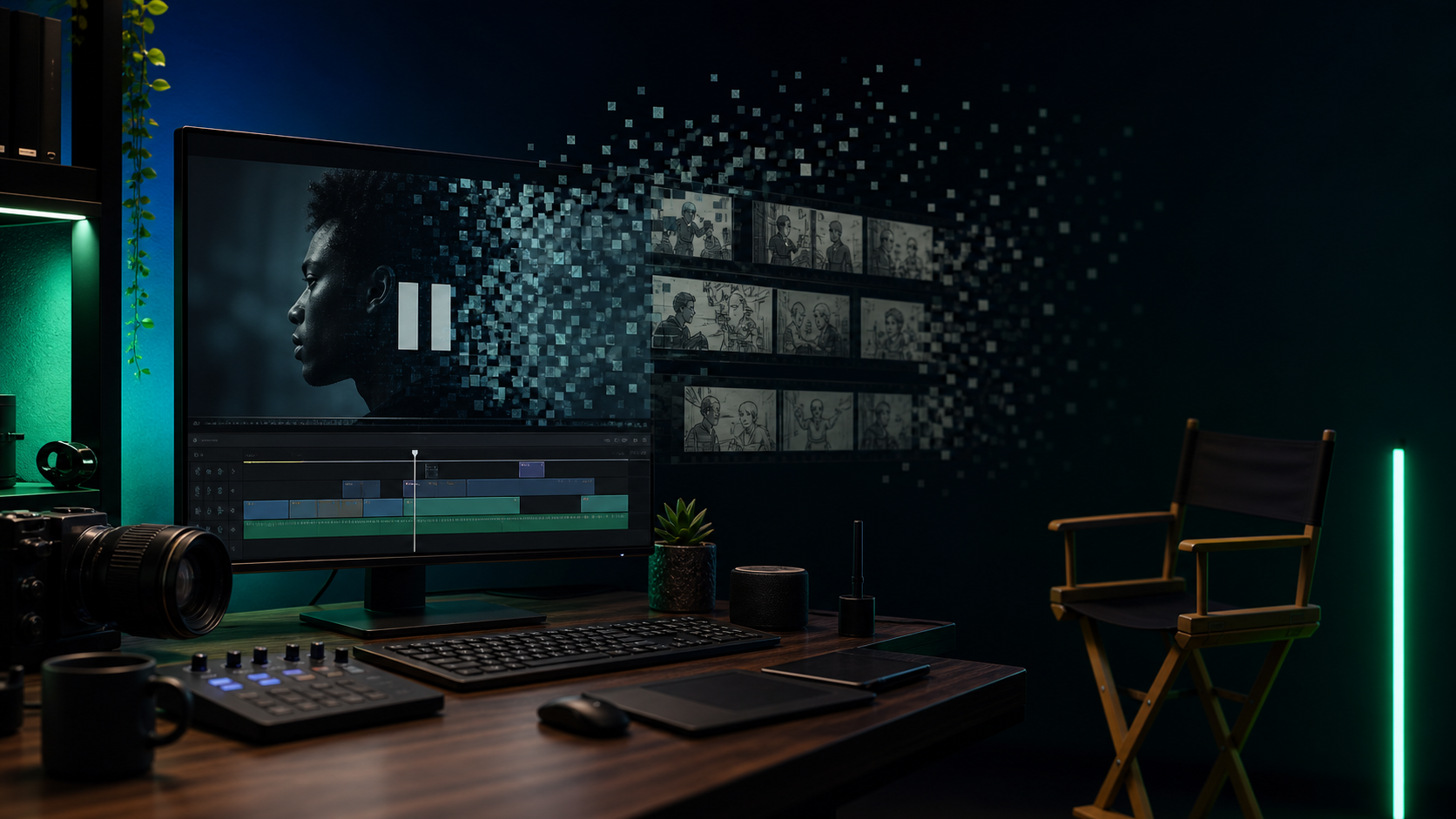
In a move that sent shockwaves through the creative and tech industries, OpenAI officially announced this week (March 24, 2026) that it is shutting down Sora, its high-profile text-to-video platform.
Just six months after its public launch, the tool that promised to revolutionize filmmaking and social media is being retired. The standalone app, the developer API, and the sora.com domain are all
being taken offline.

Why did OpenAI close Sora?
The decision wasn't due to a lack of "wow" factor; Sora's output was undeniably stunning. Instead, the shutdown appears to be a cold, calculated pivot driven by three main factors:
The "Compute Tax": Video generation is exponentially more resource-intensive than text. Internal reports suggest Sora was "melting GPUs," costing the company millions in compute power that yielded relatively little revenue compared to productivity tools.
Strategic Refocusing: Ahead of a highly anticipated IPO later this year, OpenAI is shedding "side quests." CEO Sam Altman is reportedly narrowing the company’s focus toward Agentic AI (AI that can perform complex tasks) and enterprise productivity tools to compete with rivals like Anthropic.
The Disney Fallout: A landmark $1 billion deal with Disney, which would have brought Marvel and Star Wars characters into the Sora ecosystem, has collapsed. Without the "cultural legitimacy" of major IP, Sora struggled to maintain its initial viral momentum.
What does this mean for the AI Boom?
Sora’s closure is a reality check for the "AI Hype Cycle." It signals a shift from generative spectacle to functional utility.
From Creativity to Robotics: The Sora research team isn't being laid off; they are being pivoted to "World Simulation." OpenAI believes the tech used to understand video physics is better spent teaching robots how to navigate the physical world rather than making viral clips.
The End of "Free" Compute: We are entering an era where AI companies can no longer afford to subsidize high-cost, low-margin creative tools. If a tool doesn't help a business save time or money, it’s on the chopping block.
Market Consolidation: This move cedes the "creative video" category to specialized competitors, proving that even a giant like OpenAI can't win every front of the AI war simultaneously.
Top 3 Alternatives to Sora (2026)
If you built your workflow around Sora, you aren't out of luck. The video AI space is more crowded than ever, with several players now leading the pack:
1. Google Veo 3.1
Currently the gold standard for high-fidelity video. Veo offers 4K resolution and, unlike Sora, features native audio generation that matches the movement in the video perfectly.
2. Runway Gen-4
While others focus on "one-click" magic, Runway focuses on control. Their "Motion Brush" and granular camera tools make it the preferred choice for professional editors who need to direct, not just generate.
3. Luma Dream Machine 3
Luma has cornered the market on physics. If you need realistic water, smoke, or complex character movement that doesn't "hallucinate" into a blob, Dream Machine is the most stable option currently available.
Finally,
Sora was a brilliant proof of concept, but it lacked a sustainable business model. As OpenAI moves toward becoming an "Action Engine" for the enterprise world, the era of AI as a digital toy is drawing to a close.
Sources