Bassey John is a Performance Marketing Specialist at Ogabassey with cross-industry experience spanning e-commerce, gaming, and real estate. He focuses on paid acquisition, conversion-rate optimisation, and data-driven growth strategy, turning campaign performance into measurable revenue. At Ogabassey he writes about consumer technology, product buying guides, and the Nigerian gadget market to help shoppers make confident, informed decisions.
Last reviewed: 13 June 2026. The Nintendo eShop $50 Card is useful when the Nintendo Account region, card currency, delivery method, and planned purchase all match before checkout. For Nigerian buyers, the main decision is not console power. It is whether the buyer can safely turn naira into usable Nintendo account credit without creating a region, redemption, storage, or support problem for the recipient.
This article keeps the existing focus on the Nintendo eShop $50 Card, and merges the useful duplicate-draft context around the Nintendo eShop $35 Card as an alternative denomination. Both are digital value cards in Ogabassey's gift-card catalog, not physical game cartridges, controllers, consoles, or storage accessories.
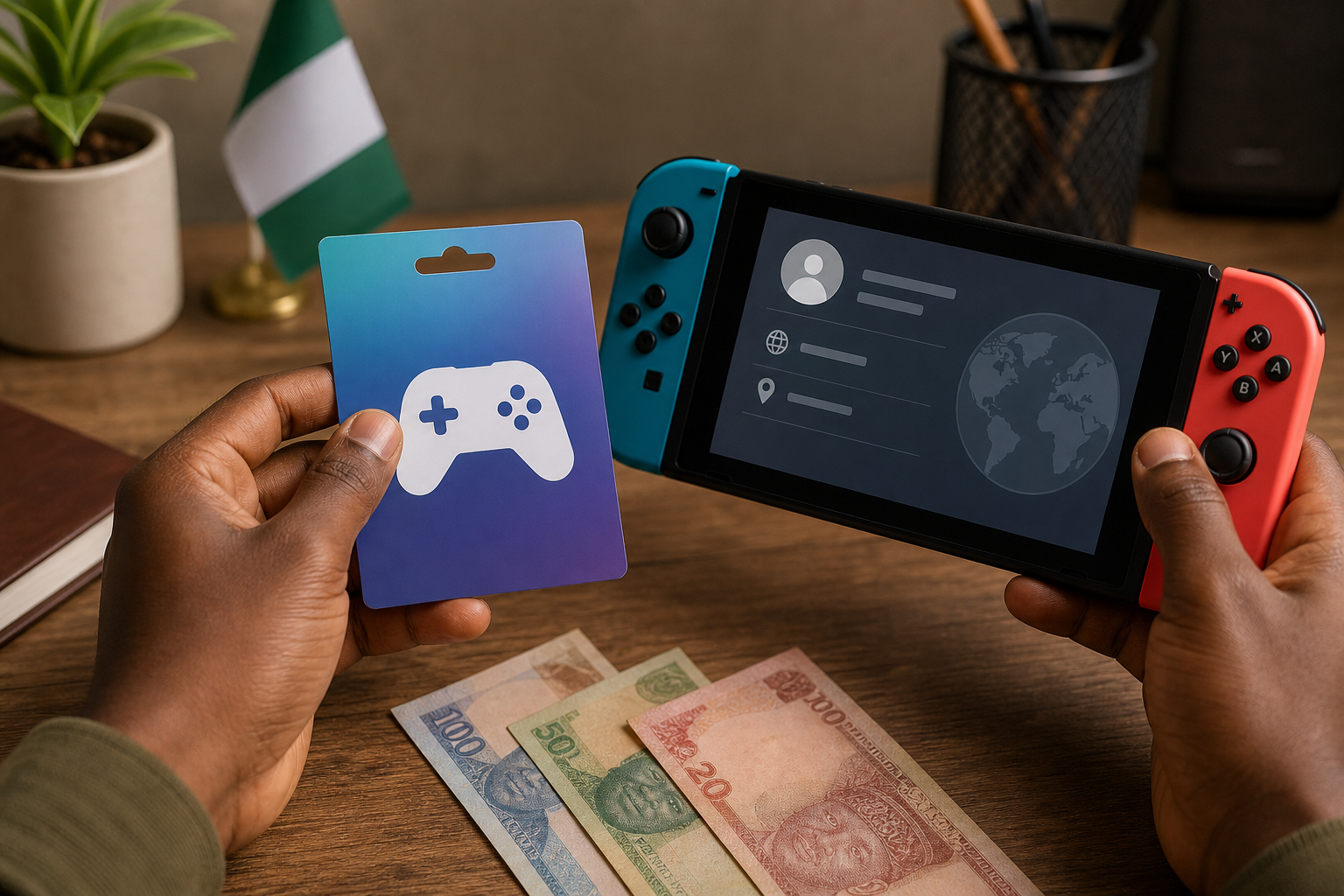
Region and account checks matter more than console specs when buying eShop credit.
Quick Verdict
Buy the $50 card when the recipient already uses Nintendo eShop, you have confirmed the Nintendo Account country and storefront currency, and the planned purchase needs close to $50 in credit. Choose the $35 card when the target purchase is smaller, when you are topping up an existing balance, or when you want to reduce the risk of stranded unused credit. Do not buy either card as a generic gaming gift for someone who might actually use PlayStation, Xbox, Steam, mobile app stores, or physical Switch cartridges.
The strongest 2026 reason to consider eShop credit is flexibility across Nintendo Switch and Nintendo Switch 2 digital purchases. Nintendo's official card page says eShop cards can be used toward a large catalog of new, classic, and indie games delivered to Nintendo Switch or Nintendo Switch 2 systems. That does not remove the buyer's responsibility to check the account region, download size, internet access, and whether a separate Nintendo Switch Online membership is needed for the game the recipient wants.
Who This Is For
This guide is for buyers in Nigeria or elsewhere in Africa who want to fund a Nintendo account for digital games, add-ons, indie titles, sale purchases, or a gift where the recipient should choose the game. It is especially useful for parents, relatives, friends, and buyers who know the recipient owns a Nintendo Switch or Nintendo Switch 2 but do not know the exact game, edition, DLC, or sale item they want.
A value card is safer than guessing a game when the recipient has personal taste, already owns many games, or is waiting for an eShop sale. It can also be cleaner than trying to pay directly on a foreign storefront if local card payment, bank restrictions, or currency conversion makes direct checkout unreliable. The buyer still needs to confirm the eShop region before paying, because valid card credit can be difficult to use if it is bought for the wrong storefront.
This is not the right first purchase if the recipient does not have a Nintendo console, cannot access their Nintendo Account, has never opened Nintendo eShop on the account, or mostly buys physical cartridges. It is also not a storage fix, controller upgrade, or online multiplayer subscription by itself. If you are still deciding between games, consoles, and accessories, start from Ogabassey's broader Gaming section before narrowing down to gift-card credit.
Key Specs And Buying Context
Decision point
What to check
Why it matters in Nigeria
Product type
Digital Nintendo eShop value card
You are buying account credit, not a cartridge, controller, console, or storage card.
Main card in this article
$50 Nintendo eShop denomination
Best when the target game, DLC, or sale basket can use most of the balance.
Alternative denomination
$35 Nintendo eShop denomination
Useful for smaller purchases, top-ups, or lower-risk gifting.
Ogabassey catalog price snapshot
$50 card: NGN 78,346; $35 card: NGN 55,789 in the provided product data
Gift-card pricing can move with FX and availability, so confirm the live product page before checkout.
Compatibility
Nintendo Account, Nintendo eShop access, and matching card currency
Region mismatch is the biggest practical support risk.
Console fit
Nintendo Switch and Nintendo Switch 2 digital purchases where supported
The card funds eligible digital purchases; it does not make every game compatible with every console.
Storage need
No storage for the card itself; storage may be needed for downloads
Large digital games may require free internal space or the correct memory card type.
Online requirement
Internet access for redemption and downloads
Plan for stable Wi-Fi or data, especially for large Switch 2 titles and updates.
Subscription requirement
Nintendo Switch Online may be required for some online features
A value card and an online membership solve different problems.
Return risk
Code delivery and redemption can limit reversals
Confirm region, delivery method, and recipient account before payment.
Region And Redemption Checks Before Checkout
The biggest mistake is treating a Nintendo eShop card as a universal dollar voucher. It is better to think of it as region-sensitive Nintendo account credit. Before buying, ask the recipient to confirm the country set on their Nintendo Account and whether they normally buy from the same eShop currency as the card. Do this before payment, not after the code is delivered.
Nintendo's official redemption guidance requires a Nintendo Account for online code redemption, and says the user must have accessed Nintendo eShop on Nintendo Switch with that account at least once. For console redemption, Nintendo lists a Switch system, a Nintendo Account set to a country where Nintendo eShop is available, and an internet connection. Those requirements matter for Nigerian buyers because Nintendo does not operate a normal Nigeria eShop storefront in the same way it does in markets such as the United States, United Kingdom, Japan, South Africa, and selected other supported countries.
If the recipient uses a US account, buy credit meant for that account and storefront. If they use a UK, South African, Japanese, or other supported region account, do not assume a US-dollar card will redeem cleanly. The console hardware itself may be region-flexible for many games, but eShop balance is tied to account and storefront rules. That is why the product page warning to confirm currency, region, redemption method, delivery method, selected item price, and live availability is not a small footnote; it is the core buying check.
When redeeming, enter the actual download code and avoid confusing any control number, receipt number, or order reference with the redemption code. Nintendo notes that some retailer cards include both a download code and a control number. If the delivery message contains more than one string of characters, slow down and identify the correct code before repeated failed attempts create confusion.
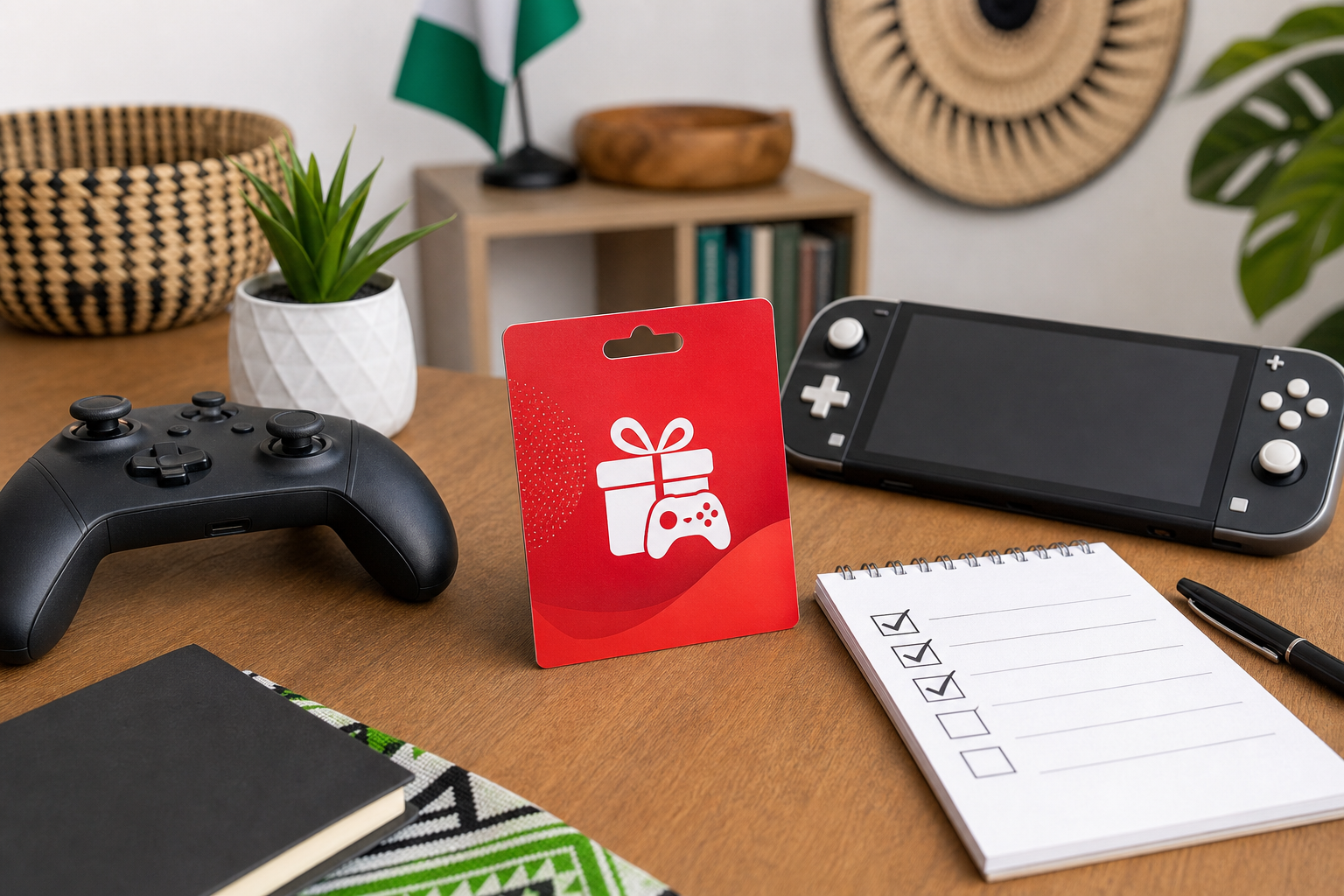
Use a short checklist before buying: region, redemption method, live price, storage, and availability.
$50 Card Vs $35 Card: Which One Fits Better?
The $50 card is the better fit when the recipient is buying a full digital game, a larger DLC bundle, or several sale items in one basket. It reduces the chance that they will need another payment method at checkout, and it can be convenient when the target item sits close to the $50 mark. It is also the simpler gift when you want to give enough room for choice without asking too many questions about the exact title.
The $35 card is better when the recipient only needs a top-up, when they are buying a smaller indie title, or when you are unsure how often they use the eShop. In the provided Ogabassey product snapshot, the $35 card is listed at NGN 55,789 while the $50 card is listed at NGN 78,346. Those figures are catalog context, not a permanent price promise. The live product pages should be checked at checkout because gift-card pricing can change with exchange rates, supply, and fulfillment conditions.
From a buyer's point of view, the denomination should follow the purchase, not the other way around. Ask what the recipient wants to buy, check the price in their own eShop account, then choose the card value that leaves the least awkward leftover balance. Leftover credit is not always bad, but it becomes poor value if the account is rarely used or if the remaining amount is too small to buy anything meaningful.
Price And Nigeria Value
The Nigeria value test is simple: compare the final naira checkout price with the exact digital item the recipient intends to buy. Divide the local price by the card value to understand the effective naira cost per dollar of eShop credit, then decide whether the convenience, availability, and delivery method still make sense. This is especially important when the naira moves quickly or when marketplace supply changes.
Separate the price of the card from the price of the game. A $50 value card does not mean every major Nintendo release, deluxe edition, expansion pass, or bundle will fit inside that balance. Some games may cost more. Some sale items or smaller indie games may cost much less. The best use is planned spending: a game plus DLC, a sale basket, an expansion pass, or a known top-up amount.
For a gift, do not optimize only for the highest card value. A bigger card can be generous, but it also increases the cost of a wrong-region mistake. If the buyer cannot verify the account region, the $35 card is not automatically safe either; the safer move is to pause and confirm. If the account is verified and the recipient actively buys digital games, the $50 card becomes easier to justify.
Compatibility With Switch And Switch 2
Nintendo eShop credit is tied to the Nintendo Account and eligible eShop purchases, not to a specific physical console box. That makes it broadly useful for people moving between Nintendo Switch and Nintendo Switch 2, provided the account and storefront are correct. Nintendo's official card page now names both Nintendo Switch and Nintendo Switch 2 as delivery targets for eShop games, which is why the 2026 context matters for this article.
Still, a gift card does not guarantee that every game works exactly the same on both systems. Switch 2 is backward compatible with many Switch games, but some software, accessories, or controller-dependent features can have limitations. If the recipient wants a particular older Switch game on Switch 2, check the game's compatibility and controller needs before buying credit for it. This matters for households that use original Joy-Con, Ring Fit-style accessories, motion-heavy games, or older family titles.
Digital ownership also means the recipient should know which Nintendo Account owns the purchase. If a household shares one console with multiple profiles, redeeming on the wrong account can create access confusion. Before redemption, confirm the account name on the console or browser page. That small check protects the buyer from funding the wrong profile and protects the recipient from needing support later.
Storage, Downloads, And Data Costs
The card itself uses no storage, but digital games do. Original Nintendo Switch systems have limited internal storage, and Switch 2 digital games can be larger because of higher-resolution assets and newer releases. A buyer who sends eShop credit without checking storage may create a second purchase need: a compatible memory card.
For original Nintendo Switch, a normal microSD card may be part of the storage plan. For Nintendo Switch 2, buyers should be more careful because Switch 2 storage expansion uses microSD Express rather than ordinary older microSD cards for Switch 2 software storage. If the recipient plans to buy large Switch 2 games digitally, eShop credit may be only half the budget; storage and download bandwidth may also matter.
Internet access is not optional for redemption and downloads. In Nigeria, that means the practical cost may include home broadband, campus Wi-Fi, office Wi-Fi, or mobile data. If the target game is large, confirm the download size before gifting. If the recipient mainly plays physical cartridges to avoid large downloads, a digital value card may be less useful than a cartridge or an accessory.
Online Play, Memberships, And Accessories
A Nintendo eShop value card is not the same as a Nintendo Switch Online membership card. It may help fund eligible purchases, but online multiplayer features for some games still require Nintendo Switch Online. Nintendo's own retail card page separates eShop cards from Nintendo Switch Online membership cards and notes that online features require a Nintendo Account, internet access, and a membership where applicable.
That distinction matters for games such as online shooters, competitive multiplayer titles, or family accounts where multiple users need access. If the recipient says they need to play online, ask whether they need game credit, a membership, DLC, or a combination. Buying the wrong card type can leave them with balance but no access to the feature they expected.
Accessories are also separate. A value card will not solve a drifting controller, a missing charger, low storage, a damaged dock, or the need for a second controller. If the real problem is hardware, compare options in Gaming Accessories instead of using gift-card credit as a workaround.
Trade-Offs And Support Risks
The upside of the Nintendo eShop $50 Card is flexibility. You do not need to know the exact game, edition, or storage size before gifting, and the recipient can choose eligible digital content themselves. It is also easier to deliver than a physical boxed game when the buyer and recipient are in different cities.
The downside is that digital value cards are less forgiving than many physical products. Once a code is delivered, exposed, or redeemed, return and reversal options can be limited. The most important warranty and support point is therefore pre-purchase verification: region, account, delivery method, live availability, and target item price. Treat the code like cash for a specific storefront, not like a general returnable accessory.
Fraud and sharing risk are also real. Do not ask the recipient for their Nintendo password. Ask for the account country, the storefront currency, and the name or price of the intended item. If a screenshot is needed, it should hide private account details. If the buyer is purchasing for a child, the parent or guardian should handle account and parental-control checks.
Alternatives To Consider
If the buyer already knows the exact game, a physical cartridge can be a cleaner gift. It can be easier to present, easier to share in a household, and less dependent on account-region credit. A cartridge is also better for players who like resale, collection shelves, or reduced download pressure, although updates may still be required for many modern games.
If the intended gift is a specific online multiplayer experience, compare eShop credit with a Nintendo Switch Online membership before paying. A membership solves access to online features where required, while eShop credit is broader spending balance. They overlap only if the balance can be used toward the exact membership or content the recipient needs in their storefront.
If the recipient mainly wants one Nintendo game, read game-specific checks such as Splatoon 3 in Nigeria before deciding between credit, cartridge, and online membership. If the buyer is comparing gift-card ecosystems instead of Nintendo specifically, Ogabassey's Steam Wallet Gift Card $75 guide is useful for understanding how platform-specific card rules differ. The key lesson is the same: choose the platform the recipient actually uses.
Buyer Checklist Before You Pay
Confirm the recipient uses Nintendo Switch or Nintendo Switch 2, not another platform.
Confirm the Nintendo Account country and eShop storefront currency.
Confirm whether the planned purchase is closer to $35, $50, or another amount.
Check the live Ogabassey product price and availability before checkout.
Confirm the code delivery method and expected redemption instructions.
Check whether the target game needs storage space, a microSD card, or microSD Express on Switch 2.
Check whether the target game needs Nintendo Switch Online for multiplayer.
Redeem on the correct Nintendo Account, not just the correct console.
Final Verdict
The Nintendo eShop $50 Card is worth buying when the recipient is already active on Nintendo eShop, the account region and currency are confirmed, and the intended purchase can use most of the $50 balance. It is a strong choice for flexible digital spending, DLC, sale shopping, and Nintendo Switch or Switch 2 owners who prefer downloads.
The $35 card is the better alternative when the buyer wants a smaller top-up, lower exposure, or a denomination that better matches a cheaper target purchase. Neither card is a good blind gift if the account region is unknown. For Nigerian buyers, the practical rule is: verify the account before you verify the price, then check live availability, delivery method, storage needs, and the exact purchase plan.
FAQ
What region or edition works in Nigeria?
The card should match the Nintendo Account and eShop storefront it will be redeemed on. Nigerian buyers should confirm the account country and card currency before checkout because eShop access and redemption depend on supported account regions.
Does a Nintendo eShop $50 Card work on Nintendo Switch 2?
Nintendo's official eShop card page includes Nintendo Switch 2 as a system for digital game delivery. The buyer still needs a compatible Nintendo Account, internet access, and the correct eShop region for the card.
Is the $50 card better than the $35 card?
It is better when the recipient has a known purchase close to $50 or buys digital games often. The $35 card is better for smaller purchases, top-ups, or situations where you want to reduce unused balance.
Do I need storage space before buying the card?
The card itself does not need storage. Downloaded games bought with the balance may need internal space or a compatible memory card, especially on Switch 2 where storage expansion requirements differ from the original Switch.
Can this replace Nintendo Switch Online?
Not automatically. A value card is account credit, while Nintendo Switch Online is a membership for eligible online features and other benefits. Confirm which one the recipient actually needs.