Bassey John is a Performance Marketing Specialist at Ogabassey with cross-industry experience spanning e-commerce, gaming, and real estate. He focuses on paid acquisition, conversion-rate optimisation, and data-driven growth strategy, turning campaign performance into measurable revenue. At Ogabassey he writes about consumer technology, product buying guides, and the Nigerian gadget market to help shoppers make confident, informed decisions.
Choosing between the Infinix Hot 50i (128GB + 4GB) and the Infinix Smart 10 Plus is really a choice between a stronger camera-led package and a lower-priced, battery-first phone. Both sit in the practical budget end of the Ogabassey Smartphones catalogue, both are listed as new, and both carry the same 4GB RAM and 128GB storage baseline in the supplied Ogabassey product snapshot. That makes the comparison useful for buyers who want enough storage for WhatsApp media, TikTok clips, school documents, business apps, and offline music without jumping into a much higher price band.
The short version: pick the Infinix Hot 50i if camera quality and a slightly larger display matter more to you. Pick the Infinix Smart 10 Plus if you want to spend less and prioritize battery capacity for long days away from a charger. The price difference in the provided catalogue data is not huge, but it is meaningful in Nigeria, where the extra spend may also need to cover a pouch, screen protector, data bundle, power bank, or delivery cost. This draft uses the supplied Ogabassey product snapshot plus Infinix product evidence where available, and it avoids unsupported promises about warranty, delivery speed, or guaranteed stock.
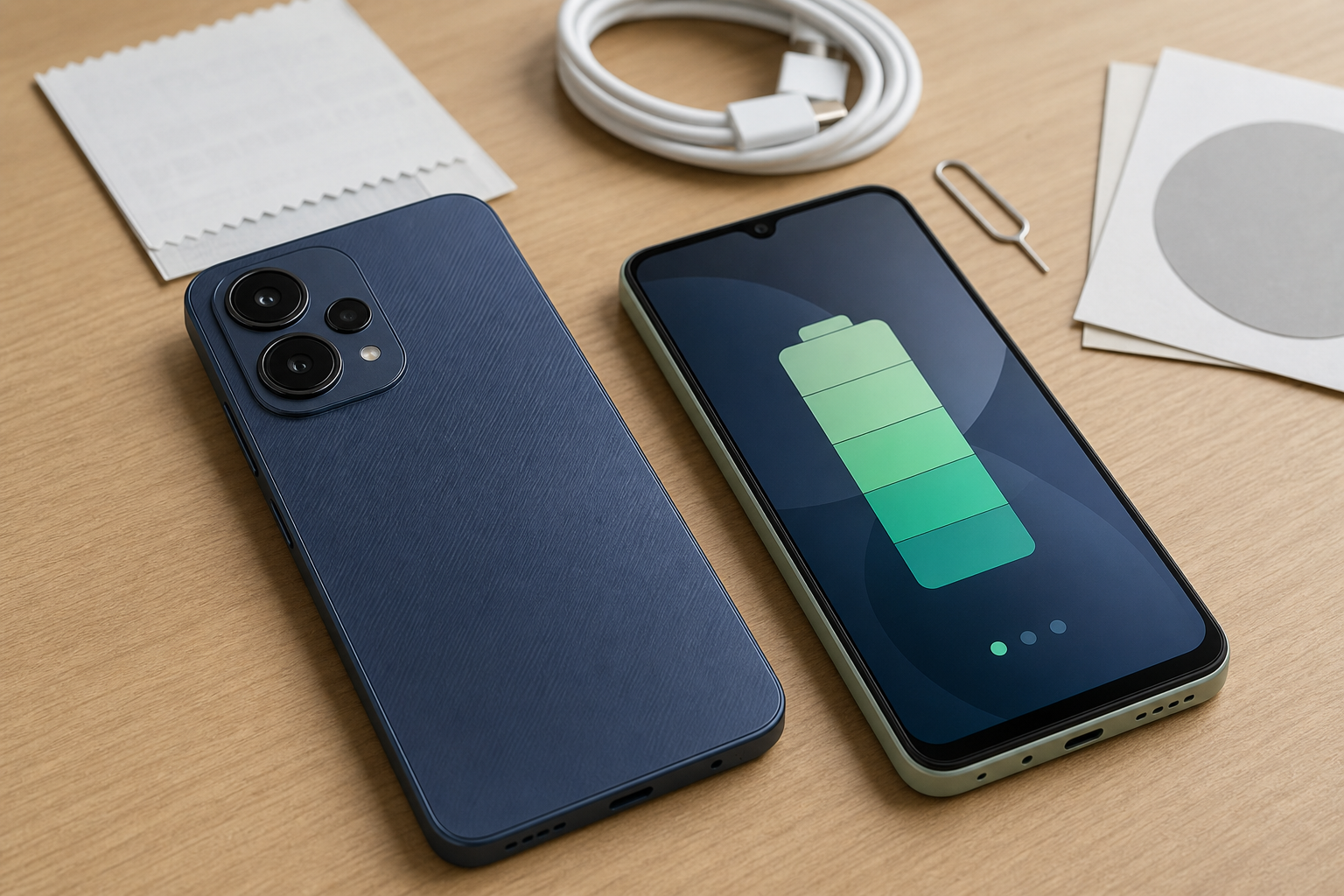
Check the full ownership picture: price, charger details, battery, variant, and live availability.
Decision summary
The Infinix Hot 50i is the better fit for buyers who want the more complete everyday phone on paper. Its listed 48MP rear camera and 8MP front camera give it a clear advantage over the Smart 10 Plus, whose supplied Ogabassey specs list an 8MP rear camera and do not provide a front camera figure. The Hot 50i also has a 6.7-inch HD+ display, which is slightly larger than the Smart 10 Plus at 6.67 inches. Both displays are HD-class at 720 x 1600 pixels, so the size difference is minor; neither should be treated as a high-resolution media flagship.
The Infinix Smart 10 Plus makes its case with price and battery capacity. It is listed at NGN 134,400 in the supplied snapshot, while the Hot 50i is listed at NGN 144,200. The Smart 10 Plus also has a 6000mAh battery with 18W charging listed in the Ogabassey description, compared with the Hot 50i's 5000mAh battery. If you are buying for a student, field worker, POS operator, dispatch rider, or anyone who spends long hours on mobile data, calls, and messaging, the larger battery may matter more than the camera gap.
Neither phone should be bought as a 5G upgrade based on the supplied catalogue facts. The Smart 10 Plus description explicitly mentions 4G/LTE support, and the Hot 50i snapshot does not position it as a 5G device. If your main question is whether 5G is worth paying extra for in Lagos or Abuja, the answer depends on your network, location, and data budget; but between these two phones, the more realistic decision is camera versus battery, not 4G versus 5G.
Price and value
On the provided Ogabassey snapshot, the Infinix Smart 10 Plus is the cheaper option at NGN 134,400, while the Infinix Hot 50i is listed at NGN 144,200. That puts the Hot 50i about NGN 9,800 higher than the Smart 10 Plus. In percentage terms, the difference is modest, but in a real Nigerian buying decision it can still affect what else you can afford on purchase day. If your budget ceiling is strict, the Smart 10 Plus is the easier recommendation because it gives you 4GB RAM, 128GB storage, a large display, and a bigger listed battery for less money.
The Hot 50i justifies its higher catalogue price mostly through its camera package. A 48MP main camera and 8MP front camera are more appealing if you often take product photos, school-event pictures, social media clips, or video calls in decent light. Budget-phone megapixel counts are not the full story, because processing, sensor size, lens quality, and lighting all matter. Still, with only the supplied facts available, the Hot 50i has the stronger evidence for camera-focused buyers.
For value, think beyond the sticker price. A buyer comparing these two should confirm the selected colour, RAM/storage variant, device condition, final checkout price, warranty or return terms, and live availability before paying. The Hot 50i row stock quantity is listed as 10 in the supplied snapshot, while the Smart 10 Plus stock is listed as 20. Those numbers help with context, but they should not be treated as a guarantee at checkout because live inventory can move quickly. If one colour or variant is important to you, check the exact product page before making the decision.
Performance and daily use
Both phones are listed with 4GB RAM and 128GB storage, so the day-to-day performance question is less about memory capacity and more about expectations. A 4GB RAM Android phone in this price band should be viewed as a practical device for messaging, calls, browsing, social apps, light photography, mobile banking, Google Workspace basics, YouTube, and casual games. It is not the best class of phone for heavy multitasking, long gaming sessions on demanding titles, or keeping many large apps open at once.
The Smart 10 Plus description lists a Unisoc T7250 processor. The supplied Hot 50i data does not include a chipset figure, so this comparison should not pretend to benchmark the two. A buyer should instead ask what kind of workload the phone will carry. For a parent buying for a student, either 128GB model gives useful breathing room for assignments, photos, downloads, and class group chats. For a small business owner, 128GB also helps if WhatsApp Business images, invoices, delivery photos, and customer videos accumulate quickly.
If your current phone has 2GB RAM or 32GB storage, both models should feel like a practical upgrade in storage headroom. If you already use a 6GB or 8GB RAM phone, these two are more likely to feel like budget replacements than upgrades. Buyers switching from older Tecno, Itel, Samsung A-series, Redmi, or Infinix models should compare their current storage and battery health first. Sometimes the biggest improvement comes from a fresh battery and more storage, not from a dramatic jump in processor power.
Battery, display, and build
The battery section is where the Infinix Smart 10 Plus has its clearest advantage. Its supplied description lists a 6000mAh battery with 18W charging. The Infinix Hot 50i is listed with a 5000mAh battery. A 1000mAh difference can matter if you spend long days outside, use hotspot often, or live in an area where power supply is inconsistent. Actual endurance still depends on signal strength, screen brightness, app habits, and battery health over time, but the larger listed capacity gives the Smart 10 Plus a stronger battery-first argument.
The Hot 50i's 5000mAh battery is still substantial for budget Android use. For many buyers, 5000mAh is enough for a full day of calls, WhatsApp, browsing, and social media if the phone is managed sensibly. But if you are buying for someone who forgets to charge, works outdoors, or travels often between towns, the Smart 10 Plus is easier to recommend. The supplied 18W charging detail also gives buyers a clearer charging expectation for the Smart 10 Plus, while the Hot 50i snapshot here does not provide a charging wattage.
On display, the difference is narrow. The Hot 50i has a 6.7-inch HD+ screen at 720 x 1600 pixels, while the Smart 10 Plus has a 6.67-inch display with the same HD-class resolution. Both are large enough for videos, reading, and typing, but both are still HD-class. If you are coming from a sharper Full HD phone, text and images may not look as crisp. If you are coming from an older small-screen device, both should feel roomy and easier for browsing, forms, school PDFs, and mobile banking.
The Hot 50i snapshot lists a weight of about 186g. The Smart 10 Plus snapshot does not provide a weight figure, so buyers who care about pocket feel should check the product page or inspect the device where possible. The Hot 50i also lists available colours including Sleek Black, Sage Green, and Titanium Grey, while the Smart 10 Plus product images in the supplied data show multiple colour assets but the key specs field does not provide a confirmed available-colour list. Colour should be treated as variant-dependent until confirmed at checkout.
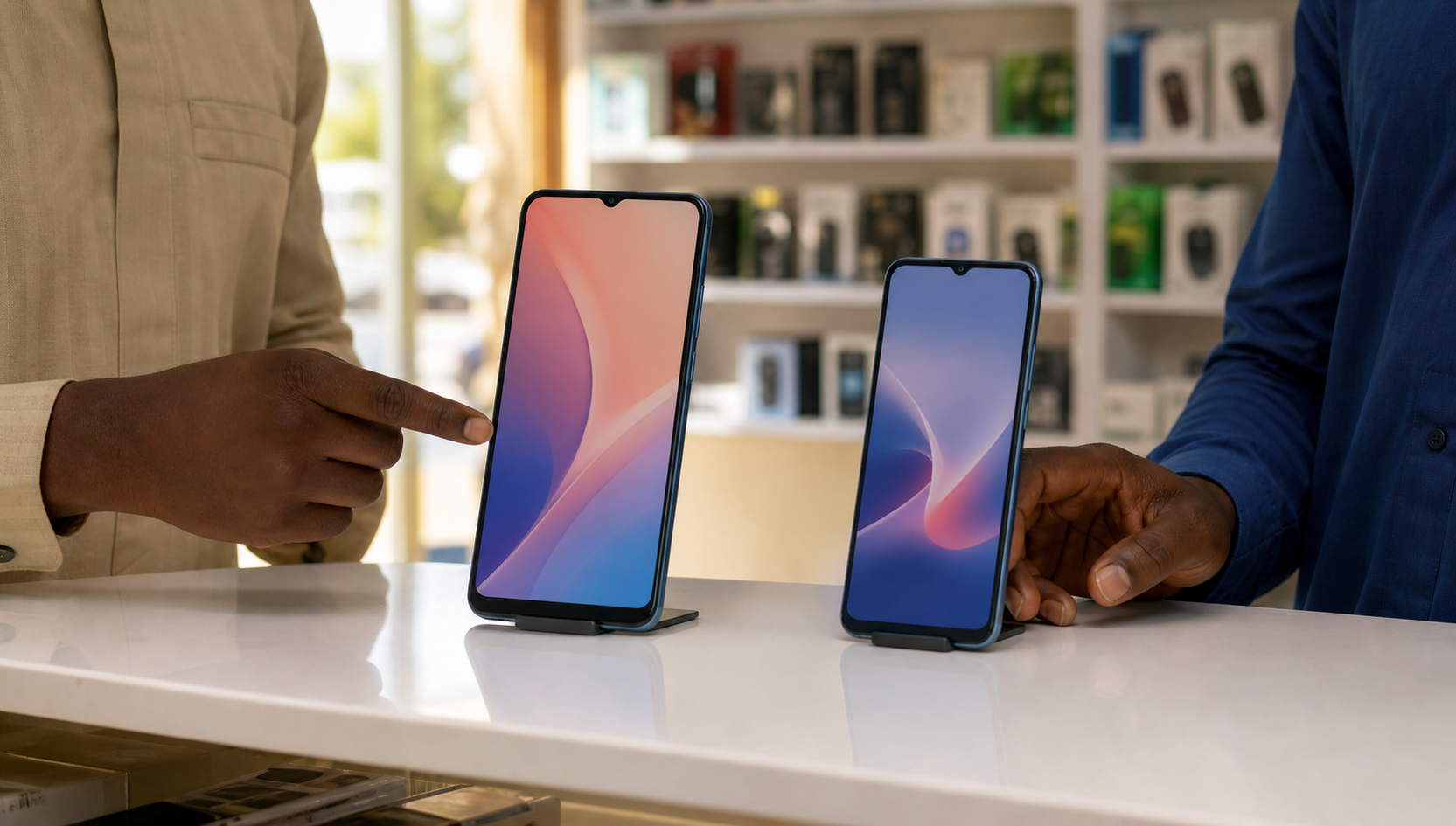
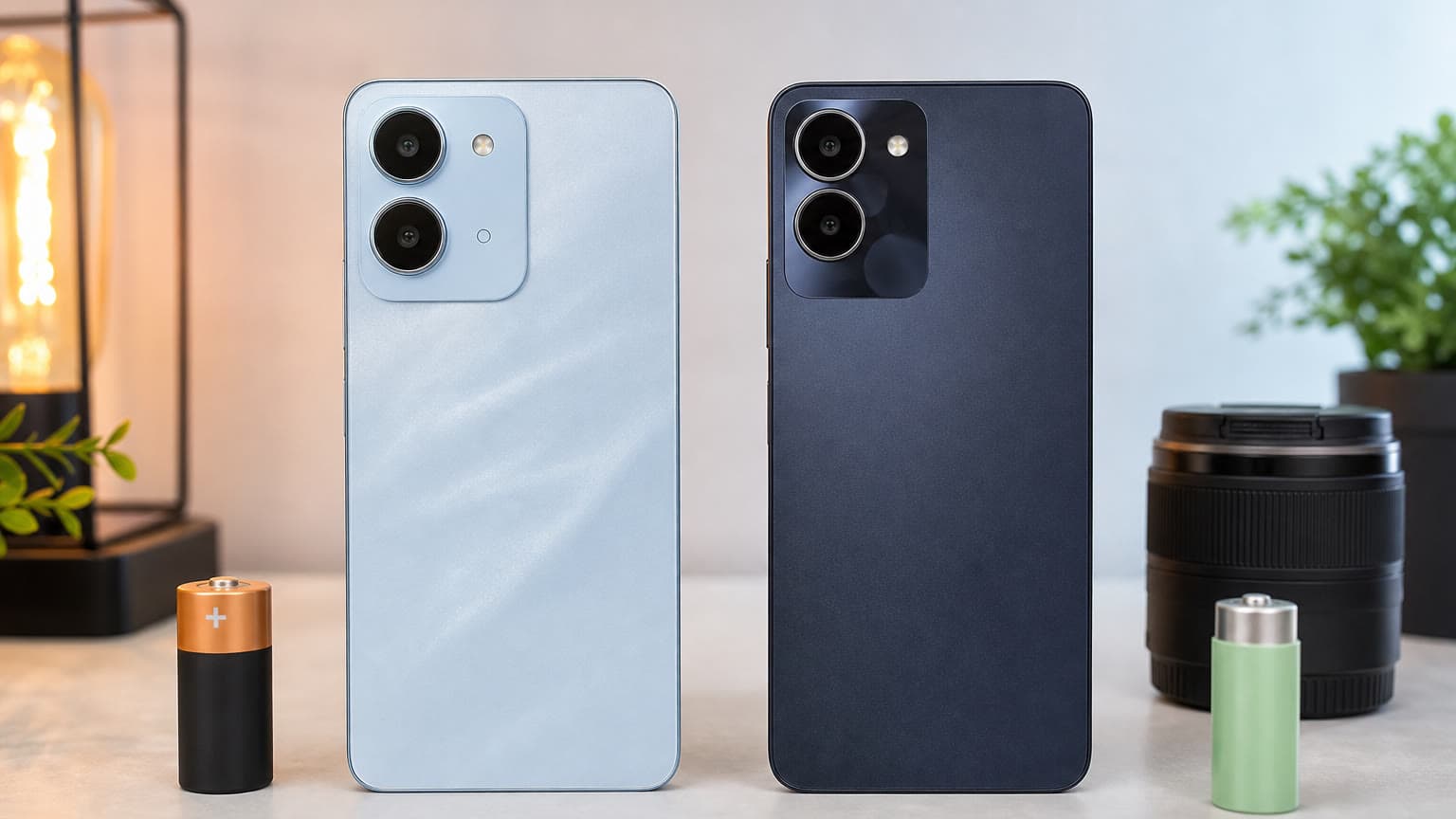
Both phones have large HD-class displays, but the buyer fit differs by camera and battery priorities.
Camera and content creation
If photography is part of the decision, the Infinix Hot 50i is the more convincing choice from the evidence supplied. It is listed with a 48MP rear camera and an 8MP front camera. That does not automatically make it a camera phone in the premium sense, but it gives it a better starting point for casual portraits, marketplace product shots, social media posts, and family photos. For a small vendor who photographs shoes, food packs, clothes, accessories, or repair work, that camera advantage may be worth the extra NGN 9,800 shown in the provided price snapshot.
The Smart 10 Plus is listed with an 8MP rear camera, and the front camera figure is not supplied in the product_key_specs data. That makes it harder to recommend for buyers who care about selfies, video calls, or content creation. It can still serve basic photo needs, especially in good daylight, but its strongest buying case is not photography. If you only need QR code scanning, document photos, casual snapshots, and occasional video calls, it may be enough. If camera quality is one of the top three reasons you are buying, choose the Hot 50i or consider moving to another phone with stronger camera evidence.
Network fit, software horizon, and ownership checks
For buyers in Lagos, Abuja, Port Harcourt, Ibadan, Accra, Nairobi, or other urban African markets, network fit is not just a spec-table issue. A phone can be affordable and still be frustrating if it does not match the bands, SIM setup, or data performance you need. The supplied Smart 10 Plus description mentions 4G/LTE support. For the Hot 50i, the supplied comparison data focuses on display, camera, battery, RAM, storage, weight, and colour; it does not make a 5G claim. If 5G is a requirement, these two should not be your final shortlist without additional verification.
Is 5G worth paying extra for in Lagos or Abuja? For heavy downloaders, mobile hotspot users, and people living or working inside strong 5G coverage zones, it can be worth considering. For many budget buyers, however, a reliable 4G phone with better battery, enough storage, and local repair familiarity may be the smarter purchase. Between the Hot 50i and Smart 10 Plus, the money is better judged against camera needs, battery needs, and verified after-sales support than against 5G.
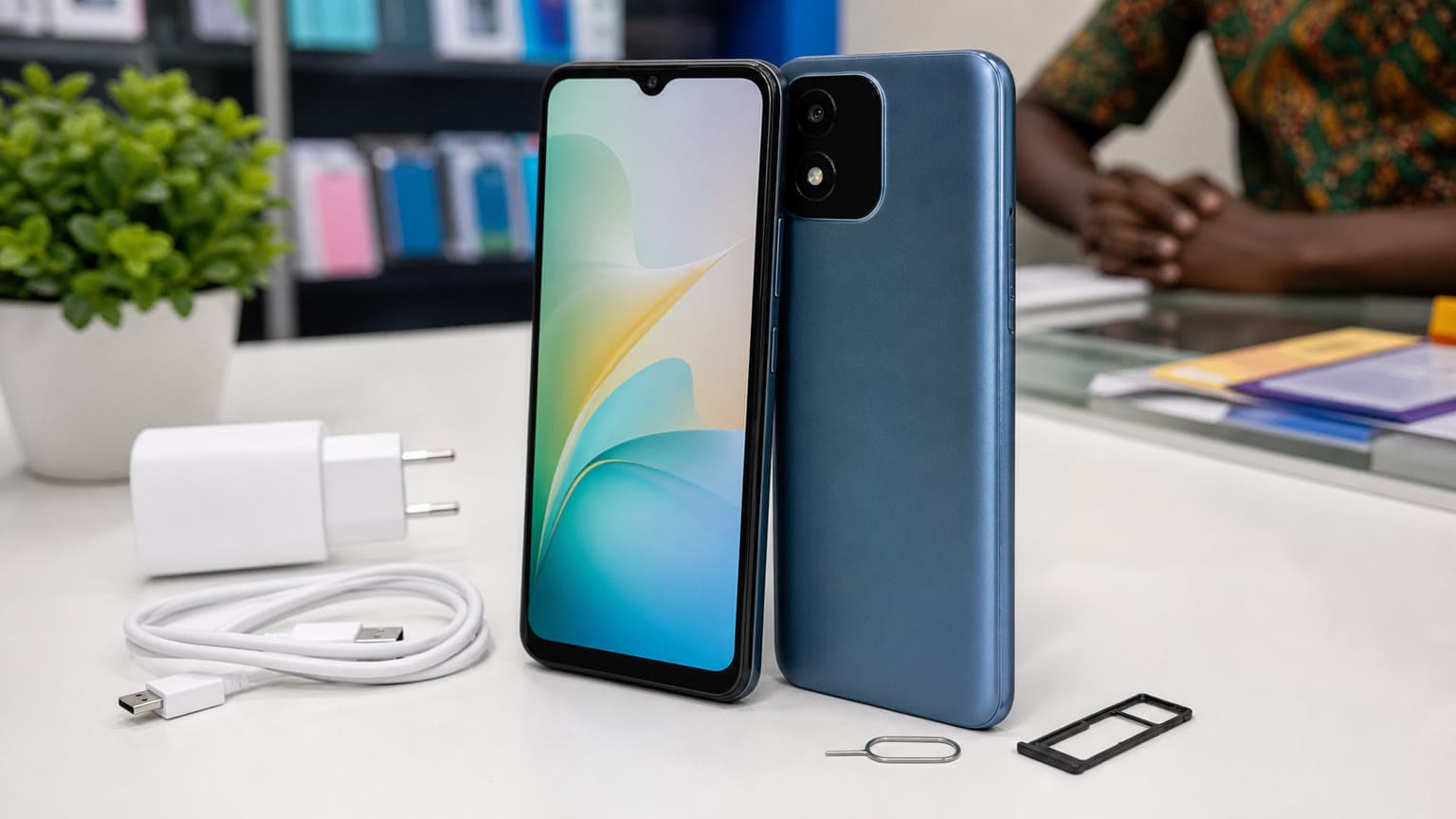
Software update horizon is another area where buyers should be careful. The supplied snapshot does not provide guaranteed Android version updates or security patch timelines for either phone. Do not assume a long flagship-style update policy. Before purchase, confirm the current software version, whether the box and device are original for your market, warranty or service-center terms, charger contents, and the exact model code. This matters because regional Infinix configurations can vary, and the Smart 10 Plus metadata itself warns buyers to confirm exact regional SKU/model code, charger rating, network bands, and supported features before purchase.
Who should buy each option
Buy the Infinix Hot 50i if camera value matters
The Infinix Hot 50i is the better choice for a buyer who wants stronger camera specs, a known front camera figure, a slightly larger screen, and a still-large 5000mAh battery. It is the more balanced pick if you can afford the higher listed price and do not want to sacrifice camera confidence for battery capacity. It is especially sensible for social sellers, students who take class and event photos, parents who want clearer family pictures, and anyone who wants a budget Infinix that does not feel too limited on storage.
Buy the Infinix Smart 10 Plus if battery and price come first
The Infinix Smart 10 Plus is the more practical pick for buyers who want to keep the price lower and get the larger listed battery. Its 6000mAh battery is the main reason to choose it, especially for long commutes, busy workdays, and inconsistent charging routines. It also has the same 4GB RAM and 128GB storage baseline as the Hot 50i in the supplied catalogue data, so you are not giving up storage to save money. The trade-off is camera strength: based on the supplied specs, the Smart 10 Plus is not the better camera choice.
Alternatives to consider
If neither phone fully answers your needs, stay within the broader Smartphones category and compare by the problem you are actually trying to solve. If you want better photos, look for a phone with stronger camera evidence, not just more storage. If you want gaming, check chipset, RAM, refresh rate, thermals, and battery performance. If you want a work phone for calls, hotspot, banking, and WhatsApp Business, battery size, network compatibility, storage, and repairability may matter more than camera megapixels.
Buyers comparing Infinix with Tecno, Samsung, Xiaomi, iPhone, or Google Pixel should keep price band in mind. A used iPhone or used Pixel may produce better photos, but it may also bring battery-health risk, repair-cost risk, and accessory-cost differences. A Samsung or Xiaomi alternative may offer a different software experience or display quality, but the final decision should compare the exact model, condition, storage, warranty terms, and Nigerian parts availability. In this specific pair, both Infinix options are listed as new, which simplifies the used-versus-new question: you are mainly choosing between two new budget phones rather than taking a chance on a used premium device.
Verdict
For most buyers choosing only between these two, the Infinix Hot 50i is the better all-rounder because its 48MP rear camera, 8MP front camera, 6.7-inch HD+ display, 4GB RAM, 128GB storage, and 5000mAh battery make it the more complete package on paper. It costs more in the supplied Ogabassey snapshot, but the difference buys a clearer camera advantage and a more rounded spec sheet.
The Infinix Smart 10 Plus is the better value pick if your top priorities are lower price and battery capacity. Its listed NGN 134,400 price, 6000mAh battery, 18W charging, 4GB RAM, and 128GB storage make it a sensible everyday phone for buyers who mainly need messaging, calls, browsing, social media, and long battery life. Before checkout on either model, confirm live availability, selected variant, colour, final price, warranty or return terms, charger details, and network compatibility. That final verification matters more than choosing based on one spec alone.
Catalog-linked prices update automatically. Historical and other quoted prices remain as written. Open the product page to confirm the current price, selected variant and availability before buying.