Bassey John is a Performance Marketing Specialist at Ogabassey with cross-industry experience spanning e-commerce, gaming, and real estate. He focuses on paid acquisition, conversion-rate optimisation, and data-driven growth strategy, turning campaign performance into measurable revenue. At Ogabassey he writes about consumer technology, product buying guides, and the Nigerian gadget market to help shoppers make confident, informed decisions.
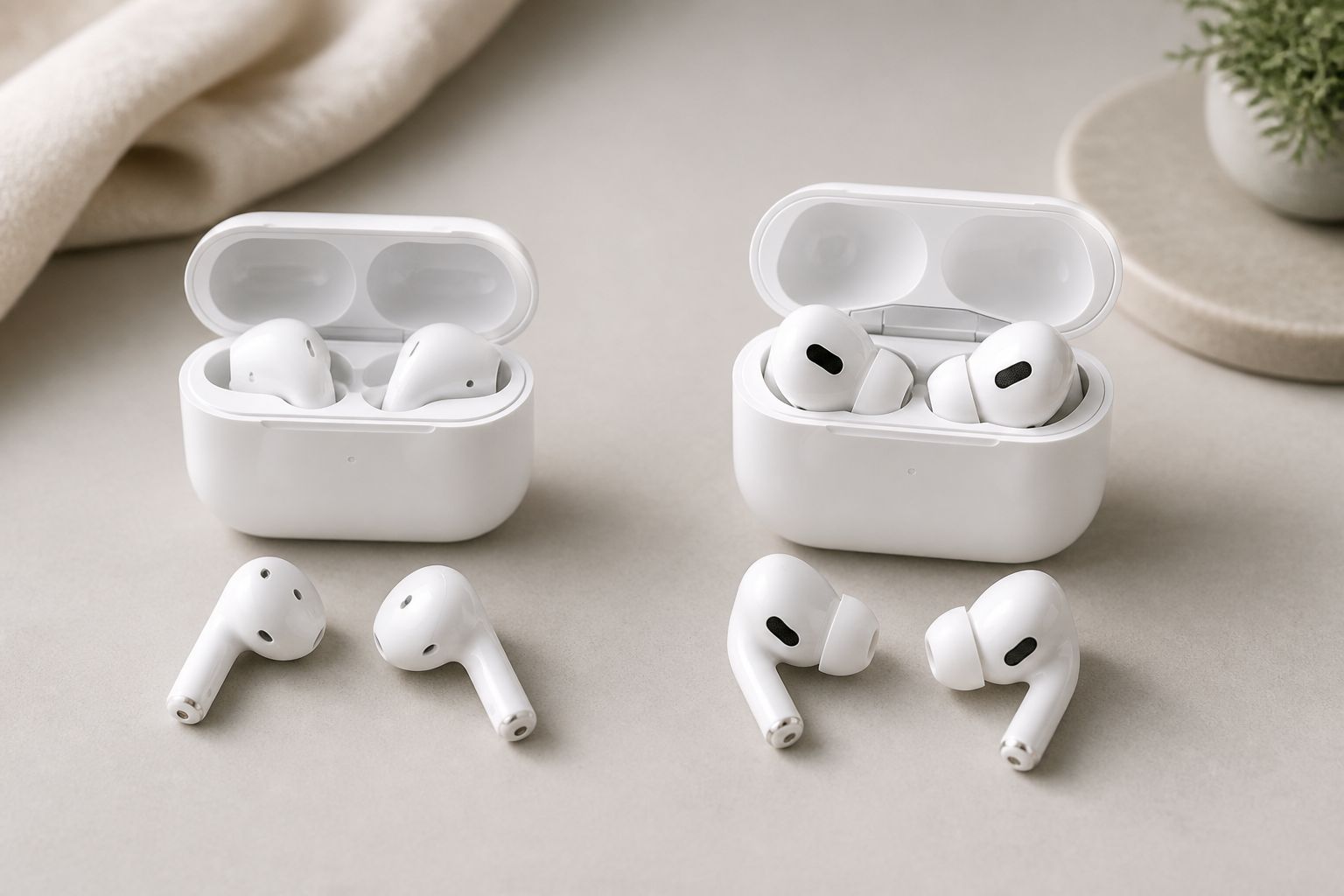
Apple AirPods 2 and AirPods 4 ANC are not close substitutes in 2026. AirPods 2 are the cheaper, familiar Apple earbuds for basic listening, calls, and quick pairing. AirPods 4 ANC cost more, but they are the modern open-fit AirPods with active noise cancellation, USB-C, newer controls, better Find My case features, and stronger day-to-day usefulness in noisy Nigerian environments.
At the Ogabassey catalog prices supplied for this draft, AirPods 2 are listed at ₦160,000 while AirPods 4 ANC are listed at ₦260,000. That ₦100,000 gap is the whole decision: pay less for simple Apple earbuds, or pay more for the model that solves the problems most buyers now complain about, especially background noise, Lightning charging, and older feature support.
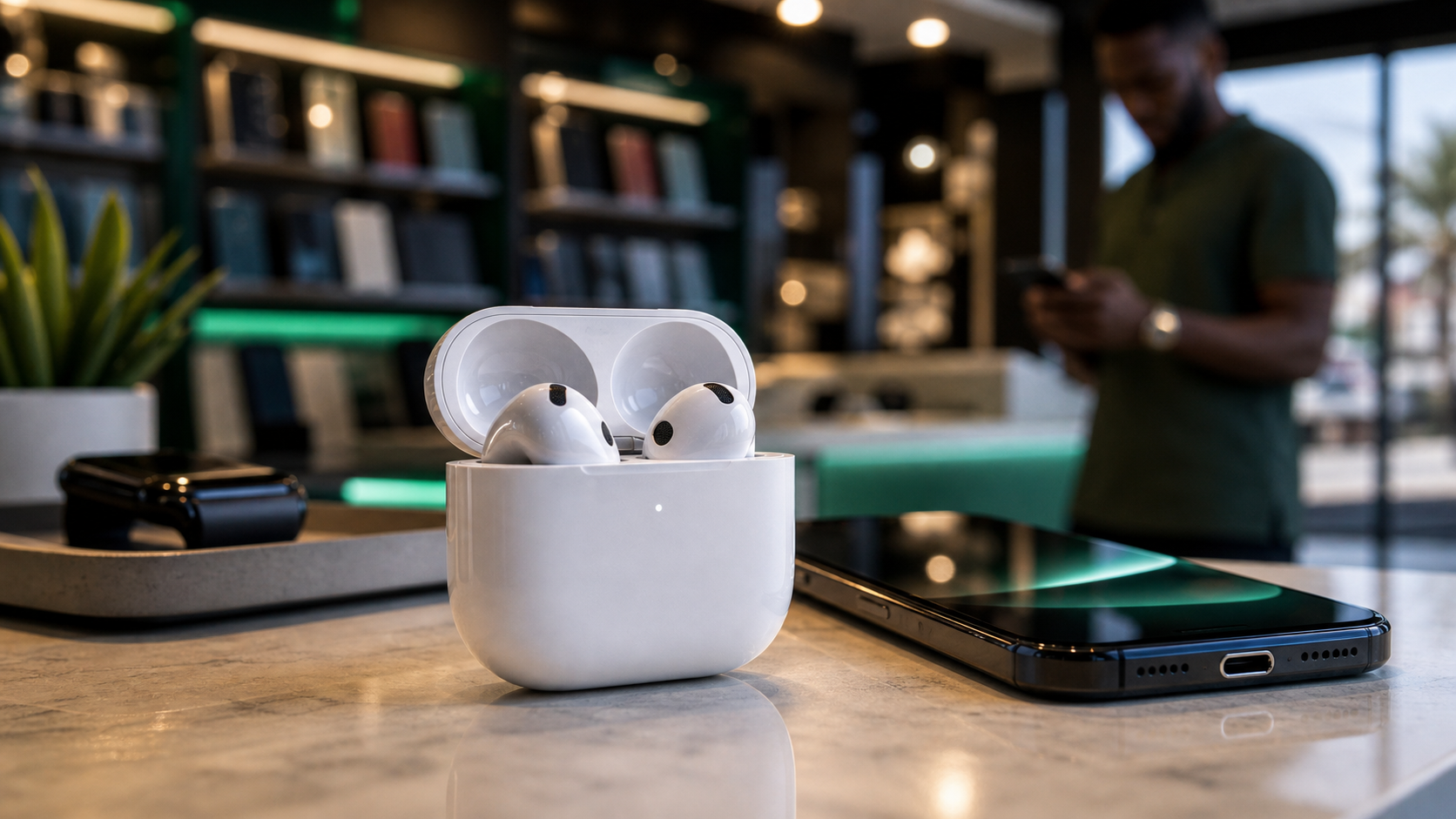
The main difference is not just price: AirPods 4 ANC add modern noise-control features.
Decision Summary
Choose Apple AirPods 2 if you mainly need affordable Apple earbuds for music, WhatsApp calls, Zoom meetings, podcasts, and simple iPhone pairing in quiet places. They still make sense as a lower-cost pair for light use, a backup pair, or a buyer who strongly prefers the older AirPods shape.
Choose Apple AirPods 4 ANC if you use earbuds daily in Lagos traffic, shared offices, campus spaces, flights, gyms, generator noise, or busy homes. The ANC model is the better long-term buy for most people because it handles more environments, uses USB-C, has a newer H2 chip, supports more current AirPods features, and is less likely to feel outdated during the ownership period.
The only reason to pick AirPods 2 over AirPods 4 ANC in 2026 is budget or fit preference. If you can afford the difference and the AirPods 4 shape sits comfortably in your ears, AirPods 4 ANC are the stronger recommendation.
AirPods 2 vs AirPods 4 ANC: Key Differences
Feature
Apple AirPods 2
Apple AirPods 4 ANC
Release year
2019
2024
Ogabassey catalog price in this draft
₦160,000
₦260,000
Best fit
Basic Apple earbuds at the lower price
Daily earbuds for noise, calls, commuting, and newer devices
Noise cancellation
No active noise cancellation
Active Noise Cancellation, Transparency mode, Adaptive Audio, and Conversation Awareness
Chip
H1 headphone chip
H2 headphone chip
Controls
Double-tap controls
Force sensor controls, including press-and-hold for listening modes
Charging case
Lightning charging case or wireless charging case variant
USB-C case with speaker, Find My proximity support, Qi charging, and Apple Watch charger support
Dust, sweat, and water resistance
No current Apple IP rating for AirPods 2
IP54 rating for earbuds and case
Single-charge listening
Up to 5 hours
Up to 4 hours with ANC on, up to 5 hours with noise control off
Total listening with case
More than 24 hours
Up to 20 hours with ANC on, up to 30 hours with noise control off
Connectivity
Bluetooth 5.0
Bluetooth 5.3
Price And Value In Nigeria
The cheaper AirPods 2 price is attractive, but value depends on how and where you listen. If your earbuds mostly stay at home or in a quiet office, AirPods 2 can still cover the basics without forcing you to spend extra money. They pair quickly with Apple devices, they are light, and the battery rating remains respectable for simple listening.
AirPods 4 ANC are better value when the earbuds are part of your daily routine. The extra ₦100,000 buys ANC, Transparency mode, Adaptive Audio, Conversation Awareness, USB-C charging, IP54 protection, Find My case speaker support, and a newer Apple audio platform. Those upgrades are practical in Nigeria because background noise is often the real problem: traffic, public transport, office chatter, construction, generators, markets, and windy outdoor calls.
Because local prices can move with exchange rates and stock, use this rule if the catalog price changes: AirPods 2 are worth considering when they are much cheaper and you do not need ANC. AirPods 4 ANC become the easy pick when the price difference is moderate, because the feature gap is much larger than the age gap suggests.
Performance And Daily Use
For simple listening, AirPods 2 still do the expected Apple things well. They open near an iPhone, pair quickly, reconnect easily, and work fine for music, podcasts, videos, calls, and online meetings. If you already own Lightning cables and you use your earbuds in quiet rooms, the older model does not suddenly become unusable just because newer AirPods exist.
AirPods 4 ANC are stronger in the messy real world. Active Noise Cancellation reduces steady background noise; Transparency mode lets you hear people, traffic, or announcements; and Conversation Awareness can reduce playback when you start speaking. Apple’s current support pages also list AirPods 4 ANC among models that support Adaptive Audio with compatible software, which makes them more flexible than AirPods 2 for shifting environments.
There are limits. AirPods 4 ANC have an open-fit design, not silicone ear tips like AirPods Pro. That makes them more comfortable for buyers who dislike sealed in-ear buds, but it also means their noise cancellation will not isolate as strongly as AirPods Pro models. If you need the most aggressive noise blocking for flights or loud workspaces, read Ogabassey’s AirPods 4 ANC vs AirPods Pro 2 USB-C comparison before buying.
AirPods 4 ANC are easier to recommend for noisy commutes, offices, and daily calls.
Battery, Charging, And Build
AirPods 2 have a simple battery advantage when you compare one charge without ANC: Apple lists up to 5 hours of listening time, and more than 24 hours using the case. A 15-minute charge in the case can provide up to 3 hours of listening. For a student or office user who listens in short bursts, that is still useful.
AirPods 4 ANC are rated for up to 4 hours of listening with ANC enabled, up to 5 hours with noise control off, and up to 20 hours with the case when ANC is on. With noise control off, the case can take total listening up to 30 hours. That means AirPods 2 can look better on battery if you ignore ANC, but AirPods 4 ANC give you the option to trade battery for quieter listening when you need it.
Charging is a bigger practical split. AirPods 2 use a Lightning case or a wireless charging case variant. AirPods 4 ANC use a USB-C charging case with a speaker for Find My proximity support, and Apple lists support for USB-C, Apple Watch charger, and Qi-certified charging. If your phone, tablet, power bank, or laptop is already USB-C, AirPods 4 ANC are easier to live with.
There is no display to compare here, so the build decision comes down to case, charging, fit, and resistance. AirPods 4 ANC have an IP54 dust, sweat, and water-resistance rating for both earbuds and case. AirPods 2 do not carry that current Apple rating, so they are the weaker option for gym bags, light rain exposure, dusty commutes, or buyers who want more durability confidence.
Compatibility And Pairing
Both models work best inside the Apple ecosystem, especially with iPhone, iPad, Mac, Apple Watch, and Apple TV. Apple’s current AirPods guidance says to use the latest device software before pairing. AirPods can also work as Bluetooth headphones with older Apple software and non-Apple devices, but some features may be limited.
The difference is how much you lose when you step outside newer Apple devices. AirPods 2 can still behave like straightforward Bluetooth earbuds. AirPods 4 ANC can also play audio over Bluetooth, but the reasons to buy them are Apple-side features: ANC controls, Adaptive Audio, Find My case features, personalized Spatial Audio, and deeper settings on compatible Apple devices. Android buyers can use them, but they should not pay the premium unless they are comfortable losing some Apple-only convenience.
Pairing also differs slightly. Older AirPods models use the setup button on the back of the case for manual pairing. AirPods 4 use a newer case interaction, where the case can be opened near the device and the front of the case can be double-tapped when manual pairing is needed. For most iPhone buyers this will not matter day to day, but it is useful when troubleshooting.
Genuine Product, Warranty, And Buyer Checks
AirPods are heavily copied, so price alone should not be the trust signal. Before paying for either model, check that the product name shown in iPhone Bluetooth settings matches the product being sold, confirm the serial number in settings and on the case, inspect the packaging and invoice, and avoid unusually cheap sealed listings from unknown sellers. A copied serial number can still appear convincing, so use multiple checks instead of relying on one number.
For warranty and repair confidence, keep the receipt or invoice and check coverage after pairing. Apple’s support pages explain where to find the serial number and how to start service, but local service outcomes still depend on product authenticity, purchase route, region, and coverage status. Buying from Ogabassey’s listed Apple accessories catalog or a trusted seller is safer than chasing the lowest marketplace price.
Who Should Buy Each Option?
Buy Apple AirPods 2 if your budget is tight, you mostly listen in quiet places, you already use Lightning accessories, and you want the cheapest easy-pairing Apple earbuds in this comparison. They are also sensible for a backup pair or for a buyer who loses earbuds often and wants to limit replacement cost.
Buy Apple AirPods 4 ANC if you commute, make many calls, work around people, study in shared spaces, travel, exercise, or want one pair that feels current with newer iPhones and USB-C devices. They are the better everyday recommendation because the ANC, case, resistance rating, and newer Apple features all reduce real ownership friction.
Do not buy AirPods 4 ANC only because they are newer. Buy them because you will use the upgrades. If you never turn on ANC, do not care about Find My case features, and only need occasional audio, AirPods 2 save money. If you use earbuds every day, the cheaper option may become the more frustrating one.
Alternatives To Consider
If you want the newer AirPods shape but do not need active noise cancellation, check Apple AirPods 4 availability before deciding. The non-ANC model keeps the newer design, H2 chip, USB-C case, and several modern features, but it drops the ANC-focused extras. It can be the middle option when stock and price make sense.
If you are comparing within Apple’s higher-end earbuds, read Ogabassey’s AirPods 4 ANC worth-buying guide and the AirPods Pro 2 USB-C buying guide. AirPods Pro-style earbuds are better for buyers who want a sealed fit and stronger isolation, while AirPods 4 ANC are better for people who hate silicone ear tips but still want some noise control.
If you are mainly considering AirPods 2 because they are cheaper, also compare them with the older mid-range Apple option in Ogabassey’s AirPods 2 vs AirPods 3 guide. That helps if your real decision is budget AirPods versus slightly newer open-fit AirPods, not specifically ANC.
Verdict
For most Nigeria buyers in 2026, AirPods 4 ANC are the better buy. They are newer, more capable, easier to charge with modern devices, better for noisy spaces, and more useful for everyday movement between home, work, school, transport, and calls. AirPods 2 remain relevant only as the cheaper Apple option for basic, quiet listening.
If the ₦100,000 difference is painful, buy AirPods 2 and accept the missing features. If you can stretch to AirPods 4 ANC, the upgrade is worth it because you are not just paying for a newer name. You are paying for ANC, USB-C, IP54 resistance, Find My case support, better controls, and a pair of earbuds that makes more sense for how people actually use audio in 2026.
Catalog-linked prices update automatically. Historical and other quoted prices remain as written. Open the product page to confirm the current price, selected variant and availability before buying.