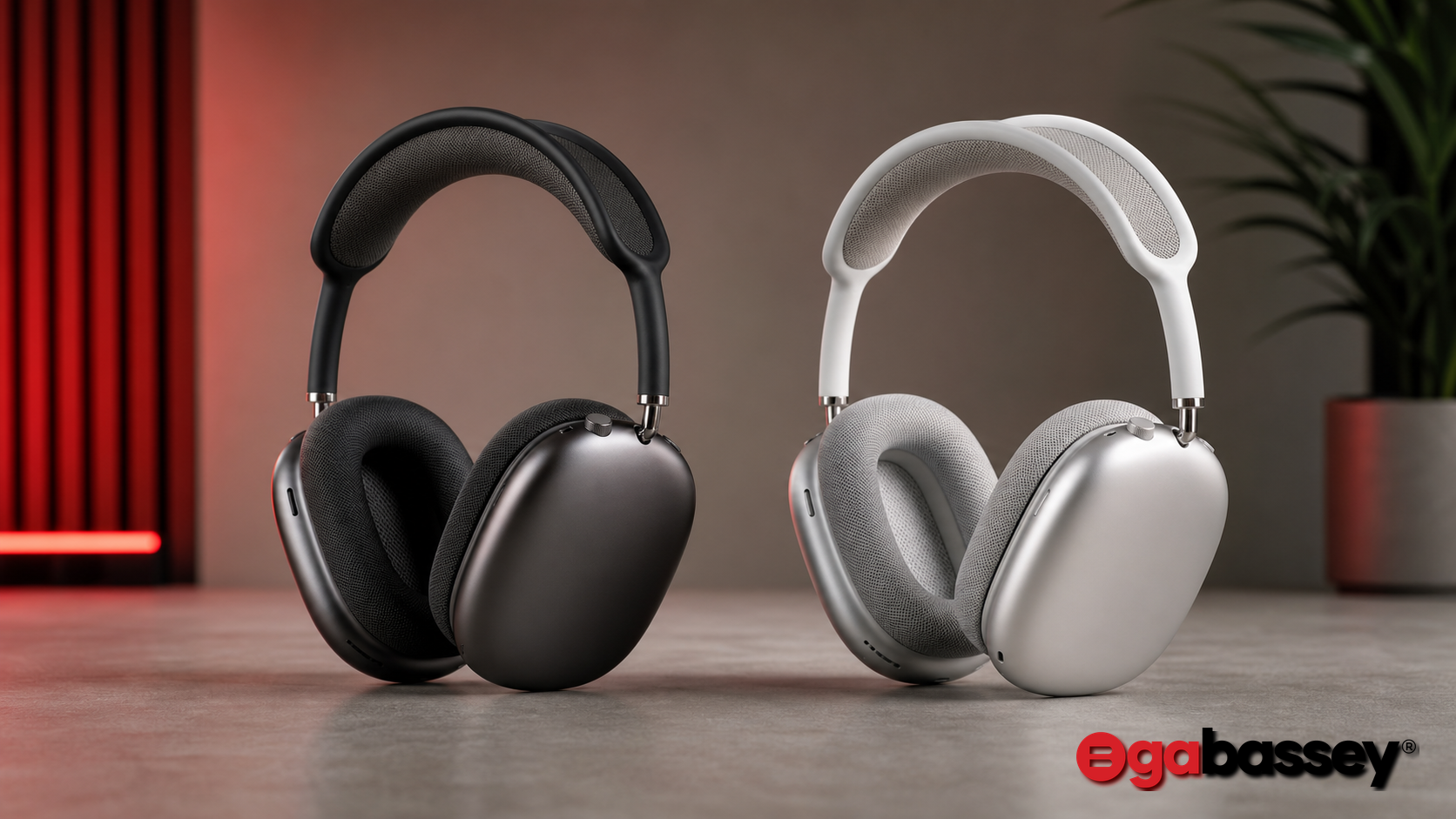
Five years. That's how long Apple kept its premium over-ear headphones on ice before giving them a meaningful upgrade. The AirPods Max launched in December 2020 to widespread admiration for their build quality and sound and widespread jokes about that bra-shaped Smart Case. In September 2024, Apple gave the line a quiet refresh (Lightning → USB-C, new colours, nothing else). Then in March 2026, the real sequel finally arrived: the AirPods Max 2, powered by the H2 chip.
But here's the question nobody's asking directly: is the AirPods Max 2 actually worth $549, or does the original , now available cheaper, still hold its ground?
Let's get into it.
Quick Context: Three Versions, One Confusing Story
Before we compare, let's make sure we're on the same page about which "AirPods Max" we're talking about:
• AirPods Max (2020) — The original. Lightning port, H1 chip. Still floating around refurbished.
• AirPods Max USB-C (2024) — Same headphone, new charging port, new colours. Also unlocked wired lossless audio via a 2025 firmware update.
• AirPods Max 2 (2026) — The actual next generation. H2 chip, new features, better ANC, improved sound.
For simplicity, we'll group the 2020 and 2024 USB-C models together as "Gen 1" and focus on what's meaningfully different about Gen 2.
Design: Absolutely Nothing Changed (And That's Fine)
The AirPods Max 2 look identical to the original. Same anodized aluminum cups. Same knit mesh headband. Same telescoping stainless steel arms. Same Digital Crown. Same oval ear cushions.
Apple hasn't touched the physical design since 2020 — and honestly, that's not necessarily a bad thing. The build quality is still premium and distinctive. But if you were hoping for a folding design, a lighter frame, or a better carrying case, you're still waiting. The Smart Case remains what it is.
Color options for Gen 2: Midnight, Starlight, Orange, Purple, and Blue — same palette introduced with the 2024 USB-C refresh.
Verdict: It's a tie. Same design, same comfort, same premium feel.
The Chip: H1 vs H2 — This Is the Real Upgrade
This is where everything diverges.
Gen 1 runs on Apple's H1 chip — the same processor from 2019, which also powers the second-generation AirPods and the original AirPods Pro. It's a capable chip, but it's six years old.
Gen 2 runs on the H2 chip — the same silicon powering the AirPods Pro 3. The H2 enables computational audio features that simply aren't possible on H1 hardware.
What this means in practice:
Feature Gen 1 (2020/2024) Gen 2 (2026)
Chip H1 H2
Adaptive Audio ❌ ✅
Conversation Awareness ❌ ✅
Live Translation ❌ ✅
Voice Isolation (calls) ❌ ✅
Personalized Volume ❌ ✅
Head gesture Siri ❌ ✅
These aren't minor software features — they're daily-use upgrades. Adaptive Audio automatically balances noise cancellation and transparency based on your environment. Conversation Awareness drops the volume when you start talking to someone nearby. Live Translation (powered by Apple Intelligence) translates in-person conversations in real time.
Gen 1 users have been wanting these features for years. The H2 chip finally delivers them.
Active Noise Cancellation: A Meaningful Leap
The original AirPods Max launched with class-leading ANC in 2020. Six years later, the competition has caught up — Sony and Bose have put in serious work.
The AirPods Max 2 addresses this directly. Apple claims the Gen 2's ANC is 1.5x more effective than the previous generation. That's not a marketing rounding error — independent testing shows noticeably better suppression of low-frequency noise like airplane engines and commuter trains.
The ANC improvement is powered by the H2 chip's new digital signal processing algorithm and a new high dynamic range amplifier working together.
Verdict: Gen 2 wins clearly. If you frequently fly, commute, or work in noisy environments, this alone is a significant reason to upgrade.
Sound Quality: Good Gets Better
Gen 1 always sounded excellent. The drivers, acoustic design, and spatial audio implementation made these a genuine audiophile-leaning product at a mainstream price.
Gen 2 takes it further:
• New high dynamic range amplifier adds cleaner headroom, resulting in richer bass, more natural vocals, and better instrument separation
• Adaptive EQ now extends to higher frequencies and adjusts more consistently across different head shapes and ear geometry
• Spatial Audio improvements: better instrument localization, more accurate bass response, more natural mids and highs
And crucially — both Gen 1 USB-C and Gen 2 support 24-bit/48kHz lossless audio over a wired USB-C connection. So if lossless was your main reason to upgrade from the original 2020 model, the 2024 USB-C version already solved that.
Verdict: Gen 2 sounds meaningfully better than Gen 1, particularly in detail and spatial accuracy. But the gap between the 2024 USB-C model and Gen 2 is smaller than the gap between the original 2020 model and Gen 2.
Battery Life: No Real Change
Both generations deliver up to 20 hours of listening with ANC on. That number has not changed.
To be fair, that's a respectable figure — but in 2026, Sony's XM6 series pushes 37 hours, and the Sennheiser Momentum 4 hits 56 hours. Apple's premium positioning doesn't quite match its battery stamina, and Gen 2 doesn't fix this.
A five-minute charge still gives you 1.5 hours of playback. USB-C charging on both USB-C Gen 1 and Gen 2.
Verdict: Tie — and a mild disappointment all around.
Creator-Focused Features: Gen 2 Opens New Doors
One underrated aspect of the AirPods Max 2 is its push toward creative workflows:
• Studio-quality audio recording — you can use the headphones as a reference monitor while recording
• Logic Pro integration — lossless audio + ultra-low latency over USB-C enables a full professional workflow
• Personalized Spatial Audio with head tracking over USB-C — the only headphones that allow this during music creation
• Camera Remote — press the Digital Crown to take a photo or start/stop video on iPhone or iPad
If you're a podcaster, musician, or content creator embedded in the Apple ecosystem, these features make the Max 2 a genuinely compelling tool, not just a listening device.
Price: Same Tag, Very Different Value
Both generations are priced at $549 in the US / ₦— (expect Nigerian pricing to vary by retailer, typically in the ₦800,000–₦1,000,000 range depending on import and exchange rate).
The difference: Gen 1 USB-C models will likely see price drops now that Gen 2 is here. If you can find a Gen 1 USB-C at a meaningful discount — say, ₦150,000–₦200,000 less — the calculus changes depending on your use case.
The Verdict: Who Should Buy What?
Buy the AirPods Max 2 if:
• You're buying fresh and want the best Apple has to offer
• You frequently fly or commute and need top-tier ANC
• You're a creator who wants to integrate your headphones into a production workflow
• You want Adaptive Audio, Conversation Awareness, or Live Translation
• You're upgrading from the 2020 Lightning model (the jump is massive)
Buy the AirPods Max USB-C (Gen 1) if:
• You find it at a significant discount post-Gen 2 launch
• You primarily use headphones for casual music/movie listening and don't need the smart features
• Wired lossless audio over USB-C is your main audiophile requirement
Skip both and look at AirPods Pro 3 if:
• You want nearly all the H2 features at $249
• Portability matters more than over-ear sound staging
Bottom Line
The AirPods Max 2 isn't a redesign , it's the headphones getting the software update they should have gotten three years ago, delivered via hardware. The H2 chip closes the feature gap that made the original feel oddly behind its cheaper AirPods siblings, and the ANC and sound improvements are real and noticeable.
If you're in the market for premium over-ear headphones and you're already in the Apple ecosystem, the AirPods Max 2 are not the easiest recommendation at $549. If you're considering the Gen 1 USB-C at a discount, it's still a solid headphone, just one that's becoming more obviously dated.
Apple took five years. The wait was almost worth it.
Have you tried the AirPods Max 2 yet? Drop your thoughts in the comments — especially if you're upgrading from Gen 1.
Related reading: Battle of the Headphones: AirPods Max vs. Sony WH-1000XM5.